Advertisement
Like a phoenix, Bola Tinubu rises from Opposition ashes
Friday 03rd March, 2023 11:00 AM|
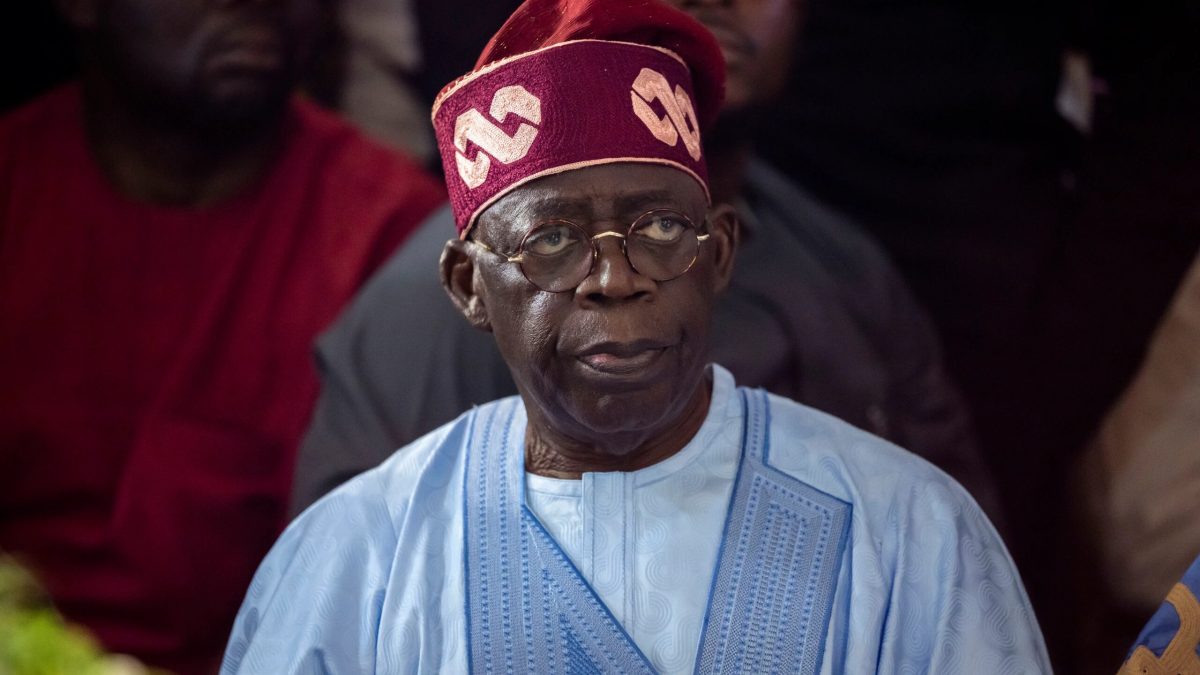
Nigerian President-elect Bola Tinubu would most likely have lost the election had it been held last year – before the main opposition Peoples Democratic Party (PDP) split three ways.
The combined votes of his three closest rivals – one member and two former members of PDP – would have been enough for a comfortable return to power for the party, as together they received 60 per cent of the vote.
The PDP’s Atiku Abubakar got 29 per cent of ballots cast, the Labour Party’s Peter Obi got 25 per cent and Rabiu Kwankwaso of the NNPP got 6 per cent while Nigeria’s next president was elected with 37 per cent.
It would have been easy for a united PDP to capitalise on an electorate tired of the economic hardship, widespread insecurity and record inflation experienced under outgoing President Muhammadu Buhari and the governing All Progressives Congress (APC).
The APC is the fruit of Tinubu’s hard work and he is known as a “political godfather” – helping put Buhari in office eight years ago.
Yet 12 months is a long time in politics – and the 70-year-old former Lagos governor, aided by his party machinery, eased to victory.
Reinvention goes wrong
It was billed as the most competitive presidential election in Nigeria since the end of military rule in 1999.
This was because a third candidate came to the fore. For the last two decades, Nigeria has largely been a two-party state at the national level. Though there has been a plethora of third-party candidates seeking the presidency in that time, no-one has been able to truly make waves like Mr Obi, who excited young voters.
He was vice-presidential candidate for the PDP in 2019 – and his old party had ruled Nigeria for the first 16 years after the return to democracy.
At the time it was a truly national party that connected with millions countrywide, though its strongholds were in the south, where it was assured of votes in every election cycle.
After the PDP experienced its second loss at national polls, in 2019 under Abubakar, it was clear it needed to reinvent itself to attract the millions of young Nigerians who felt frozen out of the political system and frustrated by a political class they saw as responsible for the country’s lack of progress.
Religious and ethnic sensitivities also play a role in a country split between a largely Muslim north and mainly Christian south with hundreds of different ethnic groups
Many southerners felt that the PDP had taken their loyalty for granted after it opted to throw open its presidential ticket to candidates from all areas of Nigeria, instead of confining it to applicants from the south-east – the one area of the country yet to produce an executive leader.
This allowed Abubakar, its major financier and a Muslim former vice-president from the north-east, to run once more.
Obi, a Christian who hails from the south-east and had served two terms as governor of the Anambra state, left the PDP with days to the party primary.
Five powerful southern governors also refused to back Abubakar in the election – it is thought that some of them worked for his opponents. While Kwankwaso, a northern politician popular in Kano, Nigeria’s second-largest city, broke ranks and went to the NNPP to get a shot at the presidency.
Though the PDP has now reclaimed some northern states it lost to the APC in 2019, it has bled heavily in its traditional southern strongholds, where Obi did extremely well.
This worked in the APC’s favour, which stuck to a strategy that has served it well in the past – securing the votes in its bases in the north and west. It was helped by voting day problems in opposition strongholds, where election officials often arrived late – in some places three-and-a-half hours after polls should have closed. This left many voters effectively disenfranchised.
Many excited first-time voters who had arrived hours before dawn were unable to cast their votes because of the late arrival of election materials.
“I arrived at my polling unit at 8:00 but until 11:00 I did not see anyone,” a first-time voter at a polling unit along the Airport Road in the capital, Abuja, told the BBC after eventually managing to vote.
– BBC
In the southern city of Lagos, where many young, educated residents were backing Obi, BBC reporters met many people who arrived early but left after waiting hours for polling officers who never showed up. In some polling units with thousands of registered voters, voting did not start until 13:00 – one-and-a-half hours before polls were due to close, and despite the extension of voting in such places, many did not vote as darkness fell and security officials had to leave. It is impossible to know many potential votes were lost as a result.
Author
Latest News
Advertisement
More on News