Advertisement
KNEC responds to concerns over the 2025 KCSE poor results
Wednesday 21st January, 2026 12:01 PM|
The Kenya National Examination Council (KNEC) has defended the performance of sub-county schools in the 2025 Kenya Certificate of Secondary Education (KCSE).
KNEC clarification comes amid widespread concerns over poor performances in sub-county schools in the country, with students in most of these schools scoring an average of Grades C and D.
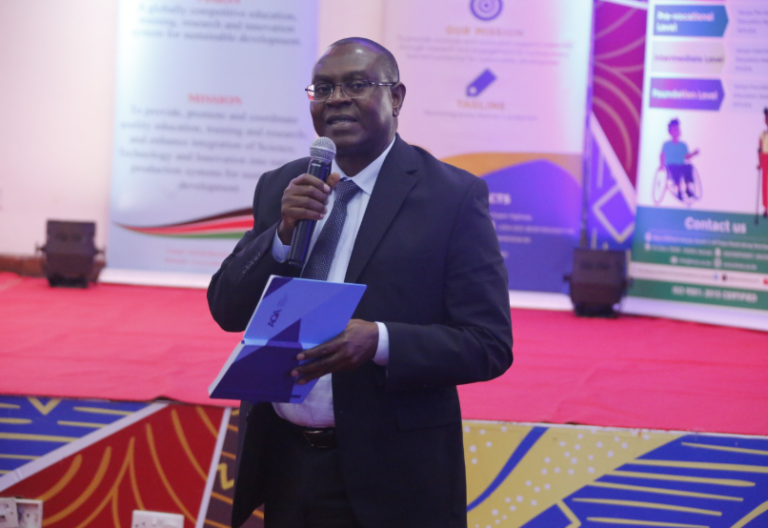
Speaking on Tuesday, January 20, 2026, during the Elimu Mashinani Forum held in Lavington, Nairobi, KNEC Chief Executive Officer, David Njengere, said that judging the results of students without considering their entry behaviour in Form One is an unfair analysis.
“From a statistical perspective, I think it would not be fair to examine the results at the sub-county level without considering the entry behaviour of these learners in Form One,” Njengere explained.
You Might Also Like


While comparing the 2025 KCSE performance of students in national schools and those in sub-county schools, the KNEC boss noted that the education system determines the outcome of a student long before they sit their final examinations.
“Learners who score 400 marks and above in the Kenya Certificate of Primary Education (KCPE) almost always end up in national schools. Those who join sub-county schools are mostly those with 200 marks and below.”
According to the 2025 KCSE results, out of the 993,226 candidates who sat the exam, 1,932 candidates obtained an overall mean grade of A (plain) in the 2025 KCSE examination, with 270,715 candidates attaining the Grade C+, qualifying for direct university entry.
A total of 507,131 candidates scored C- and above, while 634,082 candidates scored D+ and above, compared to 605,774 in 2024.
Njengere explained that the difference in KCPE performance of students who join national schools and sub-county schools makes it unrealistic to expect sub-county schools to register results similar to national schools after just four years.
“It is therefore not possible to expect that, at the end of four years, sub-county schools can post comparable results with national schools,” he said.

What the KNEC data say
Despite the existing challenges, the KNEC CEO observed that performance data from sub-county schools reflects a growing upward trend in academic achievement.
Statistics show that about 13 per cent of learners in these schools attain a C+ grade and above, an indicator of improving standards and promising future performance.
“When you look at the statistics, they tell you that if you can get 13 per cent of learners in sub-county schools getting C+ and above, that is an indication that if all factors were held constant, we put more resources in those schools; there is no reason why a child should fail,” he argued.
Omtatah writes to KNEC
Meanwhile, KNEC clarification comes days after Busia Senator Okiya Omtatah wrote to KNEC challenging the handling of Kenya Sign Language (KSL) in the 2025 Kenya Certificate of Secondary Education (KCSE) examinations, calling for an urgent regrading of the results.
He argued that the current grading system unfairly disadvantages certain categories of candidates.
In a letter to KNEC Chief Executive Officer David Njeng’ere, received on January 13, 2026, the senator questioned the methodology used to factor KSL into the computation of candidates’ final mean grades, citing what he described as discriminatory inconsistencies.
“Exams must be fair. Rules cannot change after the fact,” the letter read in part.

The senator stated that while KNEC classifies KSL as a technical subject under Category 5 of the 8-4-4 curriculum, its grading was applied inconsistently across candidates who sat the 2025 KCSE.
Omtatah said the post-examination policy shift violated fairness and legitimate expectations, unfairly disadvantaging candidates and schools that had invested in KSL teachers and instruction under the existing guidelines.
“This post-examination policy shift constitutes an unfair administrative action. It violates the legitimate expectations of the students who selected KSL in good faith, guided by existing school and policy guidelines,” the letter read.
“Schools invested resources, employed trained teachers, and allocated instructional time with the expectation that KSL would be treated as any other KNEC-approved subject. This action undermines principles of equity, fairness, and inclusive education, potentially contravening national educational goals and societal integration.”
Author
Latest News






Advertisement
More on News