Kenya’s El Niño puzzle: Why are parts of the country getting hotter and drier instead of wetter?
By Aloys Michael, July 17, 2026Many Kenyans associate El Niño with torrential rains, floods and widespread destruction after the devastating 1997-98 event and the October-December 2023 rainy season. Yet the latest FEWS NET report paints a different picture, showing that parts of western Kenya are becoming hotter and drier despite the global climate pattern being present.
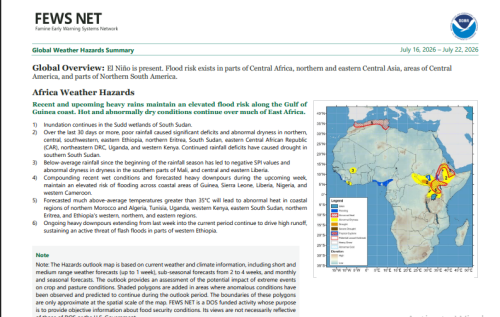
According to the latest Global Weather Hazards Summary by the Famine Early Warning Systems Network (FEWS NET), El Niño is present, but western Kenya has experienced more than 30 days of below-normal rainfall, leading to significant rainfall deficits and abnormal dryness. The agency also forecasts temperatures exceeding 35 degrees Celsius across western Kenya during the July 16-22 outlook period.
The apparent contradiction has a simple explanation: El Niño does not guarantee heavy rainfall everywhere or throughout the year. Its influence varies by season, location and interactions with other atmospheric conditions. That means some parts of Kenya can experience prolonged dry spells even while seasonal forecasts point to wetter conditions later in the year.
“El Niño is present, while warning that over the last 30 days or more, poor rainfall caused significant deficits and abnormal dryness across several East African countries, including western Kenya,” the forecast reads.
The findings come as the government continues preparations for the October-December rainy season, when above-normal rainfall is forecast in parts of the country, illustrating how short-term weather hazards and seasonal climate outlooks can point to different conditions at different times.
Why is Kenya dry
The report also forecasts temperatures much above average, greater than 35°C across western Kenya during the coming week.
The agency’s Africa overview further notes that abnormal dryness persists across East Africa, with rainfall deficits expected to continue over western Kenya even as unusually high temperatures persist.
Climate experts say these conditions are not inconsistent with El Niño. Although the phenomenon often increases the likelihood of enhanced rainfall during Kenya’s October to December “short rains” season, its effects vary across regions and seasons. Other atmospheric and oceanic conditions can temporarily weaken or alter its influence.
FEWS NET also emphasises that its Global Weather Hazards Summary is not a seasonal rainfall forecast. Instead, it is an early warning product designed to identify weather hazards that may affect crop and pasture conditions over the coming days and weeks.
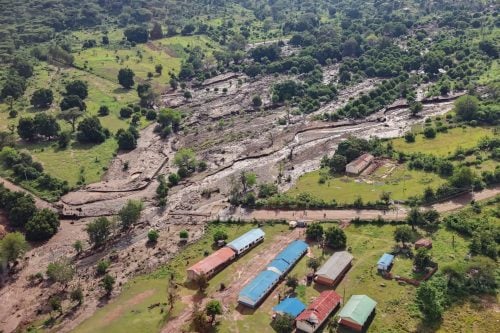
For western Kenya, the immediate concern is that prolonged rainfall deficits and extreme heat could reduce soil moisture, stress crops, dry out pasture and increase pressure on water resources if the pattern persists.
October rains ahead
The FEWS NET outlook comes even as the government says it has activated preparedness measures ahead of the forecast above-normal October-December rainfall, while continuing interventions to address drought in affected areas.
Public Service Cabinet Secretary Geoffrey Ruku said emergency response teams, relief supplies and logistical support had been reviewed and strategically positioned to enable a rapid response to flooding, landslides and possible displacement should the seasonal rains intensify later this year.
“We have ongoing interventions to address the issue, but we have already activated emergency response measures, positioned relief supplies and coordinated with county governments to ensure we are fully prepared to respond to any humanitarian challenges,” Ruku said.

He said county governments were strengthening contingency plans and urged Kenyans to follow advisories issued by the Kenya Meteorological Department and rely on official government communication for weather updates.
The government’s preparations do not contradict the FEWS NET findings. While FEWS NET’s report assesses short-term weather hazards during the July 16-22 period, the government’s plans are based on seasonal forecasts indicating the possibility of above-normal rainfall during the October-December “short rains.”
Together, the two outlooks highlight Kenya’s increasingly complex climate, where different regions and different times of the year can experience sharply contrasting weather conditions. Instead, weather conditions should be monitored through regular updates from the Kenya Meteorological Department and trusted early warning systems such as FEWS NET.
As climate variability intensifies, understanding the difference between short-term weather hazards and seasonal climate forecasts will be critical for protecting lives, supporting agriculture and strengthening Kenya’s resilience to increasingly unpredictable weather.