Advertisement
Kenya tests oil spill readiness in Lamu ahead of planned December output
Friday 12th June, 2026 10:15 PM|
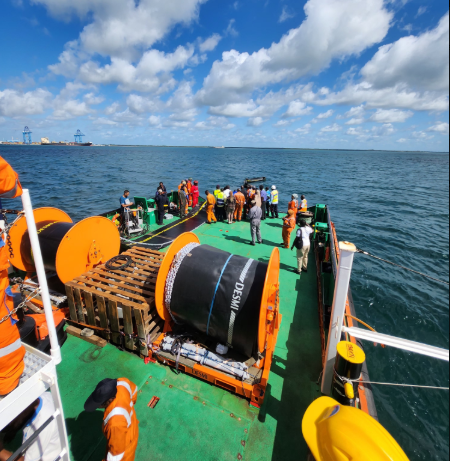
Kenya has intensified preparations for the start of commercial oil production by conducting a major oil spill response training exercise in Lamu, months before crude extraction is expected to begin in December.
The four-day programme, organised by the Lamu Port-South Sudan-Ethiopia Transport (LAPSSET) Corridor Development Authority, brought together personnel involved in the handling and transportation of petroleum products.
The exercise focused on strengthening capacity in oil spill prevention, emergency preparedness and environmental response.
LAPSSET officials said the training is designed to equip workers with the skills needed to manage potential maritime incidents as oil-related activities increase at the coast.
You Might Also Like



“This reflects our commitment to responsible infrastructure development and environmental stewardship,” Lamu Regional Office Liaison Officer Ali Shee said on Friday, June 12, 2026.
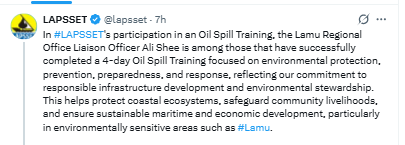
Authorities noted that the drills are aimed at protecting marine ecosystems, preserving livelihoods that depend on coastal resources and ensuring safe maritime operations in environmentally sensitive areas such as Lamu.
The preparedness efforts come as Lamu Port positions itself to play a central role in Kenya’s emerging oil industry. Increased petroleum handling activities raise the risk of spills, which can result from equipment failures, storage overflows or accidents during loading and unloading operations.
The government has maintained that oil production from the South Lokichar Basin remains on track to commence before the end of 2026. Speaking during the launch of oil field development works in Turkana County.
On May 5, 2026, Energy and Petroleum Cabinet Secretary Opiyo Wandayi said Kenya was entering a new phase in its quest for energy independence.
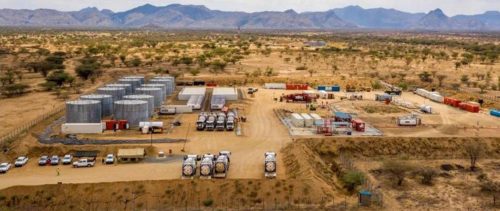
To support exports, the government is advancing plans for an 890-kilometre crude oil pipeline linking Turkana to Lamu. The project is expected to provide a direct route for transporting crude to the coast for international markets.
Lamu Port has increasingly been identified as a key component of Kenya’s oil export strategy. Its growing importance follows the full operationalisation of the port, which Transport Cabinet Secretary Davis Chirchir described as a major milestone under the LAPSSET Corridor project.
Beyond supporting oil exports, the port is expected to ease pressure on Mombasa Port, diversify trade routes and stimulate economic growth across northern Kenya as the country prepares to join the ranks of oil-producing nations.
Author
Latest News







Advertisement
More on News