Kenya braces for El Niño floods while millions recover from devastating drought – WFP
By Aloys Michael, July 21, 2026Kenya is preparing for floods before the first raindrop has fallen. Just months after prolonged drought pushed millions of people into food insecurity across the country’s arid and semi-arid lands, humanitarian agencies are racing to prepare for a new climate threat.
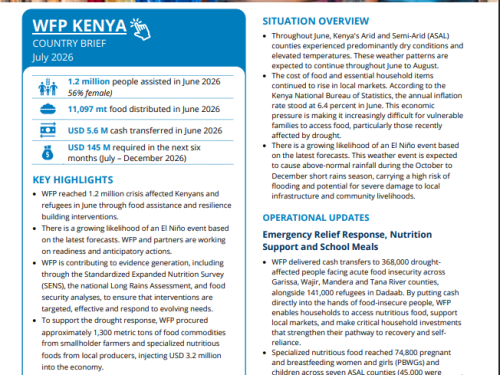
Weather forecasts indicate a growing likelihood of an El Niño event that could bring above-normal rainfall between October and December, raising the risk of flooding across already vulnerable communities.
According to the World Food Programme (WFP) Kenya Country Brief for July 2026, the anticipated El Niño “is expected to cause above-normal rainfall during the October to December short rains season, carrying a high risk of flooding and potential for severe damage to local infrastructure and community livelihoods.”
Rather than waiting for disaster to strike, humanitarian agencies are shifting to anticipatory action, an approach that uses weather forecasts and early warning systems to protect lives and livelihoods before a crisis unfolds. The strategy aims to reduce humanitarian suffering while lowering the financial cost of emergency response.
From drought to floods in a single year
Across Garissa, Wajir, Mandera, Tana River, Marsabit, Turkana and other arid and semi-arid counties, communities are still recovering from prolonged drought.
The WFP says dry conditions and elevated temperatures persisted throughout June and are expected to continue through August, even as forecasts point to possible flooding later in the year.
A pastoralist family struggling to keep weakened livestock alive through months of drought could soon face flooded grazing areas, damaged roads and disrupted markets if heavy rains materialise. The rapid swing from one climate extreme to another illustrates the growing challenge posed by climate change across East Africa.
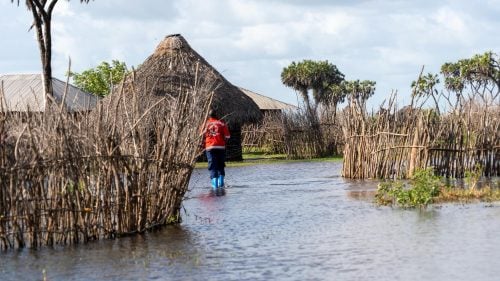
Kenya has experienced severe El Niño-related flooding in previous years, making early preparedness a critical priority for government agencies and humanitarian organisations whenever forecasts indicate heightened risk. The WFP says it is already working with the Government of Kenya and humanitarian partners on readiness measures ahead of the October-December rainy season.
The agency is supporting the national Long Rains Assessment, food security analyses and vulnerability assessments to ensure future interventions are “targeted, effective and respond to evolving needs.” It is also coordinating flood anticipatory planning through the Food Security and Livelihoods Cluster.
The report adds that “acting before shocks occur saves lives and livelihoods,” highlighting the growing emphasis on prevention rather than reacting after disaster strikes.
The Kenya Meteorological Department (Kenya Met) continues to monitor evolving weather patterns, with humanitarian agencies using seasonal forecasts to guide preparedness planning alongside government disaster management structures.
Millions already depend on humanitarian support
The looming flood threat comes as humanitarian needs remain exceptionally high.
In June alone, WFP assisted 1.2 million crisis-affected Kenyans and refugees. The agency distributed 11,097 metric tonnes of food and transferred Ksh724,640,000 in cash assistance.
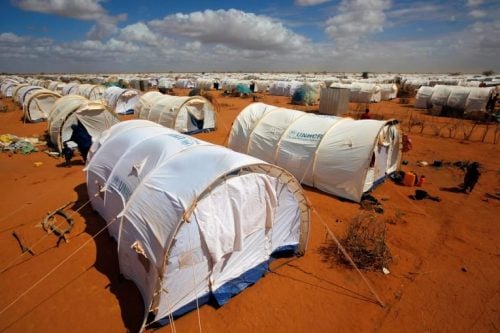
Among those assisted were 368,000 drought-affected people across Garissa, Wajir, Mandera and Tana River counties, alongside 141,000 refugees in Dadaab.
Meanwhile, Kenya’s annual inflation rate reached 6.4 per cent in June, increasing the cost of food and essential household goods and making recovery even more difficult for vulnerable families.
Beyond emergency relief, WFP is investing in resilience by purchasing approximately 1,300 metric tonnes of food commodities from Kenyan smallholder farmers and locally produced nutritious foods, injecting Ksh413.76 million into the local economy.
The organisation is also partnering with local NGOs to expand climate-smart agriculture, sustainable water management, nutrition-sensitive farming and financial inclusion programmes across six arid and semi-arid counties.
These investments are designed not only to help communities survive the next emergency but also to strengthen their ability to withstand future climate shocks.
A new era of disaster preparedness
Kenya’s response reflects a broader transformation in humanitarian action. Instead of waiting for floods to destroy homes, roads and livelihoods before mobilising aid, agencies are increasingly relying on science, predictive data and coordinated planning to reduce the impact of disasters before they happen.
As climate change drives more frequent and intense weather extremes, Kenya’s approach could become a model for anticipatory humanitarian action across Africa.
For families across northern Kenya, the challenge is no longer surviving drought or floods as separate crises. Increasingly, it is preparing for both in the same year, and ensuring that early action today prevents a humanitarian catastrophe tomorrow.