Advertisement
Japan earthquake injures 50 and traps many people inside shopping mall
Tuesday 28th July, 2026 08:12 PM|
A 6.8-magnitude earthquake has shaken south Japan, leaving at least 50 people injured. Some are trapped and presumed dead inside a shopping mall.
The earthquake hit the Kumamoto prefecture on the southern Kyushu island late on Tuesday afternoon, knocking out power to thousands of homes and damaging roads, bridges and buildings.
Japan’s prime minister, Sanae Takaichi, told reporters authorities were still assessing the extent of the damage in the area, which was devastated by another deadly quake a decade ago.
“We have already been informed that people have been injured. Power outages and fires have occurred in some areas, and there has also been damage to roads and bridges and the collapse of buildings,” Takaichi said. “I ask everyone to take action to protect themselves, including evacuating to a safe location.”
You Might Also Like

About 300,000 people have been instructed to go to evacuation centres, the disaster management agency said. The areas with the biggest tremors will remain at risk of further strong quakes and landslides for about a week since the shallow earthquake is triggering active seismic activity in the area, according to the Japan Meteorological Agency.
So far there have been more than 60 aftershocks ranging in magnitude from 1 to 4, the agency said. A tsunami warning was issued immediately after the quake, but was lifted within two hours.
One person was killed in south-west Japan when a house collapsed during the earthquake, Kyodo News reported.
One hospital reported more than 50 injuries, and another about 40, including 10 in a serious condition, the public broadcaster NHK said. Several people on a high-speed train at the time of the quake were also injured and multiple people were unaccounted for after a chimney collapsed at a Nippon Paper Industries factory, according to local media reports.
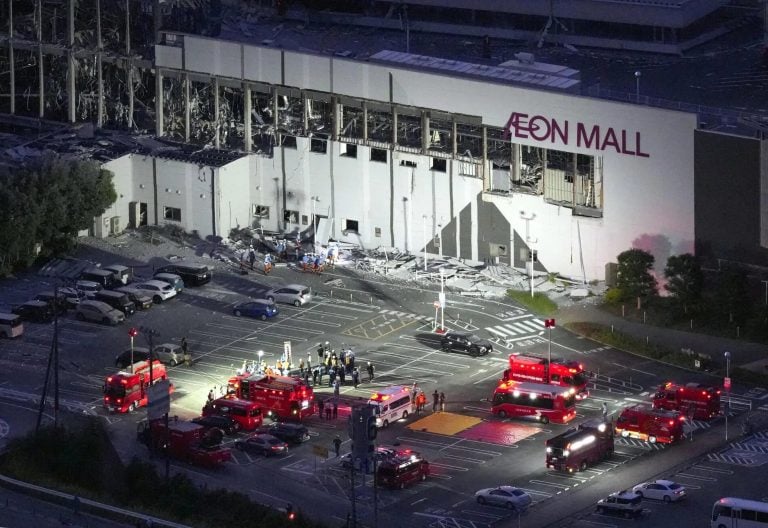
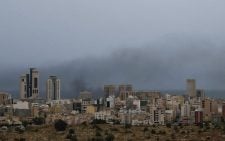
An explosion occurred in an Aeon shopping mall shortly after the earthquake, trapping “many people”, fire services said. The broadcaster TBS reported that police said “quite a few” were presumed dead. About 20 to 30 workers at the mall were unaccounted for, NHK said.
Rescuers race against time
An Aeon spokesperson said customers and employees were evacuated after the initial quake and the cause of the explosion remained unclear. Footage showed one side of the mall, the prefecture’s largest with roughly 200 stores, was torn away, exposing steel beams and strewing debris across the neighbouring car park. Several ambulances and fire engines were parked outside as rescue teams searched for survivors.
Kazuya Tsurunaga told TBS he heard the explosion while cleaning up dishes broken by the earthquake inside a pub about 300 metres from the Aeon mall.
“It was a huge impact,” he said. “A large cloud of smoke billowed up, and because the wind happened to be blowing and the wind direction was towards the shop, the area around us was in a state like volcanic ash was falling.”
Footage from NHK showed several other buildings on fire or partly collapsed, along with large fissures appearing on major roads, including an elevated highway. TSMC, the world’s largest contract chip maker, Sony and Fujifilm evacuated workers from their factories in the area.
The quake’s epicentre was about 12 miles (20km) south of Kumamoto, central Kyushu island’s largest city, with a population of about 700,000. The US Geological Survey initially said the earthquake had a magnitude of 7.1, but revised it later to 6.8.
Japan, which is located along the “ring of fire” of volcanoes and oceanic trenches in the Pacific basin, is one of the world’s most earthquake-prone countries, with a tremor occurring at least every five minutes. The country accounts for about 20% of the world’s earthquakes of magnitude 6 or more.
A massive earthquake in Kumamoto 10 years ago killed 275 people and injured a further 2,739. It damaged thousands of buildings including the city’s castle, a popular tourist site. Some of the castle’s stone walls are said to have been damaged in the most recent quake.
Kyushu Electric Power said 48,000 homes had lost power, while the railway company JR Kyushu suspended services, including its high-speed bullet trains. Kumamoto airport also shut its runway as airlines diverted and cancelled flights.
The telecoms operators KDDI and NTT Docomo said there was disruption to their mobile phone services owing to power shortages and transmission-line failures. There were no irregularities reported at the nuclear power stations in the area, Japan’s nuclear regulation authority said.
Author
Latest News






Advertisement
More on News