Advertisement
Is Kenya heading for a debt trap? New report ranks country among Africa’s highly indebted nations
Tuesday 28th July, 2026 09:00 PM|
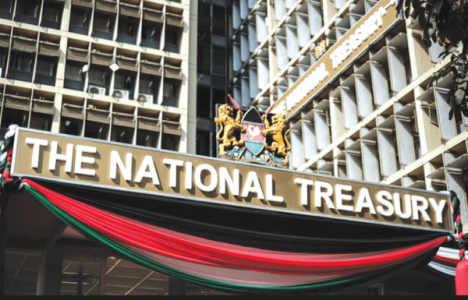
Kenya has been listed among Africa’s highly indebted countries after a new report showed its debt-to-GDP ratio remained above the 60% threshold widely regarded as a benchmark for debt sustainability, raising fresh concerns over the country’s growing debt burden and rising cost of servicing loans.
According to the Africa Debt Story 2026 report, Kenya’s debt-to-GDP ratio stood at 65.6% in 2026, placing it among 23 African countries whose debt levels exceed the 60% mark.
The report identifies Sudan as the continent’s most indebted nation with a debt-to-GDP ratio of 272%, followed by Zambia at 114.9% and Cabo Verde at 113.7%.
The report also ranks Kenya among the 10 African countries with the largest public debt stock. Kenya is placed sixth with a public debt of $79.3 billion (approximately KSh10.2 trillion), accounting for 4.33% of Africa’s total public debt.
You Might Also Like



Egypt leads the continent with $348.34 billion (approximately KSh44.9 trillion), followed by South Africa at $305.57 billion (approximately KSh39.5 trillion), Algeria at $122.40 billion (approximately KSh15.8 trillion), Morocco at $108.79 billion (approximately KSh14.1 trillion) and Nigeria at $99.26 billion (approximately KSh12.8 trillion).

“About 72% of Africa’s debt is owed by ten African countries: Egypt, South Africa, Algeria, Morocco, Nigeria, Kenya, Sudan, Angola, Ghana and Côte d’Ivoire. Over 35% of this debt is concentrated in North African countries. Egypt leads with a debt stock of $348.34 billion, representing 19.03% of Africa’s total public debt. South Africa follows at $305.57 billion (16.69%).
“Beyond the top two, there is a sharp drop in debt levels. Algeria holds $122.40 billion (6.69%), while Morocco ($108.79 billion) and Nigeria ($99.26 billion) account for 5.94% and 5.42%, respectively.”
Sudan follows Kenya with $76.89 billion (approximately KSh9.9 trillion); Angola has $72.47 billion (approximately KSh9.4 trillion); Ghana, $58.40 billion (approximately KSh7.5 trillion); and Côte d’Ivoire, $51.61 billion (approximately KSh6.7 trillion). Collectively, the 10 countries account for 72% of Africa’s total public debt, highlighting the concentration of borrowing across the continent.
Beyond the size of the debt, the report highlights the growing burden of debt servicing. It notes that Kenya and Ghana now spend about 26% of their GDP on interest payments on loans, an indication of the increasing pressure debt repayments are placing on government finances and the limited fiscal space available for development and social spending.
The findings come at a time when Kenya’s public debt has surpassed KSh12 trillion, with borrowing expected to increase further during the 2026/27 financial year. The government has projected a budget deficit of about KSh1.1 trillion, with nearly 90% of the deficit expected to be financed through domestic borrowing.
Dangers of domestic borrowing
Economists have cautioned that heavy reliance on domestic borrowing could trigger the crowding-out effect, where increased government demand for credit leaves less financing available for businesses and households. This could push up interest rates, discourage private sector investment and slow economic growth.
Africa’s public debt
The report further notes that Africa’s public debt has continued to rise steadily over the past decade, driven by both external and domestic borrowing.
External debt increased from $435.88 billion (approximately KSh56.3 trillion) in 2010 to $1.17 trillion (approximately KSh151.2 trillion) in 2024, representing a compound annual growth rate (CAGR) of 6.8%.
Domestic debt grew even faster, rising from $211.23 billion (approximately KSh27.3 trillion) in 2010 to approximately $660.5 billion (approximately KSh85.4 trillion) in 2024, recording a 7.9% CAGR as governments increasingly turned to local borrowing amid tightening global financial conditions.

According to the report, Africa’s average debt-to-GDP ratio has climbed from 39% in 2010 to 65% in 2024, driven by infrastructure spending, widening fiscal deficits and emergency borrowing during the COVID-19 pandemic.
Although debt levels have eased slightly from the pandemic peak, they remain significantly higher than pre-2015 levels, suggesting a structural shift towards higher debt burdens across many African economies.
African countries’ debt-to-GDP ratio
While a debt-to-GDP ratio above 60% does not automatically mean a country is in a debt crisis, the report warns that persistently high debt levels reduce governments’ fiscal flexibility, increase debt-servicing costs and limit resources available for healthcare, education, infrastructure and other critical public services.
For Kenya, the combination of a rising debt stock, growing interest payments and continued borrowing is expected to keep debt sustainability at the centre of economic policy debates in the coming years.
Author
Latest News







Advertisement
More on Business