Advertisement
Ex-CBK Governor Andrew Mulei recalls how simple question earned him Kibaki’s trust
Tuesday 28th July, 2026 03:55 PM|
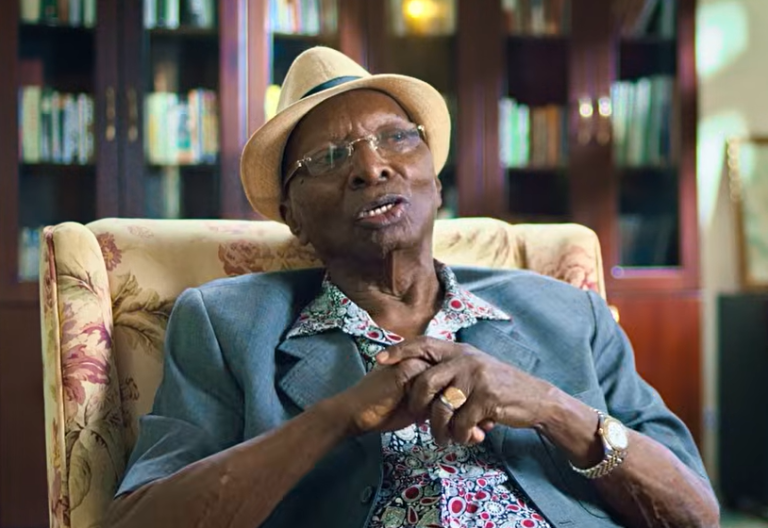
Former Central Bank of Kenya (CBK) Governor Dr Andrew Mulei has recalled how a simple economics question on supply curves impressed former President Mwai Kibaki during their first meeting in Washington DC, years before he returned to Kenya to lead the country’s monetary authority.
Mulei, speaking in an interview with the Central Bank of Kenya on Monday, July 27, 2026, said Kibaki’s reaction during the meeting gave him confidence that his economic training and international experience could help serve his country.
At the time, Kibaki was Kenya’s governor at the World Bank, while Duncan Ndegwa was Kenya’s governor at the International Monetary Fund (IMF). The two Kenyan officials met Mulei after Kenya’s ambassador in Washington DC, Leonard Oliver Kibinge, arranged a meeting to introduce them.
Mulei had built an impressive academic and professional background. His journey had taken him from broadcasting in London to studying economics abroad and working with international institutions.
You Might Also Like


“When I got there, this gentleman introduced me to his own boss. After he introduced me to Mr Harrison, he said, if you want a job, I’ll give you a job,” Mulei recalled.
The job was at the BBC, where he wrote stories about Britain and later broadcast his impressions in Kiswahili to audiences in Kenya, Uganda, Tanzania and Southern Africa.
“That was exciting because that’s the first time then I felt that I had landed,” he said.
However, Mulei later left broadcasting to pursue economics. He received a scholarship opportunity to study in Prague, where he learnt Czech before eventually moving to the United States, where he joined George Washington University.
After completing his first degree, he pursued further studies at Howard University in Washington DC. During his academic journey, he attracted attention from international organisations.
The IMF recruited him as a technical assistant to an executive director, while the United Nations later identified him as a suitable candidate to serve as a trade policy adviser in Addis Ababa.
It was through these roles that he met Ndegwa and Kibaki.
Kibaki’s economics test
Mulei said Kibaki, who was also an economist, tested his understanding of economics during their first meeting.
“Kibaki tried to get me to answer some questions related to economics because he himself was an economist,” Mulei said.
The late former president asked him how a supply curve is determined, a question Mulei described as challenging but one he was prepared to answer.
“He was asking me, how do you determine a supply curve? That’s a tricky question. But luckily I knew how you determine that. It’s a mathematical question,” he recalled.
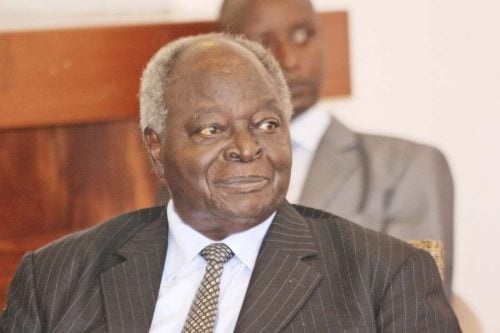
Mulei explained the concept to Kibaki, who he said was impressed by his response.
“I explained to him how quickly you determine that particular thing, and he was very impressed. So he settled down,” he said.
After the discussion, Ndegwa asked Mulei about his work at the IMF.
It was during that conversation that the issue of Kenya’s coffee earnings came up.
The coffee money debate
Mulei recalled Ndegwa explaining that Kenya was receiving significant foreign exchange earnings from coffee exports but faced a challenge over how the money should be managed.
According to Mulei, the IMF had advised Kenya to create an account where the money would be held instead of immediately converting it into shillings and releasing it into the economy.
Ndegwa, he said, was concerned about how to balance supporting farmers while avoiding inflation.
“Coffee is bringing Kenya a lot of money. We are receiving a lot of dollars,” Mulei recalled Ndegwa telling him.
“The IMF is telling us that we should create an account where the money should go and not be allowed to flow through to support activities because it will be quite inflationary.”
Mulei agreed with the IMF’s position, explaining that immediately releasing the money into the economy could create inflationary pressure.
“That would be inflationary,” Mulei told Ndegwa.
He advised that the funds should be held in an account on behalf of their owners to avoid destabilising the economy.
“You should be able to create an account that holds the money on behalf of the owners of the money so that you don’t create inflationary conditions in your economy,” he said.
The conversation later opened the door for Mulei’s return to Kenya.
Return to Kenya and CBK leadership
Mulei said Ndegwa later contacted him while he was in the United States and encouraged him to come back and contribute to Kenya’s development.
“I told the governor that I had already decided to come and work for you and work for the president to the best of my ability,” Mulei said.
When he returned, he met Kibaki, who asked him to study Kenya’s monetary policy and advise on issues affecting the economy.
“He told me that what you’ll be doing is you will study the kind of monetary policy we are running, how we are running it, and you give us advice on how that monetary policy fits into the way that you think is the correct way to proceed,” Mulei recalled.
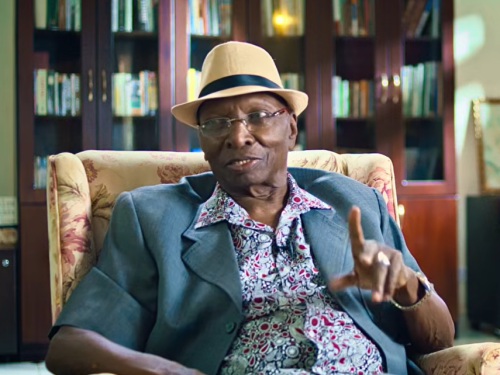
/YouTube
He was later appointed to work at the Central Bank of Kenya, where he rose through the ranks before eventually becoming governor during Kibaki’s presidency.
Mulei said his appointment as governor came as a surprise.
“Out of nowhere, an announcement is made on the radio… and the radio is saying Andrew Mulei has been appointed governor of the Central Bank,” he recalled.
At the time, he said Kenya faced serious economic challenges, including uncontrolled government spending and pressure from international donors demanding reforms.
“Economic management in Kenya was already in shambles. Government spending was completely out of order,” he said.
Building a stronger Central Bank
As governor, Mulei said he focused on strengthening the institution by improving staff morale, reorganising departments and ensuring employees had opportunities for growth.
He said the success of CBK depended on its employees.
“The most important resource for an institution like the Central Bank is the people that are working in that institution,” he said.
Mulei introduced measures aimed at improving staff welfare, including reviewing salaries, making promotion processes clearer and encouraging teamwork across all levels.
He rejected rigid workplace hierarchies that created divisions between managers and junior employees.
“The contribution of the sweeper is just as important as the contribution of the director. Each one is doing a different assignment, but it’s all leading to the same benefit for the institution,” he said.
Mulei said leaders must respect employees and create an environment where people feel valued.
“I couldn’t do it alone. I knew I depended on people to help me accomplish,” he said.
“The reward that I can give to them is to respect them, to honour them, and to be open to them and to be very fair.”
Reflecting on his career, Mulei said he remained proud of serving Kenya despite having lived and worked in different parts of the world.
He said his experiences abroad strengthened his appreciation for his home country.
“There is no place in all those countries I can find happiness the way I have found it here in Kenya, my own country,” he said.
Mulei credited former CBK leaders, including Duncan Ndegwa and Philip Ndegwa, for shaping his career and giving him opportunities to serve.
He said institutions succeed when leaders invest in people, maintain sound policies and create a culture of fairness.
Author
Kenneth Mwenda
Kenneth Mwenda is a business, sports, and politics digital writer with over seven years of experience in journalism, covering breaking news, feature stories, and in-depth analysis across a range of beats.
For inquiries, he can be reached at [email protected]
View all posts by Kenneth MwendaLatest News



Advertisement
More on Business