Advertisement
Nyakang’o reveals plan to scrutinise governors’ spending before their exit
Tuesday 28th July, 2026 07:50 PM|
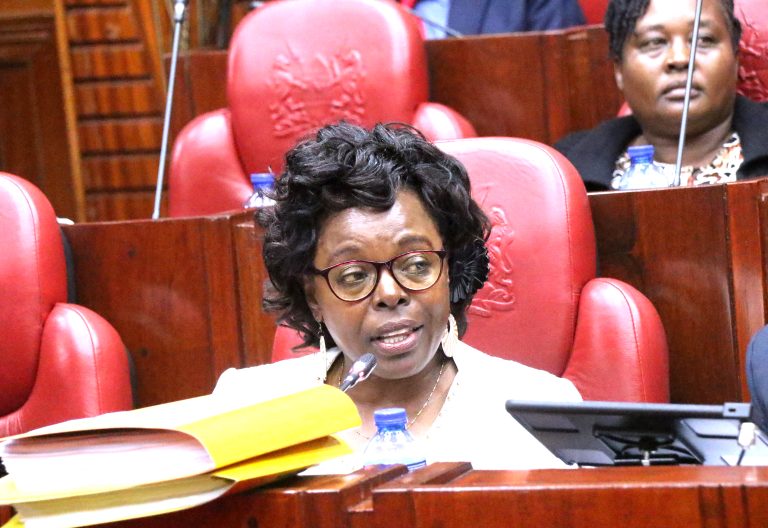
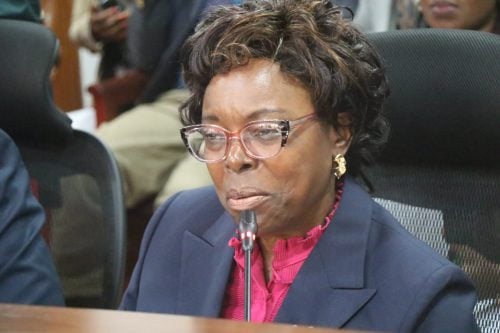
Controller of Budget Margaret Nyakang’o has warned county governments against leaving behind pending bills and financial irregularities as they approach the final year before a new administration takes office.
Speaking before the National Assembly’s Public Petitions Committee on Tuesday, July 28, 2026, Nyakang’o said her office would closely monitor county spending, budgeting processes and pending bills to ensure governors do not pass financial burdens to their successors.
She said counties had continued to face challenges in complying with budget guidelines despite repeated guidance from the Office of the Controller of Budget (COB).
Nyakang’o said her office has consistently enforced financial controls before approving the release of funds but faces challenges after counties receive the money.
You Might Also Like

“We know, for instance, that the counties are not amenable to the guidelines that I provide. But I have been consistent. Year in, year out, I have provided them with guidelines and ensured that I enforce them at the point of releasing the funds,” she told MPs.
The Controller of Budget said some counties fail to follow the intended purpose of funds after they are released, despite meeting conditions set by her office.
“Now, where they let me down is that after releasing the funds on very stringent grounds, they now go and do different things with the money,” she said.
Nyakang’o said her office was working with the Central Bank of Kenya (CBK) and the National Treasury to develop a system that would ensure approved payments go directly to authorised suppliers.
She explained that the proposed system would help prevent situations where suppliers’ details are captured, funds are released, but the money is later used for other purposes at the county level.
“That system has not started working, but if it does, I hope it can do in my lifetime as COB. That would be a major success for us because we are handling a lot of complaints from suppliers,” Nyakang’o said.
County budgets face compliance test
Nyakang’o said county budgets have also remained a major concern, with her office rejecting attempts by counties to bypass legal requirements during the budgeting process.
She said the COB reviews county budgets after they are approved by county assemblies to ensure they comply with the law before public funds are released.
“What we have found year after year is that the counties would like to cut corners in terms of the budgeting process. And I have said no. They must have a proper budget before they start spending,” she said.
The Controller of Budget revealed that as of July 28, 2026, no county budget had fully passed her office’s compliance review.
“As I speak to you today, there is not a single county budget that has passed the test,” she told the committee.
She said enforcing proper budgeting procedures from the start of the financial year would help improve accountability in county governments.
Nyakang’o added that her office would be strict on pending bills, especially because counties are approaching the final year before a new administration takes over.
“You also know that in terms of the pending bills, those debts that are left year after year, we are now moving into a new administration, and they’ll be wanting to leave them,” she said.
“So we are going to be super strict on how they handle those pending bills this year, because it is the final year before a new administration.”
Counties show gradual improvement
Despite the challenges, Nyakang’o said county financial management had improved over time, citing better audit outcomes in some devolved units.
She pointed to Makueni County, which received a clean audit report, saying other counties had also moved from poor performance levels.
“If you look at the Auditor General’s reports, you will see that there are very few counties that have actually piled up. Like Makueni this year, they got a clean audit report,” she said.
She added that some counties had improved from “very bad to bad”, and expressed hope that continued enforcement would lead to better results.
The Controller of Budget said her office also continues to train financial officers who will strengthen oversight in the future.
“I am training an army of very, very strong officers who will also be looking at power and speaking to it in the future after I’ve left,” she said.
Public debt and spending pressure
During the meeting, Nyakang’o also addressed concerns about government borrowing and expenditure pressures.
She said Kenya’s total borrowing had reached Ksh12.82 trillion, with about 60 per cent being domestic debt and 40 per cent external debt.
She warned that debt repayments were putting pressure on government finances, with 71 per cent of collected revenue going towards loan repayments.
She said reducing borrowing would require fiscal consolidation through increased revenue collection and reduced government spending.
“The impact is that up to 71 per cent of the revenues that we collect goes to loan repayment. So when that happens, it leaves us with 29 per cent to do the rest of the expenditure that we would like to do,” Nyakang’o said.
She said Kenya could gradually reduce borrowing by narrowing the gap between revenue and expenditure.
“What perhaps we can say, after looking at the problem in the eye, is to say, can we reduce our spending so that gradually we reduce the amount that we must borrow to stay afloat?” she said.
Nyakang’o maintained that improving accountability at both national and county levels would be critical in managing public finances and reducing future debt pressures.
The warning comes as Nyakang’o continues to push for greater accountability in the management of public funds at both national and county levels.
During the same Public Petitions Committee session, the Controller of Budget raised concerns over a mismatch between approved debt allocations and funds requisitioned from the National Treasury for an IMF on-lent loan.
She said her office had flagged the variance through its routine debt monitoring reports and had already engaged the Treasury for clarification, highlighting the importance of strong financial controls.
Author
Kenneth Mwenda
Kenneth Mwenda is a business, sports, and politics digital writer with over seven years of experience in journalism, covering breaking news, feature stories, and in-depth analysis across a range of beats.
For inquiries, he can be reached at [email protected]
View all posts by Kenneth MwendaLatest News






Advertisement
More on Business