Advertisement
Isaac Mwaura responds to claims that State House has lost its glory
Tuesday 16th September, 2025 12:18 PM|

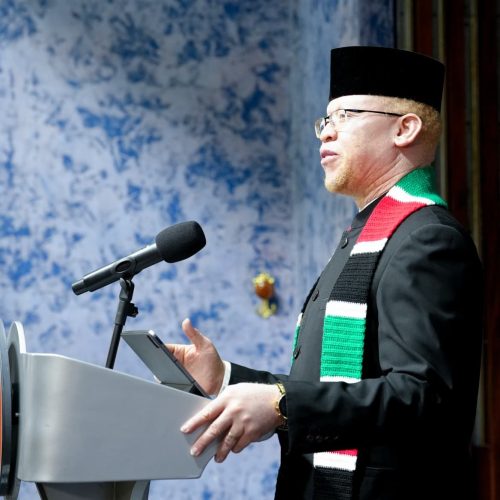
Government Spokesperson Isaac Mwaura has come out strongly to defend the increasing visits to State House, saying they reflect the will of ordinary Kenyans who brought the current administration to power.
Mwaura said critics who claim that State House has lost its prestige by hosting many groups of citizens were forgetting the spirit under which the government was formed.
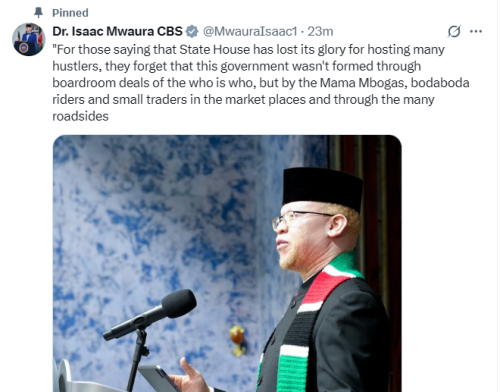
“For those saying that State House has lost its glory for hosting many hustlers, they forget that this government wasn’t formed through boardroom deals of the who’s who, but by the Mama Mbogas, boda boda riders and small traders in the marketplaces and through the many roadsides and townhalls in those small places across the country,” Mwaura posted on X on Tuesday, September 16, 2025.
He noted that the presidential standard itself carries a symbol that speaks to this origin, linking the institution directly to the people’s struggle.
You Might Also Like



“That’s why the presidential standard has a wheelbarrow symbol on it hanging high up on the State House,” he added.
Defending inclusivity
Mwaura maintained that State House is not reserved for a select few but stands as an open door for the people who played a central role in shaping the outcome of the last election. He said this inclusivity should be celebrated rather than criticised, as it redefines leadership as people-centred.
According to him, the decision to allow various groups to visit the State House is tied to the government’s commitment to remain accessible and grounded in the realities of ordinary citizens.
The Government Spokesperson went further to connect these visits with the administration’s development agenda, arguing that the same communities that frequent the State House are the direct beneficiaries of government programs.
“If you look keenly at the major programs by the government, most of them are to empower the very people who voted for it,” Mwaura stated.
He underscored that the administration’s flagship policies, from social empowerment to economic inclusion, were designed with these groups in mind.
By defending the visits, Mwaura sought to emphasise that the symbolism of State House has shifted from being a place of exclusivity to one of inclusivity, where the people who built the government have their presence recognised.
Author
Latest News




Advertisement
More on News