Advertisement
Gladys Wanga projects 17 million votes for UDA-ODM alliance in 2027
Sunday 19th July, 2026 09:05 AM|

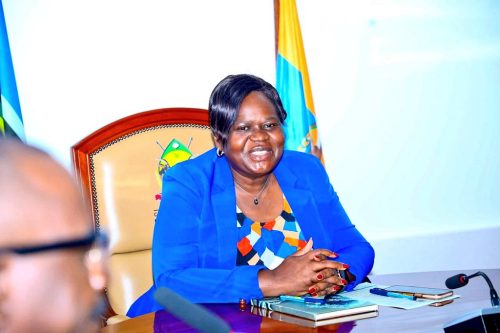
Homa Bay Governor Gladys Wanga has projected that the United Democratic Alliance (UDA)-Orange Democratic Movement (ODM) political partnership could secure nearly 17 million votes in the 2027 presidential election.
Wanga spoke during the thanksgiving ceremony of ODM Youth League President Johnmark Ketorah in Kiloh, Kajiado County, on Saturday, July 18, 2026.
She described the broad-based arrangement as more inclusive than the opposition associated with former Deputy President Rigathi Gachagua.
“Philosophy ya Gachagua ni philosophy tofauti. Philosophy yake ni ya kwamba kabila kubwa zikipata, wale watu wengine wasimame nyuma ya line huko nyuma,” Wanga said.
You Might Also Like

She maintained that ODM and Gachagua could not comfortably operate under one political arrangement.
“Hakuna siku ODM ya Raila Amolo Odinga na Gachagua wanaweza kaa kwa nyumba moja wasikizane kwa sababu ni kama mchana na usiku,” she said.
Wanga invokes a nine-to-one by-election scorecard
Wanga used the recent by-elections to support her argument.
“Na hii mambo ya by-election, kumekuwa na by-election 10 ya constituencies hapa nchini. Tisa zimeenda kwa broad-based, moja imeenda kwa confused, clueless, agendaless elements,” she said.
The figures largely support her nine-to-one scorecard. However, the contests were held between November 2025 and July 2026. They also included nine parliamentary elections and one senatorial contest.
UDA won six seats.
Its candidates received 21,564 votes in Malava, 10,431 in Banissa and 15,802 in Mbeere North. UDA also secured 55,246 votes in the Baringo senatorial election.
The party later won Isiolo South with 7,352 votes and Emurua Dikirr with 18,266.
UDA’s six winners garnered a combined 128,661 votes.
ODM won Magarini with 17,909 votes, Ugunja with 9,447 and Kasipul with 16,819. Its three winners accumulated 44,175 votes.
The two broad-based partners, therefore, collected 172,836 votes across the nine contests they won.
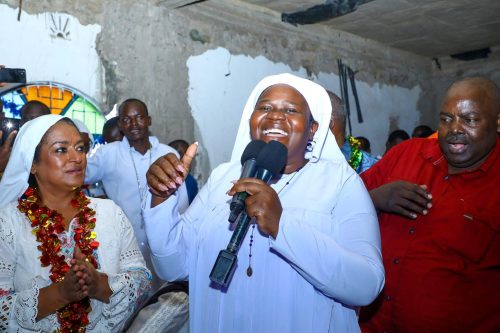
“Sasa niwaulize, tisa na moja gani mingi? Tisa! Ubabe kati ya tisa na moja, is there competition there?” Wanga posed.
However, raw by-election totals do not measure national popularity. Baringo involved an entire county, while the other elections covered individual constituencies.
Their voter registers and turnout levels were also different.
What a 17 million vote victory would mean
Wanga also challenged Gachagua’s assertion that he delivered 7.1 million votes to President William Ruto in 2022.
“Mheshimiwa Ruto alipata kura 7.2 million. Yeye anasema alimpea 7.1 million. Kwani the rest of the country wengine wote ambao walipiga kura walipiga kura 100?” she asked.
IEBC’s final results show that Ruto received 7,176,141 votes. Raila Odinga garnered 6,942,930.
Combined, their votes totalled 14,119,071. That is still 2,880,929 votes short of Wanga’s 17 million projection.
Kenya currently has an estimated gross register of 24,733,183 voters. This combines the audited 2022 register with 2,612,725 new registrations reported by April 28, 2026.
Winning 17 million votes would require support from at least 68.7 per cent of all currently registered voters.
If the 2022 turnout rate of 64.77 per cent were repeated, only about 16.02 million voters would participate.
A 17 million tally would therefore be impossible at that turnout level.
Even at 80 per cent turnout, 17 million would represent approximately 85.9 per cent of all votes cast.
Historical presidential results underline the scale of Wanga’s projection.
| Election | Elected or declared winner | Votes |
|---|---|---|
| 1997 | Daniel Moi | 2,500,865 |
| 2002 | Mwai Kibaki | 3,646,277 |
| 2007 | Mwai Kibaki | 4,584,721 |
| 2013 | Uhuru Kenyatta | 6,173,433 |
| 2017 repeat election | Uhuru Kenyatta | 7,483,895 |
| 2022 | William Ruto | 7,176,141 |
Even Uhuru’s annulled August 2017 tally of 8,203,290 votes was less than half of 17 million.
“If you count all our votes and put them together with UDA votes, tutakuwa pale na kura ambayo inaelekea milioni 17,” Wanga said.
Her figure is therefore an ambitious political target.
Achieving it would require UDA and ODM to retain almost all their 2022 voters, attract nearly three million more and deliver a historically high turnout.
Author
Latest News


Advertisement
More on Inside Politics