Advertisement
Youth’s invention to keep predators off Maa livestock
Thursday 25th May, 2023 06:40 AM|
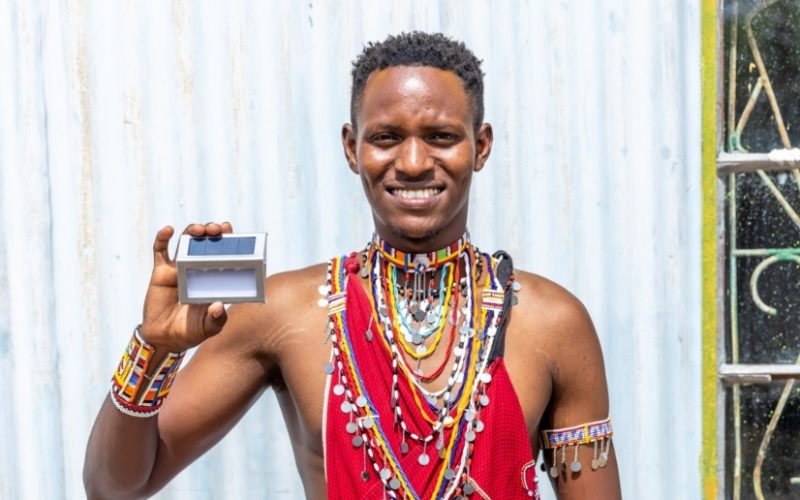
A young man from Kitengela, who has invented a light sequence that can ward off lions and other predators from attacking livestock, has earned him global recognition for his innovation.
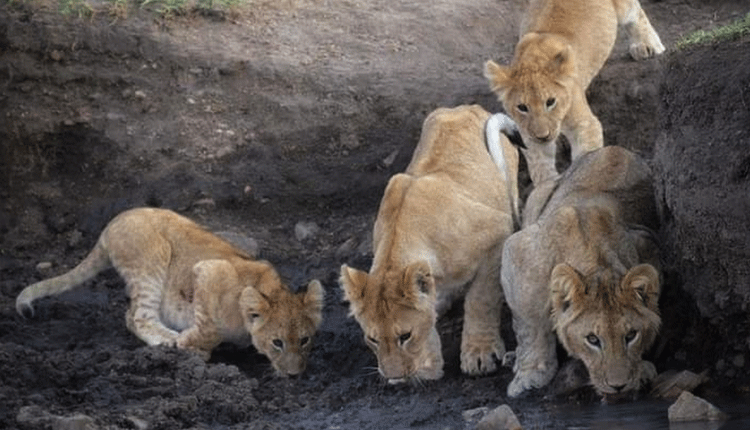
The invention is also likely to protect lions because herders are unlikely to attack the big cats unless the lions kill their cattle.
According to the inventor, Richard Turere, who has been named one of the three finalists for the second edition of the Young Inventors Prize, the gadget seeks to protect his community’s livestock without harming the endangered lions. Its system uses light sequences to scare away lions, which are now at risk of becoming an endangered species.
Richard’s move was inspired by the maiming of nine of his cows by lions from the Nairobi National Park. The attacks occurred in the span of a week.
“Many lions are killed to stop them from eating our precious livestock, which is a key concern for the Maasai community,” he said.
Lion population decline
Conservationist Paula Kahumbu, who heads Wildlife-Direct, said attacks on lions has led to a decline in their population.
“The cattle are an essential source of food and income for the local communities. To counter this risk, lions were often killed,” Dr Kahumbu said.
The Kenyan government has for years tried to reduce the number of lion being killed by herders by financially compensating those whose animals were maimed by the big cats, but it became too costly and could not be sustained.
According to the World Wide Fund for Nature (WWF), the lion population in Africa is estimated to have declined by 43 per cent in the past 20 years, with roughly 20,000 lions thought to be roaming the entire continent.
After testing several ideas, Turere’s invention, known as Lion Lights’ is based on a simple concept, replicating the human presence that keeps lions away.
“Using changing sequences of flashing lights, the lions cannot become comfortable with the patterns,” Turere said, even as he continues to analyse and improve his invention to ensure that it still works as effectively now as it did in the past.
As word of his technology spread, other community members began requesting the system for their properties, and now over 2,000 homes in Kenya use Lion Lights.
Run on wind power
“Since Lion Lights were installed, no lions have been killed in the area and a recent animal census at Nairobi National Park has seen an increase of 15 per cent in their lion population,” a source at Kenya Wildlife Service (KWS) intimates.
Further, Turere explains, “our motto at Lion Lights is that there is no existence without co-existence. For us to be able to live in this world harmoniously, we’ll have to find a way of living peacefully with each other, humans and wildlife.”
The system typically runs on solar energy but can also be coupled with wind power when the weather is cloudy or there is little sun. It has attracted international attention and has been implemented in several other countries, including Tanzania, Botswana, Namibia, Argentina, and India, where it has helped deter various species of animals, such as hyenas, leopards and cheetahs.
The prize recognises young innovators aged 30 or under who have developed technological solutions to tackle global problems and help reach the United Nations Sustainable Development Goals (SDGs). Turere’s invention contributes to UN SDG 15: Life on Land, which includes protecting, restoring and promoting sustainable use of terrestrial ecosystems.
Like many young Maasai boys from Kitengela, Turere was tasked with protecting his family’s cattle.
The Maasai inventor believes that others can learn from his journey. “I want this story to inspire the young kids that they too can do something. If I did it coming from this community with no education, and no resources whatsoever, then anyone can make it.,” he said, stating that anyone can change this world.
In 2013, Richard Turere founded an organisation, which now works with more than 50 young people in his village.
His invention caught the eye of Wildlife-Direct, the charitable organisation led by Dr Kahumbu, who helped him win a scholarship to Brookhouse School in Nairobi, where he studied A-Levels. He then completed a BA in Global Challenges and Wildlife Conservation at the African Leadership University.
Author
George.Kebaso
View all posts by George.KebasoLatest News





Advertisement
More on News