Advertisement
IEBC team gets down to work, sets priorities
Monday 21st July, 2025 04:20 AM|

After prolonged and nerve-wracking delays marked by growing tension, mistrust and speculation—including murmurs about a possible postponement of the 2027 General Election—the newly formed Independent Electoral and Boundaries Commission (IEBC) has finally broken its silence and moved to set the record straight.
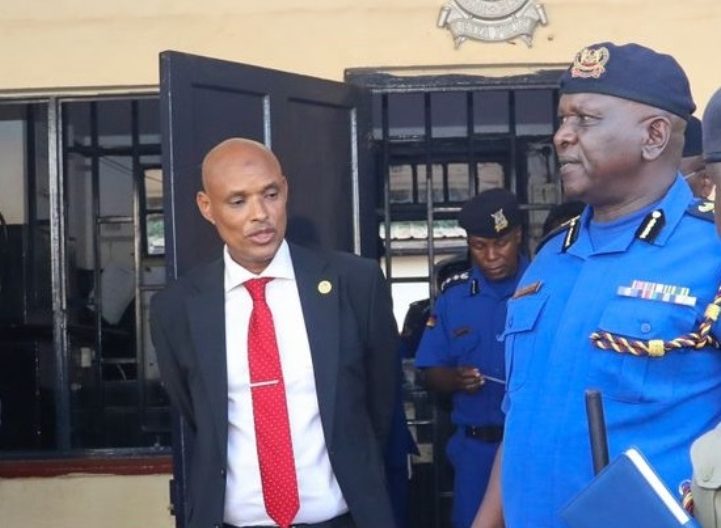
The commission has been on a week-long induction retreat in Mombasa, under tight security, with both uniformed and plain-clothed officers stationed at the hotel they had booked.
Led by commission chair Erastus Ethekon, the new IEBC promised to uphold the credibility, transparency and efficiency of Kenya’s electoral processes, despite the late start.
Ethekon outlined five key priority areas that will guide the commission’s initial agenda.
You Might Also Like
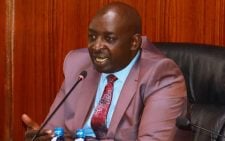


Top on the list is the organisation of 23 pending by-elections across the country—including one Senate seat, six National Assembly constituencies, and 16 County Assembly wards.
The second priority is voter registration and updating the voter register. This will be followed by targeted voter education and structured stakeholder engagement, boundary delimitation, and finally, legal reforms related to elections.
The prolonged absence of a fully constituted IEBC had created a vacuum that fueled public speculation.
Shortly before his resignation, then-President William Ruto’s Senior Economic Advisor, Moses Kuria, sparked controversy by suggesting that Kenya might not hold a general election in 2027.
Kuria cited the 2008 Kriegler Report, which recommended that Kenya should have a fully operational and independent IEBC at least two years before a general election to ensure a free and fair process.
“In 39 days, the official 24-month countdown to the 2027 elections begins. Given our litigious nature, this case could drag all the way to the Supreme Court and beyond—potentially into September 2027,” Kuria warned days before announcing his resignation on social media.
Temporary blocked
He was referring to a court case that had temporarily blocked the swearing-in of IEBC commissioners, despite their parliamentary approval.
Justice Lawrence Mugambi had ruled that while the vetting process could proceed, the actual swearing-in would remain suspended pending a decision on the legality of the recruitment process.
Kuria went further to suggest that if elections were not held, the current administration would stay in power beyond its constitutional term—a proposition that triggered widespread public outrage and legal uncertainty.
But now, with a new team in place, Dr Ethekon has moved to reassure Kenyans.
“For over two and a half years, the Commission has operated without a Chairperson and members—a constitutional crisis that left many Kenyans without representation due to deaths, resignations, and court rulings affecting those elected to various positions,” he said.
Ethekon emphasised that addressing the pending by-elections is the Commission’s top priority.
“The Commission will work closely with Parliament and political parties to expedite the process. The people in the affected areas deserve to have their elected representatives as soon as possible. We sympathise with them and assure them that we are moving with urgency to resolve the matter,” he said.
For National Assembly and Senate by-elections, the respective Speakers are expected to issue writs declaring the seats vacant.
“We note that the writs previously issued have since expired. We will engage with the Speakers of both Houses. Once we receive the new writs, the IEBC will move swiftly to conduct the by-elections. The Secretariat has been working with Parliament and the National Treasury to secure necessary budgetary allocations. We assure citizens in the affected areas that their right to representation will be restored without undue delay. We will provide details, including timelines, in due course,” said Ethekon.
On voter registration, he acknowledged increasing demand—especially from the youth and political leaders—for the resumption of continuous voter registration and an updated register.
“These calls, driven by a new generation eager to participate in democratic processes, reflect a powerful civic momentum that we intend to tap into. We hear the voices of young Kenyans demanding to be counted and involved. We are actively preparing to resume voter registration to ensure no one is left behind.”
He stressed that a credible election depends heavily on the accuracy and integrity of the voter register.
Voter registration
“A clean and inclusive register is not just administrative; it’s the bedrock of free, fair, and transparent elections,” he said, adding that the Commission will announce, via Gazette notice in August 2025, the timelines for the resumption of Continuous Voter Registration (CVR).
On targeted voter education, the Chair cited past observer mission reports on the 2022 elections, which urged the IEBC to ensure electoral information is readily accessible across all platforms and formats.
“When voters are adequately informed, they make informed choices at the ballot. To boost transparency, the Commission will amplify stakeholder engagement and proactively conduct targeted voter education throughout all electoral processes.”
Boundary delimitation has also emerged as a key issue, especially with constitutional timelines requiring the review of constituency and ward boundaries every 8 to 12 years.
The last review was finalised on March 5, 2012, meaning the next was due by March 6, 2024.
However, the process stalled due to the absence of a fully constituted Commission.
Prior to the appointment of new members, the IEBC sought legal advice from the Attorney General on whether it could proceed with the delimitation in the absence of a Chair and full team, and whether constitutional timelines could be extended—and by whom.
“The Attorney General advised us to seek an advisory opinion from the Supreme Court. We have since filed that request, and a determination is pending. Once we receive the Court’s guidance, we will engage stakeholders accordingly,” Ethekon explained.
On electoral legal reforms, the Chair revealed that the Commission has drafted several Bills and Regulations aimed at strengthening the legal framework governing elections.
These proposals have already been submitted to the Justice and Legal Affairs Committee in the National Assembly and the Senate Standing Committee on Legal Affairs and Human Rights for consideration.
Author
Reuben Mwambingu
View all posts by Reuben MwambinguLatest News



Advertisement
More on News