Advertisement
Head of Public Service Koskei orders overhaul of water sector, demands fixes on leaks & shortages
Thursday 09th April, 2026 01:36 PM|

Chief of Staff and Head of Public Service Felix Koskei has directed urgent reforms in the water and sanitation sector, warning that persistent failures are affecting millions of Kenyans who rely on reliable access to clean water and proper sanitation. The directive targets long-standing inefficiencies that continue to slow service delivery across the country.
In a statement shared on X on Thursday, April 9, 2026, Koskei said he held a high-level virtual meeting with senior officials in the State Department for Water and Sanitation, including leadership from both national and county institutions, to review challenges in the sector.
Koskei explained that the meeting brought together key sector leaders to review performance and push for changes aimed at improving service delivery, especially in areas that directly affect households and communities.
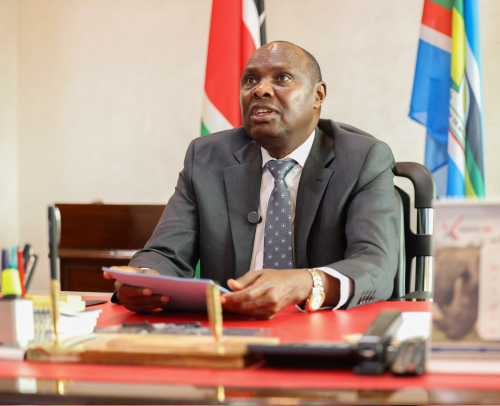
“As part of the ongoing efforts to re energize performance and re engineer service delivery across the Public Service,this morning,I held a virtual engagement with the leadership of the State Department for Water and Sanitation, bringing together the Principal Secretary, Board Chairpersons, Chief Executive Officers, and senior officers from national and county institutions across the sector.” the statement reads.
You Might Also Like


Koskei stated that water and sanitation services are critical to everyday life, affecting health, livelihoods and dignity, and said the sector must deliver consistent and reliable outcomes for citizens.
“Water and sanitation remain central to public health, economic productivity, and the dignity of our people. Every day, this sector determines whether households access clean water, whether schools provide safe sanitation, and whether communities are protected from waterborne diseases. This makes performance in this sector visible, immediate, and deeply human.” the statement reads.
Koskei pointed out several operational challenges that must be addressed urgently, including water losses, poor infrastructure maintenance and unreliable supply, saying these are issues within the control of sector institutions.
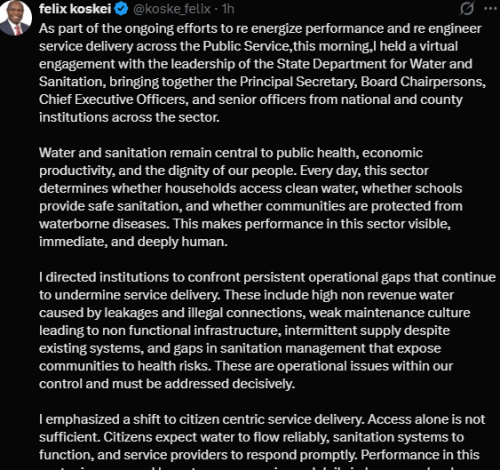
“I directed institutions to confront persistent operational gaps that continue to undermine service delivery. These include high non revenue water caused by leakages and illegal connections, weak maintenance culture leading to non functional infrastructure, intermittent supply despite existing systems, and gaps in sanitation management that expose communities to health risks. These are operational issues within our control and must be addressed decisively.” the statement reads.
He called for a shift towards services that focus on the daily experiences of citizens, noting that access alone is not enough if systems fail to deliver consistently.
“I emphasised a shift to citizen-centric service delivery. Access alone is not sufficient. Citizens expect water to flow reliably, sanitation systems to function, and service providers to respond promptly. Performance in this sector is measured by outcomes experienced daily in homes, schools, health facilities, and businesses,” the statement reads.

He also stressed the need for accountability in how resources are managed, linking better oversight to improved service delivery and reduced losses across the system.
“I also stressed integrity and prudent management of public resources. Reducing water losses, improving maintenance of existing infrastructure, strengthening enforcement, and ensuring accountability across institutions will translate investments into real improvements in service delivery.” the statement reads.
Koskei further highlighted the importance of coordination between national and county governments, saying a unified approach will speed up delivery and improve outcomes for citizens.
“Closer coordination between national and county actors remains critical. When the sector operates as one system and aligns programmes with the Government’s development agenda, we accelerate delivery and ensure reliable and sustainable services that improve the quality of life for households and communities across the country.” the statement reads.
Author
Latest News







Advertisement
More on News