Advertisement
Govt outlines plans for 2026 Kaptagat conservation programme
Thursday 18th June, 2026 10:53 PM|
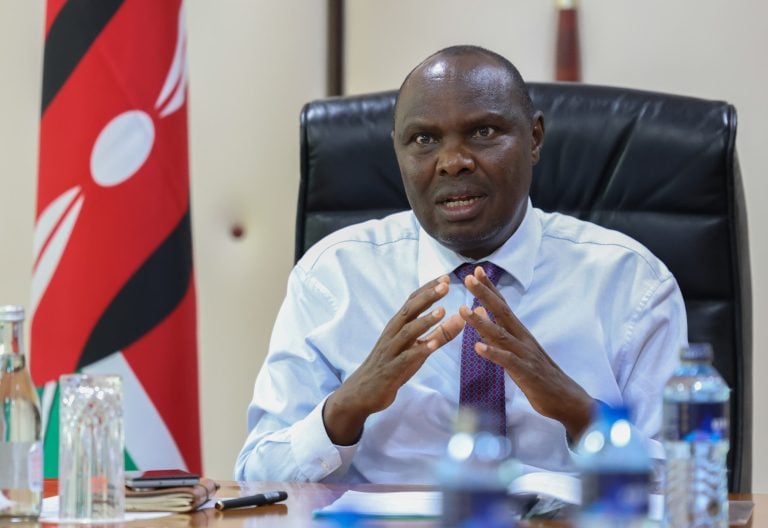
Preparations for the 2026 Kaptagat Integrated Conservation Programme (KICP) are underway, with government officials and stakeholders meeting to coordinate activities ahead of the annual conservation exercise scheduled for July 4 to July 11.
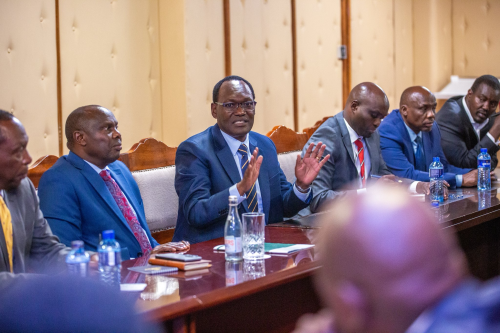
Head of Public Service Felix Koskei received a briefing on the programme during a meeting at Harambee House on June 18, 2026, attended by Elgeyo Marakwet Governor Wisley Rotich, principal secretaries, legislators, and leaders of state corporations.
The discussions focused on preparations for the 10th edition of the initiative and collaboration among agencies involved in its implementation.
Established in 2017, KICP is a community-driven conservation programme aimed at restoring the Kaptagat Forest ecosystem across Uasin Gishu and Elgeyo Marakwet counties. The programme has restored more than 3,000 hectares within the Kaptagat, Sabor, Penon, Kipkabus, and Kessup forest blocks and facilitated the planting of more than two million trees.
Ruto expected at main event
You Might Also Like
President William Ruto is expected to attend the main celebrations on July 11, 2026, at Kaptarkok Primary School in Keiyo South, Elgeyo Marakwet County. Organisers have also planned a corporate tree-growing exercise on July 10 as part of the conservation activities.lgey
Other events scheduled during the conservation week include the Kaptagat Cycling Challenge on July 4 and the Kaptagat Forest Marathon on July 11. Tree planting and ecosystem restoration activities will take place across several forest blocks, including Penon.
The programme has become an annual platform bringing together government agencies, conservation groups, local communities, and private sector partners to support restoration efforts within the Kaptagat ecosystem.
Linking conservation and livelihoods
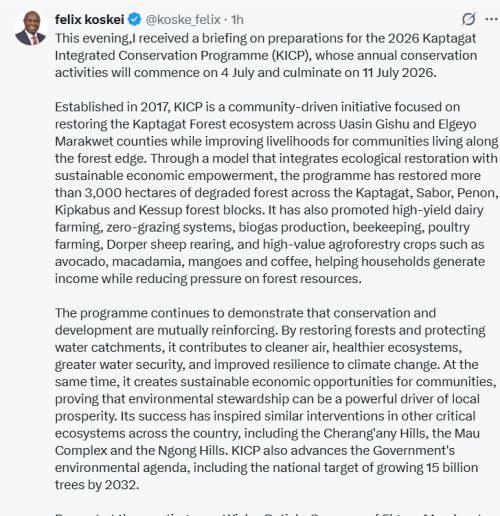
Apart from forest restoration, the programme incorporates livelihood initiatives targeting communities living around the forest. These include dairy farming, zero-grazing projects, biogas production, beekeeping, poultry farming, Dorper sheep rearing, and cultivation of high-value crops such as avocado, macadamia, mangoes, and coffee.
Officials say the programme aims to improve environmental conservation while supporting household incomes and reducing pressure on forest resources. The initiative also contributes to Kenya’s national tree-growing target and broader climate resilience efforts.
Treasury Principal Secretary Chris Kiptoo, who serves as the programme patron, said the initiative continues to demonstrate the connection between environmental restoration and community development.
“The restoration programme is already transforming households, showing how restoration meets impact,”
Additional interventions within the programme include controlled grazing through participatory licences, distribution of improved livestock breeds, and plans to fence sections of the ecosystem following consultations with local communities.
Kaptagat Forest is a key water catchment area serving Eldoret and neighbouring regions. Government officials say restoration efforts are intended to strengthen water security, protect biodiversity, and support sustainable land use practices within the ecosystem.
Author
Latest News





Advertisement
More on News