Advertisement
Chesongoch landslides spark urgent push to restore Cherangany ecosystem
Tuesday 19th May, 2026 11:55 PM|
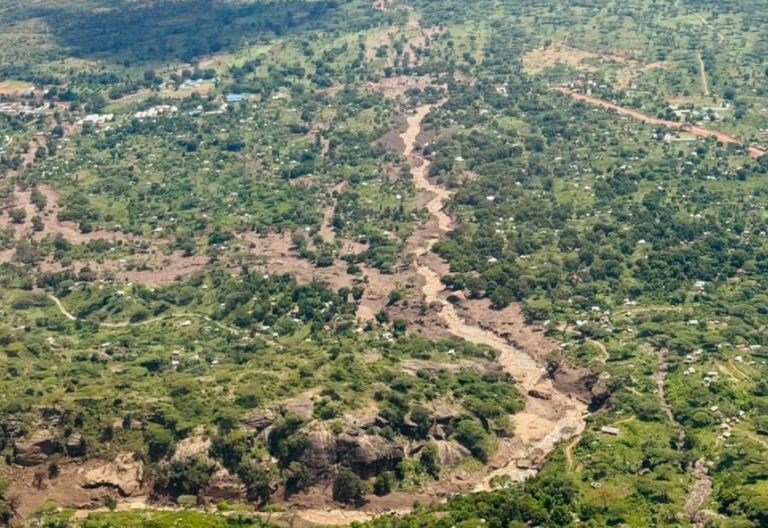
The deadly Chesongoch landslide that struck Elgeyo Marakwet on the night of October 31, 2025, has intensified calls for urgent environmental restoration in the Cherangany Hills, with Interior Cabinet Secretary Kipchumba Murkomen warning that continued ecosystem destruction is now fueling a cycle of deadly disasters in the Kerio Valley.
The tragedy, which killed several people and displaced families in Chesongoch, was triggered by heavy rains that caused massive mudslides and rockfalls in the region, an area increasingly vulnerable to environmental degradation and unstable soils linked to deforestation.
Speaking during a partners’ roundtable meeting, Murkomen described the disaster as a stark warning that environmental destruction had evolved into a national security threat.
“Mother Earth is sending a message of distress through the increasing landslides. We need to act to save the Cherangany Hills ecosystem and the people who depend on it,” Murkomen said, who serves as patron of the Cherangany Integrated Restoration and Sustainability for Heritage (CHERISH) programme.
You Might Also Like



He warned that the destruction of forests, wetlands and water catchment areas was not only undermining livelihoods but also worsening insecurity, displacement and economic vulnerability in affected communities.
“This is not just environmental degradation. It is the slow erosion of security, livelihoods and stability,” he said.
The government has since rolled out the CHERISH programme, a 10-year restoration initiative aligned with President William Ruto’s ambitious 15-billion-tree campaign aimed at reversing environmental degradation and strengthening climate resilience.
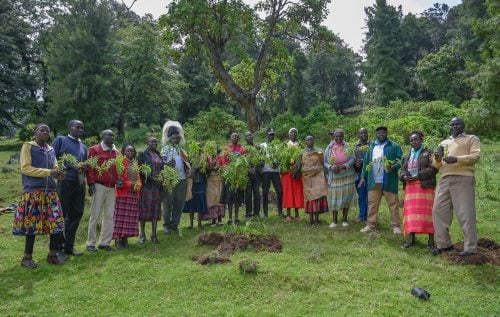
The programme targets the rehabilitation of more than 62,000 hectares of degraded escarpments, forests and riparian land within the Cherangany ecosystem, which stretches across four counties and serves as the source of more than 22 major rivers flowing into Lake Victoria and Lake Turkana.
Murkomen said the restoration effort would be largely community-driven, combining indigenous conservation knowledge with technical support from government agencies and development partners.
“The local community will run CHERISH. Indigenous knowledge is at the centre of this programme because restoration must be owned by the people who live here,” he said.
The Cherangany Hills form one of Kenya’s five major water towers and play a critical role in supporting agriculture, biodiversity, hydropower generation and water supply across large parts of the country.
Years of illegal logging, charcoal burning, encroachment and unsustainable land use, however, have left vast sections of the ecosystem exposed, increasing the frequency of floods, landslides and water shortages downstream.
Community conservation leader John Gilbert Chebet, who works within the Kapyego block of Cherangany in Marakwet East, said local restoration efforts were already beginning to yield positive results.
Chebet said residents working through the Community Forest Association (CFA) and Water Resources Users Association (WRUA) had restored more than 50 acres of degraded land over the past year through tree planting, fencing and catchment protection initiatives.
“We have worked together as the Community Forest Association and Water Resources Users Association. Water volumes have increased and even downstream communities are benefiting,” he said.
According to Chebet, environmental restoration has also started improving household incomes, with regenerated grasslands boosting livestock feed availability and increasing milk production.
Murkomen said the Chesongoch disaster highlighted the urgent need to restore degraded upstream ecosystems to prevent destructive flooding and landslides downstream.
“If we restore the upstream, we will stop the erosion, the mudslides and the rockslides that are now too frequent,” he said.
Beyond reforestation, the CHERISH programme also includes plans for wetland restoration, regulated grazing systems, agroforestry projects and eco-tourism initiatives aimed at creating sustainable livelihoods for local communities while protecting fragile ecosystems.
Murkomen appealed to development partners, conservation groups and investors to support the programme, saying the restoration of the Cherangany ecosystem was critical not only for environmental recovery but also for national economic stability and long-term peace.
“Let us ensure no family in Chesongoch or anywhere in this valley has to suffer this again. We must restore this ecosystem for life, for security and for prosperity,” he said.
Author
Francis Muli
Francis Muli is an editor and passionate digital journalist with extensive experience in crafting compelling stories across various platforms. His major focus is in business, politics and current affairs. He has a keen eye for detail and a commitment to uncovering the truth. He has contributed to leading publications across the country. When not chasing stories, you can find Muli exploring new technologies, attending local events, or reading fiction. Connect with Francis Muli on X @FMuliKE and Facebook (Francis Muli) to follow his latest stories and insights.
View all posts by Francis MuliLatest News







Advertisement
More on News