Govt launches drainage upgrade and relocation plan to curb Nairobi floods
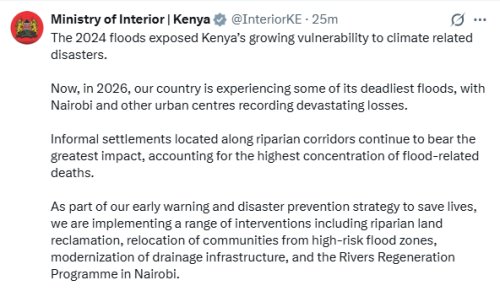
By Ndiritu Wanjiru, May 13, 2026The Ministry of Interior and National Administration has warned that Kenya is once again grappling with a worsening climate emergency after the devastating floods of 2024 exposed the country’s rising vulnerability to extreme weather events. In 2026, the situation has escalated further, with some of the deadliest floods recorded in recent years affecting major urban centres, including Nairobi.
In a statement on their X handle on Wednesday, May 13, 2026, the Ministry of Interior and National Administration has noted that, as part of disaster prevention, it has initiated intervention measures that include riparian land reclamation and drainage enhancement within Kenya’s capital city.
“As part of our early warning and disaster prevention strategy to save lives, we are implementing a range of interventions including riparian land reclamation, relocation of communities from high-risk flood zones, modernisation of drainage infrastructure, and the Rivers Regeneration Programme in Nairobi,” the ministry statement read in part.
The Ministry has further noted that the climate change disasters in Kenya have been on the rise, highlighting the need for coordinated action that is both immediate and preventive, according to the Ministry.
One part of this strategy is the implementation of a multipronged disaster risk reduction programme to save lives and make the country less vulnerable in the future.
Clam digging in riparian areas is a key component of these activities, focusing on settlements and structures developed on waterways that are vulnerable to flooding during heavy rainfall. The government has confirmed it is working towards the relocation of communities living in high-risk flood zones to reduce the chances of future displacement and loss of life when it rains.
Furthermore, the upgrading of drainage facilities in urban areas is given special attention for providing better management of stormwater and mitigating flood intensity. This involves the improvement and enlargement of existing drainage systems that have been overwhelmed by the rapid urbanisation and the variability of the rain.
The Rivers Regeneration Programme in Nairobi is a central initiative of the overall plan aimed at rehabilitating Nairobi’s river ecosystems, removing encroachments and improving natural water flow systems. The programme is expected to contribute critically to long-term flood mitigation and also enhance the environmental health of the city.
Effects of the March 2026 floods
In a press release on Tuesday, March 10, 2026, the National Police Service (NPS) confirmed the number of deaths following the recent deadly floods witnessed in various parts of the country, including Nairobi city.
The police announced that the fatalities stand at forty-nine, with 2,624 families having been displaced from their homes.
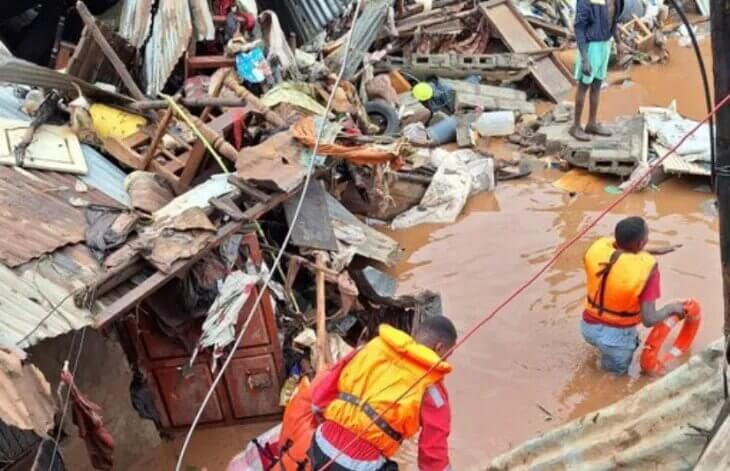
“The National Police Service (NPS) wishes to provide an update to the public following the heavy rains and flooding affecting various parts of the country, particularly in Nairobi,” the NPS said.
The new statement indicated that the forty-nine people who succumbed to the floods are from various parts of the country affected by the deadly floods.