Advertisement
Explainer: Understanding newly approved 2026 senior school fee structure
Sunday 08th February, 2026 06:54 AM|

The Ministry of Education has unveiled a new fee structure for all public senior schools in Kenya, a move that will significantly reshape how parents plan for secondary education from 2026.
The revised framework, which took effect on January 5, 2026, applies to learners under both the Competency-Based Curriculum (CBC) and the outgoing 8-4-4 system.
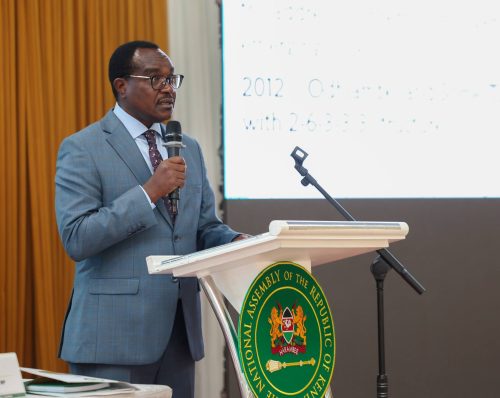
The changes were formalised through a Gazette notice dated February 6, 2026, signed by Education Cabinet Secretary Julius Ogamba.
You Might Also Like


According to the ministry, the new structure is anchored in the Basic Education Act, 2013 and aims to standardise fees nationwide, enhance transparency, and curb arbitrary charges by schools.
Day Senior School and boarding
One of the most striking changes is the complete removal of fees for learners in public day senior schools. Under the new structure, parents will no longer pay any amount for day scholars.
Instead, the government will cover a total of Ksh22,244 per student annually. This includes Ksh4,144 for tuition, Ksh1,500 for co-curricular activities, Ksh2,000 for medical care and insurance, and Ksh200 for SMASSE.
Additional funding caters for administration, learning and teaching materials, electricity, water and conservancy, and physical education at Ksh9,400, alongside Ksh5,000 for maintenance and improvement.
The move effectively makes education at public day senior schools free, easing the financial burden on households and strengthening access to secondary education.
For boarding senior schools, the cost will be shared between parents and the government, with fees varying depending on the school’s previously approved maximum rates.
In schools that were earlier allowed to charge up to Ksh53,554, parents will continue paying the same amount, while the government adds Ksh22,244. This brings the total cost per student to Ksh75,798.
Meanwhile, schools that previously capped fees at Ksh40,535 will maintain that parental contribution, topped up by the same government allocation of Ksh22,244, resulting in a total of Ksh62,779 per student.
The boarding fees cater for areas such as boarding equipment and stores, maintenance and improvement, administration, and extracurricular activities. However, parents are not required to pay for teaching and learning materials, medical and insurance, or SMASSE, as these are fully covered by the government.
Depending on the category of school, boarding-related costs fully met by parents range between Ksh25,385 and Ksh30,385.
Special needs schools
Learners in special needs senior schools will receive enhanced government support under the new structure. Parents will pay Ksh12,790 per student, while the government contributes Ksh57,974, bringing the total annual cost to Ksh70,764.
Parental contributions are limited to boarding equipment and stores at Ksh10,790 and Ksh2,000 for maintenance and improvement.
The rest of the funding goes towards specialised teaching materials, top-up allowances, and facilities tailored for learners with disabilities.
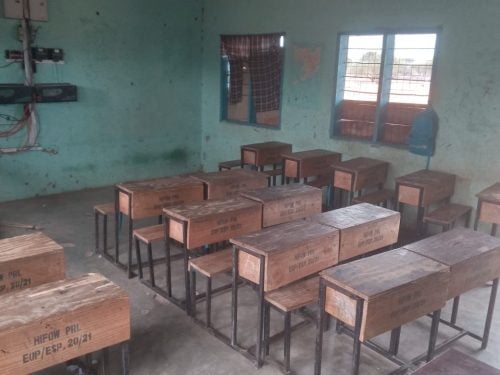
CS Ogamba has issued a firm warning to school administrators against imposing extra charges outside the approved framework, adding that no public school is allowed to levy tuition fees or introduce additional charges beyond those stipulated.
“No public school shall charge tuition fees or any other extra fees or levies contrary to the fee structure stipulated hereinabove,” he said.
Schools charging below the approved ceilings have been encouraged to maintain their current rates.
Additionally, all fees are to be paid across the three school terms in a 50:30:20 ratio to ease pressure on parents.
The framework brings much-needed clarity, predictability, and fairness, while any future changes will require approval by the Cabinet Secretary and publication in the Gazette.
Author
Latest News


Advertisement
More on News