Advertisement
Establish kidney transplant programme, medics urge State
Monday 14th March, 2022 12:00 AM|
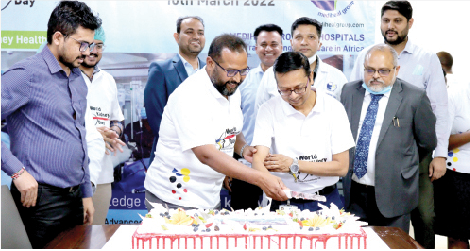
Kidney disease specialists are pushing for a national renal transplant programme. The specialists said patients who undergo a kidney transplant have a 90 per cent survival rate compared to those on dialysis.
Speaking at Kenyatta National Hospital, the medics warned of a sharp increase in lifestyle diseases in Kenya.
They are asking Kenyans to shun foods with a high concentration of salt, fat, sugar and carbohydrates to ward off lifestyle diseases.
“Rising kidney complications is a major concern to us specialists now and more worrying as we try to deal with Covid-19.
Most of the patients we are seeing have a history of lifestyle abuse,” Dr Srinivas Murthy, a consultant nephrology and transplant physician at Mediheal Group of hospitals said.
Due to the increase in cases, they called for more efforts to improve access to kidney health services.
The immediate former chairman of the Kenya Renal Association Dr Ahamed Twahir said that in Kenya, there are five million kidney patients with mild to moderate, severe and advanced cases.
Exit strategy
Describing it as a silent killer, he called on people to go for early screening by checking their blood pressure and blood sugar levels.
“If detected early, it can reduce progression to dialysis, which is almost a life sentence. However, the best way to manage a patient with dialysis is to do a kidney transplant,” he said.
East Africa Kidney Institute (EAKI) director Prof Peter Mungai called for the establishment of renal transplant programmes across the country’s health facilities to reduce the social and economic burden patients on dialysis shoulder.
He called on the National Hospital Insurance Fund (NHIF) to support kidney transplant programmes.
“In 2010 we started saying our patients need to have an exit strategy from dialysis. We started asking NHIF do something about it. We are happy to say that a few years later, NHIF started paying for transplants before dialysis,” he noted.
He said that although dialysis is good, and currently the most preferred, the chance of dying is high. “A lot of patients die along the dialysis process, and transplantation is a very good exit strategy from this,” Prof. Mungai stated.
NHIF Board chairman Lewis Nguyai said for the transplant programme to succeed, Kenyans who have a higher income, especially those who earn over Sh100,000 per month, should voluntarily give 1.7 per cent of their income to support it.
“We are urging those who have, to put in 1.7 per cent from their income, and this are those that earn over Sh100,000, to help those who cannot afford,” he said revealing that NHIF is working towards transplants to reduce the number of patients on dialysis.
“This will include post-transplant treatment,” he added.
Healthy diet
Mediheal Hospitals revealed that transplant facilities will soon be available at its Parklands branch.
“Currently we have patients from DRC, Burundi, Somalia, Tanzania, Ethiopia and Uganda. It’s been our constant endeavour that everything we do revolves around patient centricity and better clinical outcomes,” said Ashish Raman, the hospital’s Nairobi Cluster vice President.
Speaking on the spike in lifestyle diseases, Dr. Murthy noted that unchecked urbanisation is turning out to be one of the contributors and leading to compromised quality of life due to poverty in slums.
“It’s important that people access clean water, exercise, eat a healthy diet, control the use of tobacco and live in a conducive environment in order to maintain good kidney health,” he said.
Key driver
A study published in the International Journal of Environmental Research and Public Health in September 2020 cites urbanisation as an emerging key driver of Non-Communicable Diseases in many low and middle-income countries.
It linked higher prevalence of Type 2 diabetes and higher levels of blood pressure and cholesterol to urbanisation.
The study investigated the prevalence of elevated blood pressure, elevated blood glucose and their determinants in a rapidly urbanising area in Kenya.
Elsewhere, the Pharmaceutical Society of Kenya (PSK) warned that overuse of pain killers could lead to kidney problems.
“It’s an important step to consult a pharmacist prior to using these and other medications to help avoid harm,” Louis Machogu, the PSK President, said at the sidelines of Pharma Supply Chain meeting at the Strathmore Business School.He said kidney failure can result from drug interactions, use of a particular drug, the use of imaging dyes, contrast dyes among other factors.
“Pharmaceutical Care includes taking a detailed history on the patient prior to giving medication recommendations,” he added.
Author
George.Kebaso
View all posts by George.KebasoLatest News








Advertisement
More on News