Advertisement
Education gets lion’s share in revised Budget
Thursday 08th June, 2023 07:40 AM|
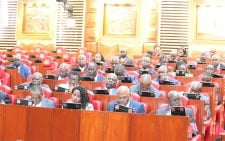
The Teachers Service Commission, Parliament, State House and the State departments of Housing, Education, Irrigation, Water and Medical Services are the major winners in the revised budgetary estimates presented by the Finance and Planning Committee of the National Assembly that is chaired by Kiharu MP Ndindi Nyoro.
Collectively, the Budget and Appropriation Committee has reallocated Sh743.2 billion to various State departments in the estimates for the 2023/ 2024 financial year, which starts on July 1.
In total, the entire Budget could cross the Sh3.68 trillion mark, the highest in the country’s history, considering that MPs want to increase both recurrent and development spending. This, according to some sources, could eventually rise to Sh4.4 trillion if redemptions and appropriations in aid are factored in.
The housing department has had its budget allocation increased from Sh1.29 billion by a staggering Sh28.4 billion to bring the total allocation to Sh29.7 billion.
Hot topic
Housing is key to the Kenya Kwanza administration and the increased allocation is part of the programme which has already been launched by President William Ruto, and which has sparked controversy over a proposal to get formal sector workers deducted three per cent of their salary to finance the Housing Fund.
MPs have also increased their own allocation by Sh2.2 billion, from Sh39 billion in the initial estimates to Sh41.2 billion in the revised one to be tabled in the National Assembly next week. The money is partly for the completion of the Bunge Towers, whose construction has stalled for years.
In the report tabled by committee chairman Ndindi Nyoro, the State department for roads has had its allocation ramped up by Sh166.8 billion from Sh82.8 billion. In total, the department will now be allocated Sh249.7 billion in the next financial year.
MPs have also reviewed allocations to the State department for Medical Services to Sh116.6 billion, up from Sh63 billion, an increment of Sh53.6 billion. The huge increment has been made necessary by the planned employment of 44,400 community health workers in the next financial year.
Piped water
The State department of Water and Sanitation will also be given Sh55.9 billion, up from Sh5.5 billion which had been proposed in the earlier Budget estimates. This signals the government’s intention to increase investments in irrigation and supply of piped water to homes.
The Teachers Service Commission (TSC) has had its allocation increased by Sh1.2 billion to bring its total provision to Sh323.8 billion, one of the highest in the Budget. The increment has been necessitated by the planned employment of 35,000 teachers in the next financial year.
In the education sector, MPs have made key adjustments with Technical Vocational Education and Training (TVETS) gaining an extra Sh7.6 billion on top of initially proposed Sh20.7 billion. Part of this money is expected to boost enrolment and start small industries.
The Ruto administration is giving emphasis to TVETs, and it has signaled its intention to construct training centres in all the 290 constituencies in addition to digital hubs in every TVET.
Further, MPs have increased allocation to the Department of Basic Education by Sh20 billion, from the initial proposal of Sh127.6 billion. In total, the department will now receive Sh147.8 billion.
Primary education will be allocated an extra Sh11 billion — to cater for among others, the new Grade Seven classes — while secondary education will be given Sh8.9 billion more.
Allocations to the department for Higher Education and Research will now go up to Sh128.6 billion from the Sh125 billion proposed earlier, while university education has its allocation enhanced by Sh3.5 billion to stand at Sh127.5 billion.
Another area that the Kenya Kwanza administration has put emphasis on, is in irrigation, which has had its allocation increased by a whopping Sh23 billion.
Internet connectivity
Over the next five years, the government plans to construct more than 100 dams to support irrigation farming and reduce dependence on rain-fed agriculture. The increased allocation signals its intention to start this journey in the next financial year.
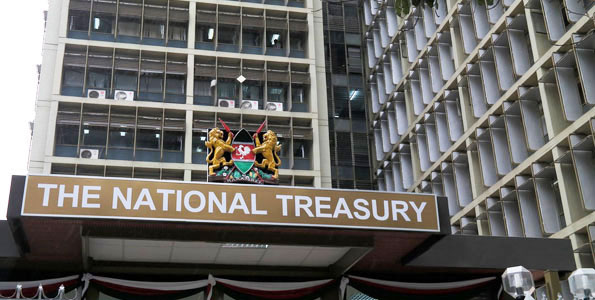
The National Treasury will be another major gainer in the Budget because its allocation will be increased by Sh53.8 billion to stand at Sh130.5 billion once MPs approve the spending plan that the Treasury CS will read in the National Assembly next Thursday.
State House, meanwhile, will receive additional Sh928.7 million to bring its total allocation to Sh7.3 billion.
And to finance the planned expansion of Internet connectivity by laying 100 kilometers of fibre cable across the country, MPs have increased the allocation to the Department for Information Communication Technology by Sh16.3 billion. From a modest Sh3.8 billion, the allocation has been boosted to Sh20.2 billion.
The State Department for Immigration and Citizen Services has been allocated an additional Sh2.7 billion and this has been necessitated by the planned introduction of the Universal Personal Identifier (UPI) number that citizens will be expected to use for life.
Finance and Planning Committee has also asked the National Treasury to speed up the review of pending bills and, in collaboration with the Auditor-General and the Controller of Budget, develop an enforceable framework to halt the accumulation of pending bills. Treasury has been challenged to report to the National Assembly by September 30.
MPs gave the Treasury up to September 30 to spearhead the process of reviewing projects across all ministries, departments and agencies (MDAs) with a view to identifying duplication of functions. Treasury will be expected to submit its report to the National Assembly.
The lawmakers disclosed that before submission of the 2024 Budget Policy Statement (BPS), the National Treasury will review the viability of projects based on the amount of resources allocated with a view to eliminating projects with limited or no resources.
“This will ensure that each project is adequately funded and can be implemented within the stipulated time frame,” reads the report.
Further, the committee gave the State Department for Medical Services a three months ultimatum to provide a clear implementation framework for the hiring of the 44,444 community health workers.
Author
Anthony.Mwangi
View all posts by Anthony.MwangiLatest News



Advertisement
More on News