East Africa’s biggest hunger test meets its smallest aid budget in a decade – report
By Aloys Michael, July 3, 2026East Africa is heading into one of its most precarious food security periods in recent years just as international humanitarian funding is collapsing, raising difficult questions about whether governments across the region can fill a widening financial gap before millions are pushed deeper into hunger.
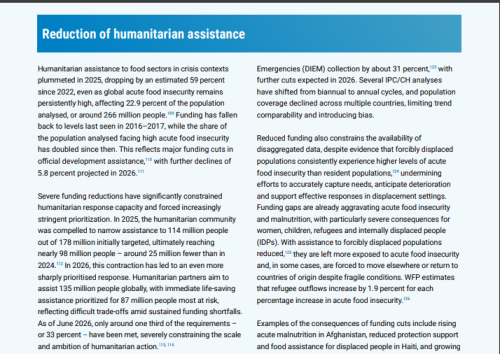
A new Food and Agriculture Organisation (FAO) and World Food Programme (WFP) Hunger Hotspots report says that while famine risks are escalating in neighbouring South Sudan and Somalia and conflict continues to devastate eastern Democratic Republic of the Congo (DRC), the agencies warn that humanitarian assistance is moving in the opposite direction. Food-sector funding has fallen by an estimated 59 per cent since 2022, returning to levels last seen in 2016–2017, despite the global number of people facing acute food insecurity continuing to rise.
The report describes the trend as a dangerous mismatch between rising humanitarian needs and shrinking resources.
“Funding gaps are already aggravating acute food insecurity and malnutrition,” it warns, adding that cuts to assessments, monitoring and humanitarian operations are weakening the ability to identify emerging crises and respond before they spiral out of control.
For East Africa, the implications are particularly severe. South Sudan remains one of the world’s highest-concern hunger hotspots, with millions projected to face severe food insecurity and several counties still at credible risk of famine if conflict intensifies. Somalia has also rejoined the highest-risk category after warnings that parts of the country could slide towards famine amid conflict, drought and soaring food prices.
At the same time, violence in eastern DRC continues to uproot communities and disrupt agricultural production across one of Africa’s most volatile regions. Yet as humanitarian needs increase, agencies say they are being forced to do more with substantially less.
According to the report, humanitarian organisations initially planned to assist 178 million people globally in 2025 but ultimately reached only about 98 million because of funding shortages. As of June 2026, only about one-third of the funding required for this year’s humanitarian response had been secured, forcing aid agencies to prioritise only the most life-threatening emergencies.
Hunger bane
The funding squeeze raises pressing questions for Kenya, which has long served as the humanitarian hub for the Horn of Africa. Dadaab and Kakuma refugee camps continue to host hundreds of thousands of refugees, largely from Somalia and South Sudan, while Nairobi remains a regional base for UN agencies and international humanitarian organisations. Any reduction in donor funding inevitably affects food assistance, nutrition programmes and refugee support, placing greater pressure on both humanitarian agencies and the Kenyan government.
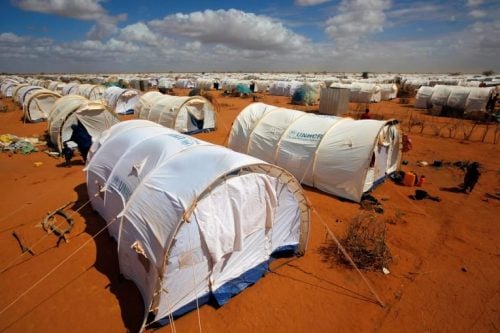
Although the report does not provide country-specific funding figures for Kenya, it highlights broader reductions affecting some of the world’s largest food crises, including Somalia and South Sudan, where humanitarian operations have become increasingly difficult to sustain.
It also warns that reduced funding is forcing cuts in food security surveys and early warning systems, weakening governments’ ability to anticipate crises before they become humanitarian disasters.
The challenge extends beyond Kenya. Uganda continues to shoulder one of Africa’s largest refugee populations, largely from South Sudan and the DRC, while Tanzania remains an important transit and trade corridor for regional food supplies.
As neighbouring countries experience worsening hunger, governments across the EAC may increasingly find themselves financing emergency responses that were previously supported by international donors.
The report argues that humanitarian financing alone cannot solve the region’s food crises, many of which are rooted in conflict, climate shocks and economic instability.
Instead, it calls for stronger collaboration between humanitarian and development partners, greater investment in resilience-building and earlier interventions before communities reach catastrophic levels of hunger.
“Modern famines are almost always human-made, foreseeable and preventable,” the report states, stressing that delayed action ultimately costs both more lives and more money.