Advertisement
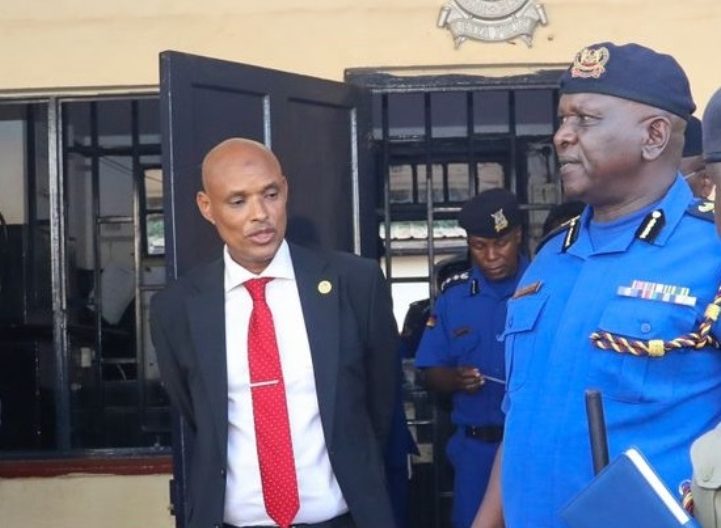
DIG Lagat set to resume office
Saturday 12th July, 2025 01:00 AM|

The imminent return to office of Deputy Inspector General (DIG) of Police Eliud Kipkoech Lagat has sparked a wave of legal, moral, and ethical concerns, even as no evidence has yet directly linked him to the high-profile murder of teacher-turned-blogger Albert Ojwang.
Lagat, who had stepped aside to allow investigations into the killing, now faces a delicate crossroads: resuming his powerful law enforcement role while still under the shadow of an unresolved case.
His situation has ignited public debate over the integrity of the police service, the presumption of innocence, and the expectations of public accountability.
“The DIG Lagat no longer holds the moral authority to be in office, as the public can no longer trust him. He should take the moral responsibility to honourably leave office because when you are serving in such a high position, people expect you to be beyond reproach like Ceaser’s wife,” says former National Police Service Commission (NPSC) chairman Johnstone Kavuludi.
You Might Also Like


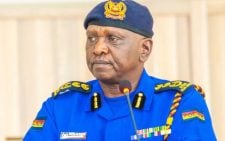
Kavuludi, the first holder of the NPSC chairmanship after the promulgation of the 2010 Constitution, says although there is nothing linking Lagat to Ojwang’s death, there is a public perception that the teacher-cum-blogger may have been “tortured to death” on orders from him.
Secondly, Kavuludi says the fact that Ojwang’s mistake was treated as a criminal matter after Lagat’s complaint instead of being handled as a normal civil matter has dented his image, reputation and integrity.
“Leave alone the public having lost confidence in him, even his own colleagues in National Police Service (NPS) would always view him as a man whose complaint, actions and direction led to the death of Ojwang and subsequent indictment of two of his junior officers,” Kavuludi observes.
Sources at Vigilance House, police headquarters where Lagat’s office is located, intimated to People Daily that he is scheduled to resume office on Monday, July 14, 2025.
The source says senior influential personalities at State House have all along been determined to ensure the return of Lagat once the pressure over Ojwang’ subsides.
But several senior officers at Vigilance who spoke on condition of anonymity believe the DIG’s return would only help in eroding the little public confidence left in the service.
“The service is at a crossroads… trying to balance between pleasing the political class and members of the public. Already, there is a trust deficit which we are trying to rebuild, and his return will only worsen things, and it gives the impression that suspects being killed by the police is no big ordeal,” a senior officer in the rank of Senior Assistant Inspector General of Police (SAIG) observed.
Already, six people, including Central Police Station OCS Samson Talaam and Police Constable James Mukhwana and four civilians …..Peter Kimani, John Ngige Gitau, Gin Ammitou Abwao, and Brian Mwaniki Njue are facing murder charges over Ojwang’s death.
Ojwang was arrested on June 7, 2025, in Homa Bay over alleged defamatory posts targeting DIG Lagat.
He was briefly held at Mawego Police Station before being transferred to Central Police Station in Nairobi later that night, where he allegedly died in custody.
A post-mortem conducted two days later attributed his death to a combination of head injuries from blunt force trauma, neck compression, and extensive bruising across his body.
After weeks of protests and pressure from civil society and the opposition, Lagat stepped aside to enable transparent and independent investigations into the death of the blogger-cum-teacher, promising to return to office once cleared.
“In the good and conscious thought of my role and responsibilities as Deputy Inspector General of Kenya Police Service, and in view of the ongoing investigations on the unfortunate incident of the death of Mr. Albert Ojwang, I have today opted to step aside …pending completion of investigations,” Lagat said in a statement.
Caesar’s wife
He then handed over his duties to his then-Principal Assistant, Patrick Tito.
In Kenya’s criminal justice system, an individual can only be charged once investigations produce sufficient evidence to meet the prosecutorial threshold set by the Office of the Director of Public Prosecutions (ODPP).
Until such a threshold is met, any suspect—no matter how senior—is presumed innocent.
However, the case has taken on a symbolic weight that goes beyond legal standards. Critics argue that resuming such a high office during an ongoing probe—however inconclusive—risks undermining public confidence in both the police service and the justice system.
According to lawyer Willis Otieno, as the ODPP continues its evaluation of the case, the spotlight remains fixed on DIG Lagat—not as a convict or even an accused—but as a symbol of the complex interplay between justice, perception, and public service.
“He has been on a paid vacation at taxpayers’ expense. During that time, he retained his rank, salary, access to State House, and police escort. That is not justice. Lagat didn’t just fail in duty–he orchestrated a killing and a cover-up,” Otieno argues.
“He should be arrested, charged, and prosecuted like any other murder suspect,” he says.
With no evidence so far linking Lagat to the murder of Ojwang and his resumption of duty imminent, a number of legal, moral and ethical concerns have arisen.
In Kenya, the process of a criminal case involves investigations, arraignment and then trial, where the accused person can either be convicted or acquitted.
A person can only be charged after the probe has revealed evidence that meets the evidentiary threshold to warrant approval of the proposed charges by the Office of the Director of Public Prosecutions (ODPP).
Equally, all suspects are presumed innocent until proven guilty by the prosecution beyond a reasonable doubt.
Other than the fact that he had filed a defamation complaint against the deceased, the Independent Policing Oversight Authority (IPOA) and the Internal Affairs Unit (IAU) have not revealed anything linking him to the murder. Lawyers say generally, acquittals in criminal cases, for example, do not necessarily equate to innocence and automatically guarantee reinstatement to a previous job, especially if the employer initiated separate disciplinary proceedings based on the same facts.
In the case of Lagat, the probe has not linked him to the murder, which begs the question: should he resume his duties at the Vigilance House?
“Julius Caesar divorced his wife, Pompeia, in 62 BC, not because he believed she was guilty, but because he felt the mere suspicion of wrongdoing was enough to warrant separation. He said, “My wife ought not even be under suspicion,” says Machakos Deputy Governor Francis Mwangangi.
Mwangangi says those in positions of authority, like DIG Lagat, should be held to a very high standard of moral conduct, accountability and integrity and must avoid even the appearance of impropriety.
In his own words in October 2024, DIG Lagat wrote, “In today’s dynamic world, the security of our communities hinges not only on the strength of our institutions but also on the trust between the police and public.”
With his return to office likely, pundits say this is likely to further erode this trust.
“The doctrine of command responsibility is essentially to encourage commanders and superiors to effectively prevent the perpetration of crimes by their juniors,” says Hussein Khalid, CEO of human rights group VOCAL Africa.
“There was no justice in stepping aside. It’s not accountability. Eliud Lagat must be arrested and charged with murder,” Khalid insists.
He further observed: “What we saw was torture and murder inside a police cell. If this country respects the rule of law, Lagat must face it in court.”
The probe was also to establish if the junior officers were acting at DIG Lagat’s behest.
Though there exists the superior-subordinate relationship between the junior officers accused and DIG Lagat, the probe has not revealed that Lagat knew or had reason to know that his juniors had planned to commit the offence, or failed to take the necessary and reasonable measures to prevent the criminal act.
Legally, senior officers can be criminally responsible for crimes committed by officers under their direct command and control, especially where they knew or should have known about such crimes, or failed to take all necessary and reasonable measures to prevent the commission of such crimes.
However, even if such orders were given, the junior officers can still be charged. Under the National Police Service Act, police officers can be criminally or otherwise liable for following unlawful orders.
Section 51 of the NPS Act clearly states that a police officer should only obey lawful commands in respect of the execution of the duties of office from his superiors in the Service.
It further states that no action can be taken against any officer who fails to comply with an unlawful order.
“Even if he was involved, detectives from IPOA and IAU have inadvertently or deliberately not linked him, either directly or indirectly,” a senior lawyer who declined to be named due to the sensitivity of the matter told People Daily.
The lawyer says when an offence is committed, every person who actually does the act which constitutes the offence; every person who does any act for the purpose of enabling another person to commit the offence; every person who aids or abets another person in committing the offence; and who counsels or procures any other person to commit the offence, are all deemed to have taken part in committing the offence.
“Equally, when people form a common intention to commit an unlawful act and in the process an offence is committed, each of them will be deemed to have committed the offence,” says the lawyer.
Author
Print Reporter
View all posts by Print ReporterLatest News





Advertisement
More on News