Advertisement
Conservation group plans to transfer 13 elephants from UK to Kenya
Wednesday 07th July, 2021 12:00 AM|
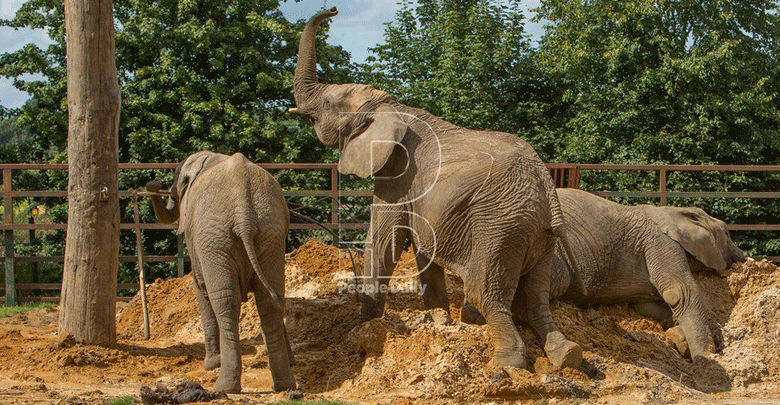
An animal charity is planning to fly 13 elephants to Africa to rewild them in what it claims is a “world first”.
The breeding herd would be flown to southern Kenya from the Howletts Wild Animal Park in Kent in bespoke crates.
The park is run by animal conservation group The Aspinall Foundation, which employs the prime minister’s wife, Carrie Johnson.
Foundation chairman Damian Aspinall said: “It’s unquestionably the biggest task we have undertaken.
This is an incredibly exciting project and a genuine world-first. As with any conservation project of this magnitude, there are obviously big risks, but we consider them well worth it to get these magnificent elephants back into the wild where they belong.
He added: “If this is successful, I would love to see elephants held in captivity all over the world be rewilded too.”
The project includes flying the elephants – who weigh 25 tonnes – more than 7,000km across the world to return them to their ancestral homeland.
It’s the first time a herd of elephants has ever been re-wilded anywhere in the world, and includes three calves along with an entire breeding herd of elephants.
The elephants are currently housed in an eight-acre enclosure at Howletts Wild Animal Park in Kent; the Howlett’s elephant herd is one of the most successful breeding herds of elephants in Europe, and include two inter-related families and while they are receiving the best care possible, The Aspinall Foundation believes that these animals belong in the wild, and that no elephants belong in captivity.
The herd lives in an enclosure at the park near Canterbury.
Aspinall said: “As happy as they are in Kent, they don’t belong here.”
He told BBC Radio Kent: “Elephants don’t do well in captivity. Hardly any are born. Females live to about half their natural life.
“Over half the elephants in captivity are obese. They suffer foot problems, skin problems, mental distress.”
Aspinall admitted the project, which he said was a “world first”, had “big risks”.
But he said: “We are trying to do everything to mitigate discomfort for these animals.”
The herd, which weighs 25 tonnes, will travel in bespoke crates with veterinary support, he explained.
“Once they have got used to walking in and out of the crates, the hope is to get them get them onto lorries, and onto a direct flight to Africa.”
Aspinall said it could take up to a year after arriving before the animals are properly settled.
Two sites in Kenya are under consideration for the project.
“I think we would have done something good in the world if we can achieve this,” said Aspinall.
The Aspinall Foundation are working with the Sheldrick Wildlife Trust, who have been at the forefront of African elephant conservation for more than four decades and the Kenya Wildlife Service. —BBC
Author
Latest News







Advertisement
More on News