Advertisement
Communications Workers Union petitions Parliament to protect Safaricom workers amid govt stake sale
Tuesday 20th January, 2026 05:15 PM|

The Communication Workers Union of Kenya (COWU-K) has formally petitioned the National Assembly to secure labour protections for Safaricom employees as the government moves forward with plans to reduce its shareholding in the telecommunications giant.
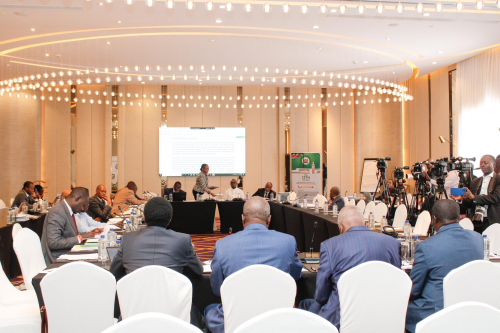
In a statement posted on its Facebook account on Tuesday, January 20, 2026, Parliament said the union appeared before a joint sitting of the Departmental Committee on Finance and National Planning and the Select Committee on Public Debt and Privatisation to present its concerns on Sessional Paper No. 3 of 2025, which outlines the government’s partial divestiture plan.
“The union, which represents workers across the communications sector, warned that the ownership shift must not be allowed to erode the labour rights of the company’s workforce. Central to their argument is a persistent representation gap within Safaricom’s corporate structure,” Parliament stated.
Representation gap
The union officials argued that there is a persistent representation gap within Safaricom’s corporate structure, informing lawmakers that while Safaricom PLC employs approximately 5,041 unionisable permanent staff, the management has historically resisted formal recognition.
You Might Also Like



They claimed that the company has utilised internal staff councils to bypass traditional trade unions, triggering a wave of employee anxiety regarding future stability.
“There is significant concern among Safaricom’s 6,462 employees regarding job security and lack of representation as the government reduces its stake to 20%,” the officials noted.
Policy disparity
The union also drew attention to a perceived disparity between the buyer of the government’s stake, Vodacom, global policies and its operations in Kenya.
“COWU-K pointed out that while Vodacom respects union rights in South Africa and Tanzania, a similar environment has not been fostered locally,” the statement read.
To mitigate these risks, COWU-K urged lawmakers to embed labour guarantees in the Sessional Paper, including mandatory recognition agreements and collective bargaining arrangements.
Specifically, the union called for Vodacom to sign a recognition agreement within three months and a Collective Bargaining Agreement (CBA) within six months of the transaction.
The union also demanded legal safeguards to ensure no employee is targeted for union participation during or after the divestiture, and a formal adoption of Vodacom Group’s Human Rights Policy within Safaricom’s operational manuals.
“They also rooted for a formal adoption of the Vodacom Group Human Rights Policy within Safaricom’s internal operational manuals,” the statement concluded.
Author
Cy Muganda
View all posts by Cy MugandaLatest News







Advertisement
More on News