Advertisement
Blow to govt as court declares sections of Computer Misuse and Cybercrimes Amendment Act unconstitutional
Thursday 02nd July, 2026 12:03 PM|

A Milimani High Court has declared sections of the Computer Misuse and Cybercrime (Amendment) Act that empower the National Computer Coordination Committee to block websites illegal.
Judge Patricia Nyaundi on Thursday, July 2, 2026, declared section 6(1)(j)(a) and section 27(1)(b) of the Computer Misuse and Cybercrimes Amendment Act unconstitutional.
“Section 6 (1) (j) (a) and section 27 (1) (b) of the Computer Misuse and Cybercrimes Amendment Act 2025 are declared unconstitutional; each party shall bear its own costs,” Judge Nyaundi ruled.
Judge Nyaundi has stated that the amendment confers upon an administrative body a sweeping authority to impose prior restraint, the most severe form of censorship, in the absence of procedural safeguards and evidential thresholds.
You Might Also Like



Notably, she has stated that the government failed in meeting the threshold set by Article 24 of the Constitution for limiting rights, ruling that the section restricts the freedoms guaranteed under Articles 32, 33 and 34, yet it does so in a manner that falls [outside] the strict confines of Article 24.
The court has ruled that one of the sections struck out is criminalising communication, stating that it was likely to cause another person to commit suicide, citing that it failed to meet the constitutional threshold standards for criminal law.
Justice Nyaundi noted that the website-blocking provision unlawfully restricted constitutional freedoms by granting sweeping censorship powers to an administrative body without judicial oversight.
“The amendment confers upon an administrative body a sweeping authority to impose prior restraint, the most severe form of censorship, in the absence of procedural safeguards and evidential thresholds,” Judge Nyaundi ruled.
In addition, she stated that the provision violated the constitutional principle of legality by failing to provide the clarity, precision and foreseeability required of criminal offences.
However, the court has upheld the enactment process by the National Assembly after finding out that the process satisfied the constitutional requirement of public participation.
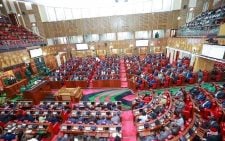
Judge Nyaundi avers that the August House did not act unconstitutionally by excluding the Senate from the legislative process, finding the amendments did not concern county governments.
Author
Zipporah Ngwatu
A journalist by profession and a lawyer by mindset, I report with precision, clarity, and integrity. My work focuses on telling stories as they are - grounded in fact, supported by evidence, and written in a language everyone can understand, free of jargon. I cover stories others often avoid, guided by a commitment to truth. If I didn’t report it, it didn’t happen! You can reach me at: [email protected]
View all posts by Zipporah NgwatuLatest News






Advertisement
More on News