Barrack Muluka: People’s will must guide Ebola quarantine decision
By Sharon Atieno, June 4, 2026Democratic National Alliances, Secretary General Barrack Muluka has argued that Kenya’s sovereignty is rooted in the country’s history of self-determination, insisting that government decisions on sensitive issues such as the proposed Ebola quarantine facility must reflect the will of citizens.
Speaking during an interview on a local station on Thursday, June 04, 2026, Muluka said Kenya’s right to self-rule was hard-won through decades of struggle against colonial domination and must never be diluted by state decisions that exclude public consent.
“When we talk about sovereignty, our self-determination that came to us in June 1963, we secured the right to self-determination,” he said. “We rule ourselves and make decisions about our own country within our policy frameworks.”
He added that this right is deeply anchored in Kenya’s constitutional order and historical struggle against colonial rule.
“Our sovereignty, where the Constitution of Kenya says it rests with the people. The people are supreme,” he stated. “When the people say they do not want an Ebola quarantine facility for Americans in our country, the government must listen to the will of the people.”
Duale defends Ebola facility amid growing backlash
Aden Duale has, however, defended the proposed US-backed Ebola quarantine facility in Laikipia, dismissing opposition protests as politically driven and warning against what he termed interference with national health security.
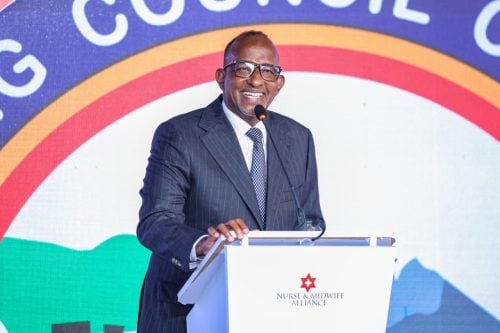
Appearing in a television interview on Wednesday night, June 3, 2026, Duale said the government will not allow demonstrations or political pressure to derail its Ebola preparedness strategy, insisting that the facility is a critical containment measure.
“This is not about President Ruto. Those are paid protesters,” Duale said, accusing critics of politicising a serious public health matter.
He maintained that Kenya is facing a heightened Ebola threat from neighbouring countries and said containment requires swift, decisive action rather than prolonged debate.
“The leadership of Laikipia must be very responsible because they do not know what we are dealing with,” he warned.
Duale further stressed that the current Ebola strain has no vaccine, justifying the need for a highly secure isolation facility.
“This strain has no vaccine,” he said, adding that Kenya must act on expert guidance rather than public pressure.
The CS also pointed to past global health responses, including Covid-19 containment measures, arguing that emergency health decisions often require limited consultation to protect lives.
Sovereignty vs state action
Despite the government’s position, Muluka maintained that sovereignty cannot be separated from public participation, warning that ignoring citizens risks eroding trust in state institutions.
He insisted that even urgent health measures must be anchored in transparency and public confidence, especially where communities feel excluded from decision-making.
Muluka framed current governance debates within Kenya’s liberation history, arguing that independence was not only political but also a guarantee of decision-making power for citizens.