Advertisement
Auditor General urges embezzlers to invest their loot locally
Thursday 23rd February, 2023 07:00 AM|
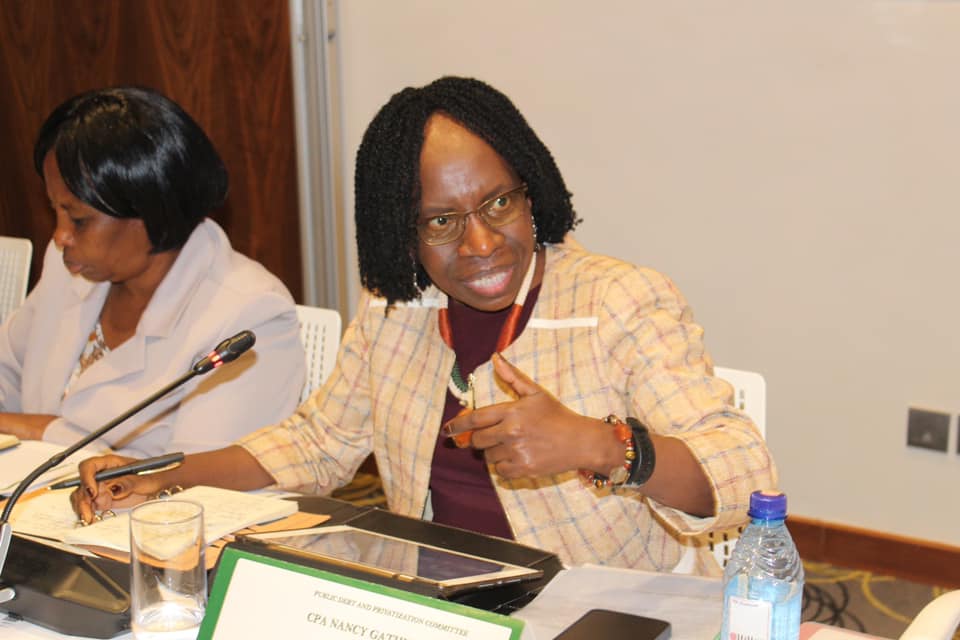
Kenyans embezzling public funds should be encouraged to invest their loot in the country instead of stashing it abroad, Auditor-General Nancy Gathungu has said.
BBC reported that Gathungu said illicit financial flows, if allowed to be invested locally, could lead to more development in countries.
“Perhaps we should start a campaign that says if you steal it and you are able to get away with it, invest it in the country where it is stolen. If you steal it from Kenyans, invest it in Kenya,” Gathungu said in a meeting held in Nairobi, according to BBC. “It sounds very strange, but perhaps we could then see development taking place in our country and then later we ask the questions, where did you get it from?” she added.
She said that is an approach being considered by auditor-generals in the region.
Mixed reactions
Her remarks elicited mixed reactions, with some saying the auditor-general was being pragmatic, while others described it as a surrender in efforts to streamline use of public funds. A 2020 World Bank estimated that up to $2.6bn (£2.1bn) is stashed in offshore bank accounts by Kenya’s ruling elite who enriched themselves from public funds.
The World Bank said in the report that their sample comprising the 22 most aid-dependent countries in the world, in terms of WB aid, it documents that disbursements of aid coincide, in the same quarter, with significant increases in the value of bank deposits in havens.
Specifically, in a quarter where a country receives aid equivalent to one percent of GDP, its deposits in havens increase by 3.4 percent relative to a country receiving no aid, by contrast, there is no increase in deposits held in non-havens. “While other interpretations are possible, these findings are suggestive of aid
diversion to private accounts in havens,” read the report.
Wealth accumulation
While the World Bank results document cleanly and robustly that aid disbursements are associated with wealth accumulation in offshore accounts, the macro nature of its deposit information represented an important limitation.
Since they did not observe who stores wealth in havens in periods with large aid disbursements, the World Bank cannot directly identify the economic mechanism underlying this correlation. “By contrast, the poorest segments in developing countries often do not even have a domestic bank account and it is entirely implausible that they should control the money flows to havens,” stated the report.
While it is more difficult to identify the precise mechanism by which aid inflows cause capital outflows to havens, the report stated that aid capture by ruling politicians and bureaucrats is a salient and plausible one.
Author
Latest News





Advertisement
More on News