Advertisement
Activists demand Ruto’s apology over protest atrocities before victims’ compensation
Saturday 09th August, 2025 04:00 AM|

Human rights defenders have called on President William Ruto to issue a public apology for the atrocities committed against protesters before the newly established State Intervention and Compensation framework begins its work of serving justice to the victims.
President Ruto on August 8, 2025, appointed Professor Makau Mutua to lead the newly established compensation initiative for victims of public protests in the country since 2017.
In a presidential proclamation, Ruto announced the creation of the initiative and named Mutua as Principal Coordinator. The program is set to run for 120 days, aimed at addressing the grievances of those affected by protests.
“The Executive Office of the President shall discharge this mandate in collaboration with the Office of the Attorney General, Ministry of Interior & National Administration, the National Treasury, and other relevant State agencies. The tenure of this special co-ordination framework shall be 120 days from the date hereof (August 8, 2025),” the proclamation stated.

You Might Also Like

However, lawyer Gitobu Imanyara criticised the framework, calling it a diversion from more pressing international scrutiny, especially regarding the US Congress bill to investigate human rights violations during the Gen Z protests.
Imanyara questioned why the Attorney General, whose office is constitutionally mandated and funded for such matters, had not been tasked with overseeing the program.
“What is the role of the Attorney General, which has the constitutional mandate and the budget for such issues? The concentration of powers at the State House undermines the principle of dispersing functions to independent offices and risks a return to the days of an imperial presidency,” Imanyara said.
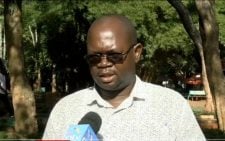
On his part, Fredrick Ojiro, Head of Rapid Response at Vocal Africa, emphasised that President Ruto must first acknowledge the atrocities committed against innocent protestors and issue a public apology to the affected individuals before any compensation efforts can proceed.
“You cannot compensate when you do not accept the guilt. President Ruto must first acknowledge that their rights were violated,” Ojiro said.
“An apology must be directed to the individual families who lost their sons at the hands of the government.”
Ojiro also criticised Ruto for not consulting with key stakeholders—such as religious groups, civil society organisations, the media, youth groups, and lawyers representing victims’ families—when setting up the compensation framework.
He also expressed concerns over the appointment of Mutua, arguing that his close ties with the political establishment could compromise the integrity of the initiative.
“Mutua does not represent human rights, nor does he reflect the grievances of the victims. This process must be people-centred and sensitive to the real concerns. His appointment signals a continuation of the status quo, preserving the interests of the political regime,” Ojiro added.
Suba Churchill, Executive Director of the Kenya National Civil Society Centre, echoed Ojiro’s views, stressing that while the government has established a compensation mechanism, it must first take responsibility for the atrocities committed.
He argued that true justice can only be achieved after acknowledging the truth.
“We have yet to see a clear acknowledgement of the responsibility the government holds for the violent actions against peaceful Kenyans exercising their right to protest,” Churchill said.
Churchill expressed that, while Mutua is well-versed in human rights law, the government should have appointed an independent figure, one who is not currently in public service, to lead the initiative.
“One might argue that such a team ought to be independent. But given that the task is assigned by the office of the president, having insiders might be helpful in navigating the political landscape,” Churchill added.
Elsewhere, Machakos deputy governor Francis Mwangangi told President Ruto to first make an unreserved apology to Kenyans as a sign of goodwill and commitment, as well as assure the whole world that such atrocities would never be repeated.
Mwangangi said the killings, abductions, enforced disappearances and dispersal of peaceful protesters had painted Kenya negatively on the international stage.
“But we expect the process to be transparency, inclusive and should address the recurring issues of human rights, social justice, rule of law and democracy. Once the task finalises its report, it should publish the list of all those to be compensated so that Kenyans can know who have been included and those left out,” Mwangangi said.
In his announcement, President Ruto justified the initiative as a necessary step for accountability and reparations for victims of protests and riots since 2017. He stressed that the initiative would also provide redress for civilians and security personnel who lost their lives or were harmed during public protests and riots.
“Since the promulgation of the Constitution in 2010, the expanded democratic space has afforded Kenyans the liberty to express themselves through demonstrations and picketing, some of which regrettably have turned violent, resulting in bodily harm and loss of life,” Ruto said.
The Mutua-led initiative, set to conclude on December 6, 2025, will focus on addressing protest-related violence from the 2017 and 2022 general elections and the ongoing Gen Z protests that began in 2024.
In March 2023, when President Ruto signed a memorandum of understanding (MOU) with Former Prime Minister Raila Odinga, the right to protest was underscored as a critical issue in the 10-point agenda.
“The derogation of rights to peaceful assembly and protests remains one of the most shameful realities on the excesses of Kenya’s law and order responses since independence,” the MOU read.
Both leaders agreed on the need to compensate the victims of the protests.
Amnesty International reported that 50 people were killed during the August 8, 2017, election protests, with many others suffering life-altering injuries due to police brutality. Protesters, mostly opposition supporters, were shot, beaten, or killed by teargas.
While the protests following the 2022 elections were deemed generally peaceful, demonstrations organised by the Azimio La Umoja coalition in March–July 2023 against the high cost of living led to 31 deaths and hundreds of injuries, with excessive police force being used.
Reports from Human Rights Watch indicated that at least 31 people were killed during the five months of protest, and hundreds sustained injuries from police shootings, beatings, and other forms of violence.
During the Gen Z protests that began in June 2024, 63 people were killed, with many more injured, while 87 individuals were abducted.
In 2025, the Kenya National Commission on Human Rights (KNCHR) reported 38 deaths and 130 injuries during protests related to Saba Saba Day and the Gen Z movement.
Author
Samuel Kariuki
View all posts by Samuel KariukiLatest News
Advertisement
More on News