Advertisement
App helps pastoralists weather adverse climate
Wednesday 08th January, 2020 12:00 AM|
Clifford Akumu
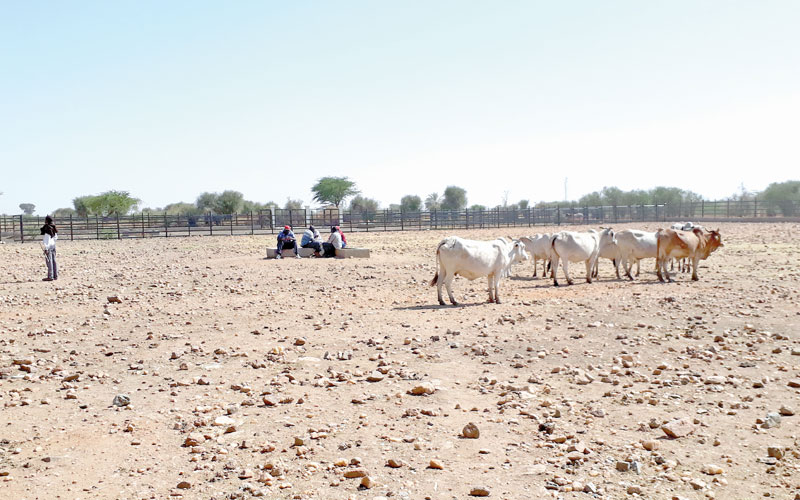
Growing up as a young man in North Horr region, Marsabit county, Racho Godana vividly remembers the effects of drought on his parents’ herd.
“I recall one time when my parents had to sell their weak cows for a lower price as the healthier ones, which had survived the drought, crossed to Isiolo county in search of pasture and water,” recalls Godana.
With livestock being many of the family’s source of wealth, including his father’s, this affected his education and that of his age mates.
You Might Also Like

It is against this backdrop that Technical Centre for Agricultural and Rural Co-operation (CTA), in partnership with Amfratech Ltd, a technology and consulting service provider, and aWhere Inc., a US-based data collection and analysis company for Agricultural Intelligence, have set-up the Climate, Livestock and Markets (CLI-MARK) project.
CTA contracted Amfratech to roll out a blended weather information system that incorporates a mobile Application (MyAnga), a weather web dashboard and SMS service to disseminate actionable weather information to pastoralists in Northern Kenya.
MyAnga will enable herders from the arid and semi-arid regions of Samburu, Borana, Isiolo, Rendile and Marsabit regions access much needed weather information and advisory services to adapt to effects of climate change.
Godana and his business partner Frankline Agolla, both of who worked for an international telecommunications firm based in Nairobi, registered Amfratech Ltd in 2013 with a vision to provide consulting services in ICT, including developing mobile applications such as MyAnga to solve social challenges.
Agolla says the innovation will help build the capability of pastoralists’ communities, who often depend on unreliable methods of finding pasture (such as scouting and word of mouth) and indigenous knowledge.
“This product will give livestock farmers the much needed information to act and decide through early warning hence having a direct impact on their livestock herds and livelihoods,” he says.
It will also enable them cushion their livestock from adverse shocks of climate change by selling the herds, buying livestock, investing in livestock insurance or purchasing hay in good time, Agolla explains.
How it works
The app, available on Google Store, alerts farmers on daily weather observations for climate regions at the ward level and provide actionable advisories making it precise compared to scouting or word of mouth.
The platform also offers a subscription-based SMS service to cater for the pastoralists without smartphones. In this case, users sign up for the service and receive weekly weather information for their wards. All they need to do is send their ward name to 22904 and follow instructions to complete self-registration. To date, the service has over 220 registered users who receive information every Monday.
“They are then able to receive weekly weather advisory updates in English, Kiswahili and local languages,” Agolla adds. The information is also synchronised into local languages such as Rendile, Borana, Gabbra, Burji and Orma among others to ease information flow among locals.
“Pastoralists move from one place to another, and with this app, they will have better information for decision making since the weather information is at ward level. Even those in Nairobi can download it and advise their people back in the village,” he adds.
The app and weather dashboard collects information from their agri-weather platform partner, aWhere, which uses a customised Ag Intelligence Platform (AIP) system that compiles agricultural information every 9 X 9 kilometres grid across the planet. It provides, humidity, temperature, wind and solar forecasts and observed data for the pastoralists.
Currently, the pilot version is free, but Agolla explains “we are in the process of coming up with a sustainable business model while also considering that this is a region where most of the population are not economically stable”.
The innovators are also planning to include weather indices, and increasing forecast period.
Author
People Reporter
View all posts by People ReporterLatest News







Advertisement
More on Lifestyle