Advertisement
Why Somaliland is a red line for African sovereignty
Tuesday 06th January, 2026 06:39 AM|
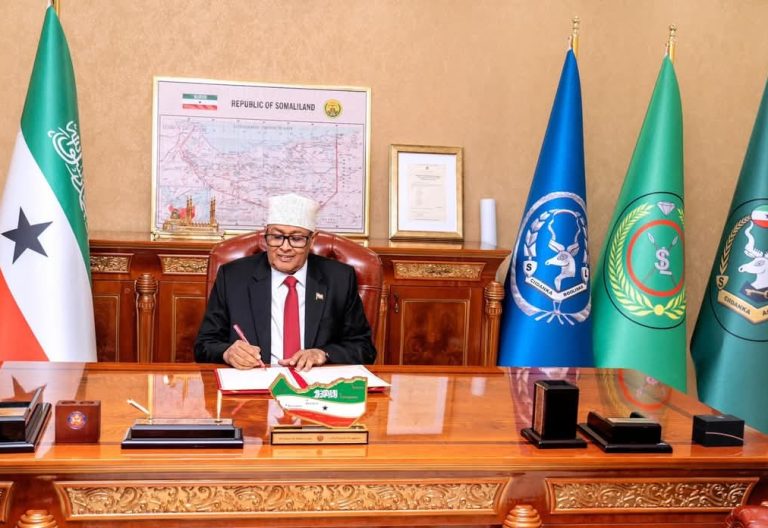
The question of Somaliland is not a side issue in African politics. It is a red line. It goes to the heart of how Africa protects itself from chaos, fragmentation and renewed foreign interference.
To write about Somaliland is to write about Somalia itself, a country scarred by war, famine and proxy politics, yet still recognised, without dispute, as a single sovereign state by the United Nations, the African Union, the European Union, Australia and most of the world.
That recognition is not symbolic. It is one of the few legal anchors holding a traumatised country together, even as the AU and the Intergovernmental Authority on Development (IGAD) push back on recognition, citing territorial integrity and peace.
Somaliland declared independence in 1991 as Somalia collapsed into civil war. Since then, it has built institutions, held elections and maintained relative stability. These facts are real and deserve respect. But stability alone does not create a state.
You Might Also Like

Sovereignty is not a reward for competence. It is a collective legal decision made cautiously, because the alternative is disorder.
That is why, for more than three decades, no UN member state has formally recognised Somaliland. The African Union has been explicit and consistent that Somaliland remains part of Somalia.
Numbers matter. Somalia has more than 18 million people. Somaliland accounts for roughly 4 to 4.5 million. Recognition of secession would not only affect Hargeisa; it would reshape political thinking across the Horn of Africa. Ethiopia has more than 80 ethnic groups and several regions with long-running grievances.
Kenya has Somali-inhabited areas with unresolved historical claims. Djibouti balances on delicate clan politics. Once one border is peeled open, others begin to itch. This is why the AU, born from the trauma of colonial partition, treats inherited borders as untouchable even when they are imperfect.
Vested interests
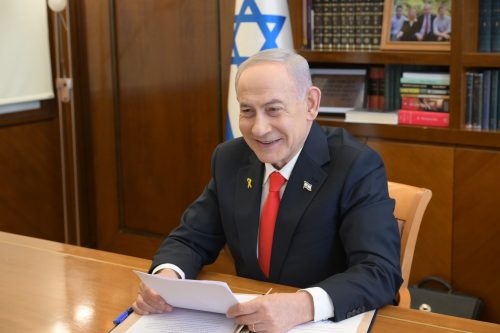
Israel’s interest is strategic rather than symbolic. Somaliland’s location along the Gulf of Aden offers proximity to the Bab al-Mandeb chokepoint, one of the world’s most sensitive shipping lanes.
In an era of Red Sea insecurity, that location brings surveillance, intelligence and logistical advantages. But strategy does not exist in isolation.
By gaining leverage, recognising a breakaway region undermines international law and deepens perceptions that rules apply selectively.
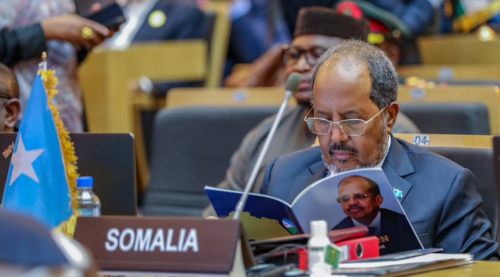
There is also an emotional truth often missed. For many Somalis, Somaliland’s secession is not an abstract legal debate. It feels like another loss layered on top of famine, displacement and decades of violence.
To see a powerful state like Israel recognise a breakaway region during Somalia’s fragile recovery feels less like support for self-determination and more like abandonment.
International law tries to balance self-determination with territorial integrity. In Africa, that balance has been conservative because the cost of failure is written in blood.
Eritrea’s independence followed a 30-year war and still led to renewed conflict. South Sudan’s independence, celebrated in 2011, was followed by a civil war that killed hundreds of thousands. These are not distant lessons.
Somalia today is struggling, but it is not static. Federal institutions exist. Elections are held. Debt relief has begun. International financial institutions have re-engaged. Fragmentation now would not protect Somaliland’s success; it would harden divisions and complicate reconciliation indefinitely.
Somalia’s unity is fragile and incomplete. But it is recognised, and that recognition remains one of the country’s last stabilising pillars.
To pull at it now, without a Somali-led process, risks turning a hard recovery into another chapter of loss.
Author
Latest News





Advertisement
More on Insights