Why Ruto’s ODM gamble faces test as factions clash ahead of NDC
By Aloys Michael, March 19, 2026President William Ruto’s political outreach to sections of the Orange Democratic Movement (ODM) is facing a significant test, as internal divisions within the party deepen just eight days before a crucial National Delegates Convention (NDC).
What initially appeared to be a strategic realignment following the March 7, 2025, cooperation pact with the late Raila Odinga is increasingly exposing the risks of relying on a fragmented political partner.
The emerging factional battles within ODM are now casting doubt on the durability of that alliance and its value to Ruto’s 2027 re-election strategy, with his critics committed to making him a one-term president.
The divisions have come into sharp focus with the announcement of parallel conventions scheduled for March 27, 2026. Vihiga Senator Godfrey Osotsi confirmed that the Linda Mwananchi faction will hold a separate people’s dialogue convention, effectively rejecting the legitimacy of the official NDC.
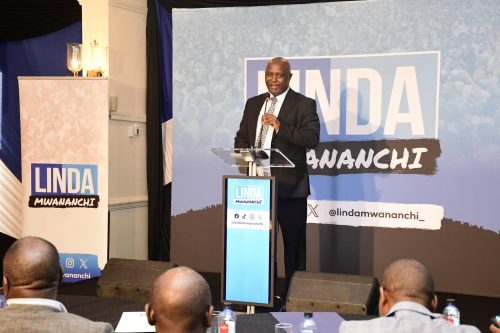
“On 27 March, we are holding an ODM people’s dialogue convention, which is going to run parallel to the NDC organised by the Linda Ground group,” Osotsi said.
He further declared a boycott of the main convention, framing it as illegitimate and already subject to legal challenge.
“Linda Mwananchi, we have made a decision that we are not going to participate in the National Delegates Convention that has been convened and organised by the Linda Ground Group because that NDC is illegal and undemocratic, and some of the ODM members have gone to court to question the illegitimacy and also illegality of that NDC,” he said.
Osotsi also claimed the faction controls 35 counties, underscoring its confidence in commanding grassroots support and raising questions about which side truly represents the party’s base.
At the same time, ideological tensions are compounding procedural disputes. Nairobi Senator Edwin Sifuna has sharply criticised a 10-point agenda linked to the ODM-Ruto cooperation framework, arguing it prioritises political messaging over accountability.
“The report is a shameful charade designed to deceive Kenyans into believing progress has been made where none exists,” Sifuna said.
Which way, ODM?
This critique reflects a broader concern within ODM that the cooperation pact has drifted from governance reforms into early campaign positioning, intensifying mistrust among factions.
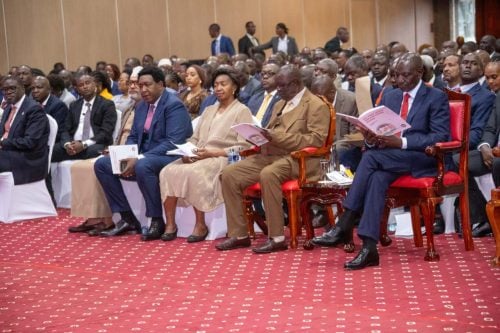
Even as these divisions widen, Ruto has continued to engage a section of ODM leaders aligned with Siaya Senator Oburu Odinga, who currently leads the party. This faction is pushing for a structured pre-election arrangement that includes the Deputy President position, key government roles, and regional zoning ahead of the 2027 polls.

However, the United Democratic Alliance (UDA) has shown reluctance to concede such significant power-sharing demands, creating a fundamental tension as ODM factions seek tangible political returns versus a ruling party wary of diluting its own base.
The rise of the Linda Mwananchi faction adds another layer of complexity. Positioned against the broad-based government approach, the group appears to be gaining traction in ODM strongholds such as Gusii and parts of Nyanza. Its growing influence signals resistance at the grassroots level to closer ties with Ruto’s administration.
This evolving dynamic exposes why Ruto’s ODM strategy is inherently risky. First, a divided ODM cannot reliably deliver a unified voting bloc, weakening its value as a political partner.
Second, disputes over the legitimacy of the NDC could produce parallel leadership claims, complicating any agreements reached. Third, growing anti-Ruto sentiment within sections of ODM risks eroding whatever support the alliance was meant to secure.

Finally, internal resistance within UDA limits how far Ruto can go in accommodating ODM demands without alienating his own supporters.
“As a party of ODM, we are ready to go into negotiations with other formations in the country, the like-minded,” Oburu said during the rally. “I know there are a few of them, but we are starting negotiations with our current partners in the broad-based government, which is UDA. And my party has given me authority to start negotiations,” Oburu said.
The timing of the fallout is also critical. With just days to the NDC, the party’s internal contest is no longer a contained dispute but a public power struggle with national implications. Rather than consolidating a broader coalition, the ODM engagement is exposing competing interests that may prove difficult to reconcile.
Ultimately, Ruto’s outreach to ODM was designed to neutralise opposition and broaden his political base ahead of 2027 as they strategise to make him a one-term president.
Instead, it now risks entangling him in a fractured party whose internal conflicts could spill over into the national arena.
If the divisions persist beyond the NDC, the President may find that his would-be ally becomes an unpredictable and potentially counterproductive force in his re-election bid.