Advertisement
Why Nairobi’s BRT deal might collapse after Trump’s aid cuts
Monday 24th November, 2025 06:11 PM|

Kenya’s dream of a modern Bus Rapid Transit (BRT) network has been thrown into fresh uncertainty after US President Donald Trump scrapped a Ksh7.4 billion agreement that was expected to underpin key components of the capital’s public transport overhaul.
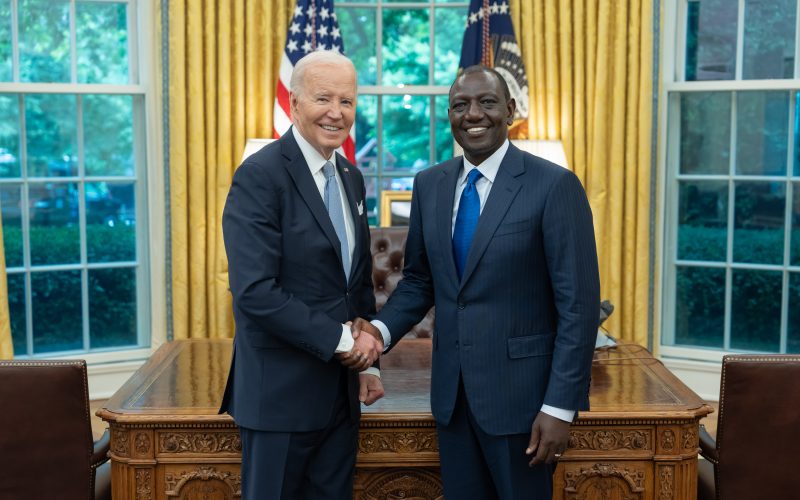
The deal, signed during President William Ruto’s 2023 visit to New York and activated in May 2024, was one of the flagship outcomes of his engagement with then US President Joe Biden. It promised Ksh5.8 billion in American support through the Millennium Challenge Corporation (MCC) Threshold Program, alongside a Kenyan contribution of Ksh1.56 billion.
But Treasury disclosures now confirm that Washington has issued formal notice terminating the programme, marking one of the largest casualties of Trump’s sweeping rollback of foreign aid and development partnerships.
The MCC package was designed to run until mid-2027 and unlock reforms in urban planning, land use, pedestrian and cycling infrastructure, gender-inclusive public transport, and most critically, the acquisition of climate-friendly buses for Nairobi’s emerging BRT corridors.
You Might Also Like
At the time of signing, Treasury Cabinet Secretary Njuguna Ndung’u described the deal as a breakthrough that would strengthen institutions and deliver long-lasting benefits for Nairobi residents. Now those ambitions appear increasingly uncertain.
Trump’s aid retreat and its ripple effects
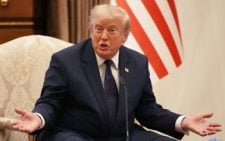
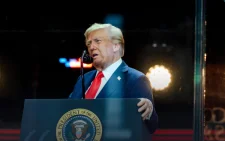
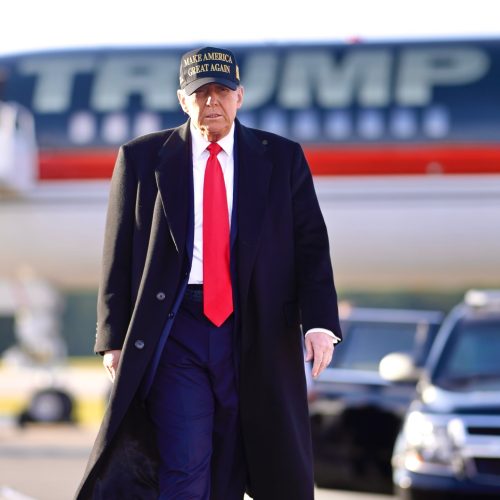
Since returning to the White House in January 2025, Trump has moved aggressively to dismantle Biden-era development programmes. His administration has already initiated plans to eliminate more than 90 percent of USAID contracts and slash around Ksh7.8 trillion in global assistance.
Kenya has been among the hardest hit, with cancelled American contracts now exceeding Ksh108 billion. The termination of the BRT agreement fits into a broader recalibration of US priorities under Trump’s “America First” doctrine, which has shifted focus away from foreign development spending.
This approach has been evident across several fronts. Trump has questioned the value of US military involvement in Kenya and Somalia, arguing that America should not “police the far reaches of Kenya and Somalia” while facing what he called an invasion from within. His remarks raised concerns about the future of military support, including intelligence and counter-terrorism cooperation centred at Manda Bay in Lamu.
Similarly, trade relations appear to be shifting toward a more transactional approach. Although Kenya was reportedly spared from sweeping tariff hikes and discussions around a possible one-year extension of the African Growth and Opportunity Act (AGOA) have been mentioned, these developments have not been officially confirmed.
They nonetheless highlight signals that Washington may be reassessing long-standing engagements. Against this backdrop, the potential collapse of the MCC deal suggests that development financing-particularly for infrastructure-may no longer be assured.
What the cancellation means for the BRT rollout
The Ksh7.4 billion MCC contribution was expected to partially fund Line 2 of Nairobi’s five-line BRT network, the Simba corridor connecting Rongai, Lang’ata, the CBD, Ruiru, Thika, and Kenol. The line was planned to include dedicated lanes along Thika Road, 10 intermediate stations, and park-and-ride hubs.
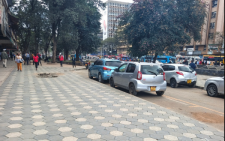
Construction delays and payment backlogs have already slowed progress. Without the MCC funding, officials fear the financial gap could widen, further stalling timelines for a network that was intended to ease congestion, improve air quality, and reduce reliance on ageing matatu fleets.
A recent National Treasury report also reveals that the government was already lagging in the implementation of the BRT programme due to financial and policy constraints. According to the report, the Nairobi Metropolitan Area Transport Authority (NaMATA) has yet to finalise key procedures required for effective execution, including the development and review of BRT designs and broader transport integration plans.
The report further shows that unresolved pending bills owed to contractors have led to the suspension of works on BRT Line 2, preventing the project from meeting its original targets.
Other BRT lines remain dependent on international partners:
- Line 3 will run from Tala and Njiru through Dandora and the CBD to Ngong, with 120 electric buses.
- Line 4 has African Development Bank support and connects Donholm to Karen and Kikuyu.
- Line 5 relies on Korean Exim Bank financing for the Ksh7.6 billion Outer Ring Road corridor.
- Line 1 will operate from Limuru to Imara Daima via the Nairobi Expressway.
Last year, the government secured KSh7.6 billion through a loan from the Korean Export-Import Bank to support the construction of BRT Line 5. The 10.5-kilometre corridor, running from the Eastern Bypass to the Thika Superhighway, will include 13 stations, three river bridges, two overpass bridges, pedestrian footbridges, street lighting, landscaping, improved drainage, and advanced traffic management systems.
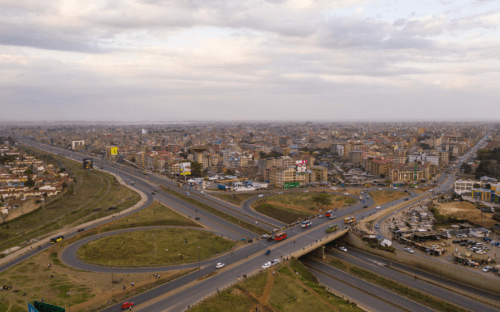
Collectively, the network was expected to feature modern stations, CCTV enforcement, EV-charging depots, footbridges, and integrated ticketing. The termination now places additional pressure on Kenya to mobilise alternative financing to keep the plans alive.
The Treasury report suggests that extended discussions with development partners following shifts in U.S. foreign assistance policy have contributed to the slow progress, creating uncertainty around timelines and funding commitments.
The cancellation comes just as President Ruto continues to publicly support Trump’s positions on key global issues. On Monday, during a joint press conference with Malaysian Prime Minister Anwar Ibrahim, Ruto backed Trump’s intervention in Sudan, calling the crisis a humanitarian catastrophe requiring urgent international action.
Ruto also reiterated Africa’s demand for permanent seats on the UN Security Council, framing Kenya as a proactive partner in global governance.
However, Trump’s inward-looking foreign policy has repeatedly shown that political goodwill may not translate into sustained financial or security commitments. While Kenya has benefited from selective exemptions, such as tariff relief, development funding has not been spared.
A warning sign for Kenya’s urban ambitions
For Nairobi, the collapse of the MCC arrangement is more than a budgetary setback. It jeopardises a flagship initiative meant to redefine urban mobility in a city grappling with worsening congestion and pollution. The recent completion of the Business Management Centre at the Kasarani Depot offers a glimpse of progress, but without broader funding, the BRT vision risks stalling indefinitely.
The termination also reflects a wider geopolitical shift: as the Trump administration reshapes America’s development footprint, countries like Kenya may be forced to diversify their partnerships or shoulder more of the infrastructure burden.
Author
Kenneth Mwenda
Kenneth Mwenda is a business, sports, and politics digital writer with over seven years of experience in journalism, covering breaking news, feature stories, and in-depth analysis across a range of beats.
For inquiries, he can be reached at [email protected]
View all posts by Kenneth MwendaLatest News

Advertisement
More on Insights