Advertisement
Why Kenya needs a bold plan to rescue its schools
Tuesday 13th January, 2026 06:30 AM|

The release of the 2025 Kenya Certificate of Secondary Education (KCSE) results has once again forced the country to confront an uncomfortable truth.
Year after year, the list of top-performing schools barely changes. Familiar names, Alliance, Kabarak, Kapsabet, Maseno and a few others, dominate the headlines.
Meanwhile, hundreds of thousands of candidates fall short of the minimum university entry grade, quietly slipping out of the national conversation.
This pattern is not a reflection of intelligence or effort. It is a mirror held up to a deeply unequal education system.
You Might Also Like

Behind the numbers are real schools struggling to survive. Many county and sub-county schools operate with overcrowded classrooms, broken desks, outdated textbooks and overstretched teachers handling far more students than is reasonable.
Science lessons are taught without laboratories. Libraries exist in name only. In some schools, motivation is so low that both learners and teachers aim to get through the year.
Yet we expect these students to compete on the same national exam as those in schools with modern facilities, small classes, steady funding and generations of institutional confidence. That expectation is not just unfair, it is dishonest.
Kenya likes to say education is the great equaliser. But the KCSE results tell a different story. Education, as currently structured, often reinforces inequality rather than dismantling it.
Where a child is born still largely determines the quality of schooling they receive and, ultimately, the opportunities available to them.
Reinvigorating education
What the country needs now is not more lamentation or blame-shifting. Kenya needs a bold, deliberate rescue plan for its schools, a long-term, well-funded national effort to lift every public school to acceptable standards. Think of it as a Marshall Plan for education.
Such a plan would focus on basics first: classrooms that are safe and dignified, enough trained teachers, functional laboratories, stocked libraries and access to learning technology.
No child should fail chemistry because their school has never owned a Bunsen burner. No student should abandon dreams of engineering because they have never touched a computer.
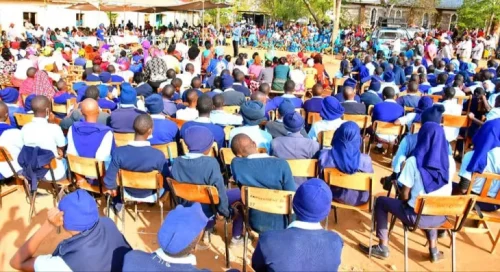
This is not an impossible dream. It is a question of priorities. The same seriousness applied to roads, stadiums and political campaigns can be applied to education if there is a will.
Beyond infrastructure, Kenya should also think creatively about integration. Inter-county student exchange programmes could expose learners to different cultures, languages and ways of life.
A student from Turkana spending a term in Nyeri, or one from Kilifi learning in Kisii, would gain more than academic knowledge. They would gain empathy, confidence and a deeper sense of national belonging.
Education is not just about grades. It is about shaping citizens who believe they matter and that their country has invested in them.
If Kenya continues on the current path, the KCSE results will remain predictable: elite schools at the top, struggling schools at the bottom, and a widening gap in between.
But with bold thinking and honest commitment, the country can rewrite this story.
Author
Latest News






Advertisement
More on Insights