Advertisement
Why IMF is questioning Kenya’s shilling stability
Thursday 30th October, 2025 12:45 PM|
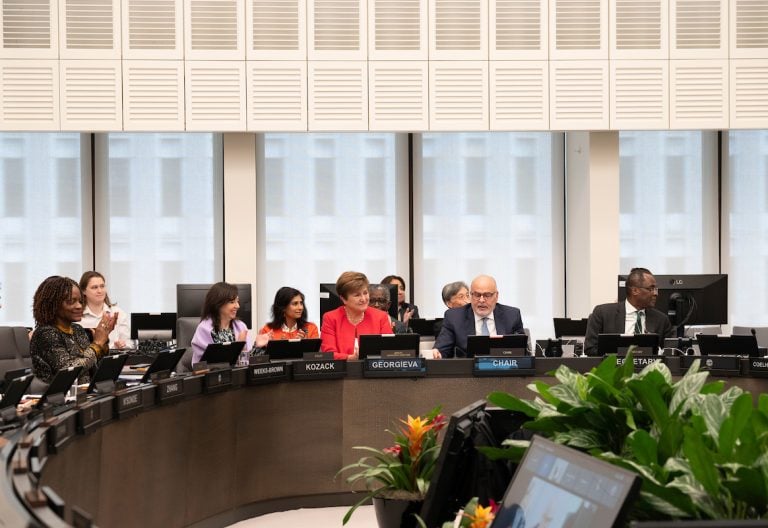
Kenya’s shilling has remained unusually stable against the US dollar over the past year, but this stability is now at the centre of discussions with the International Monetary Fund (IMF) as the country seeks a new funding arrangement.
The currency has hovered around Ksh129 per dollar for most of 2025, a position supported by strong foreign exchange reserves, healthy diaspora remittances, and sound monetary policies from the Central Bank of Kenya (CBK).
However, the IMF has expressed concerns that the shilling’s limited fluctuation may be affecting the transmission of monetary policy and complicating inflation targeting. Kenya Revenue Authority (KRA) chairperson Ndiritu Muriithi described the IMF’s position as misaligned with the realities of developing economies.
Speaking on Friday, October 24, 2025, Muriithi said the Fund’s models often fail to consider the unique structural factors that influence Kenya’s economy.
You Might Also Like


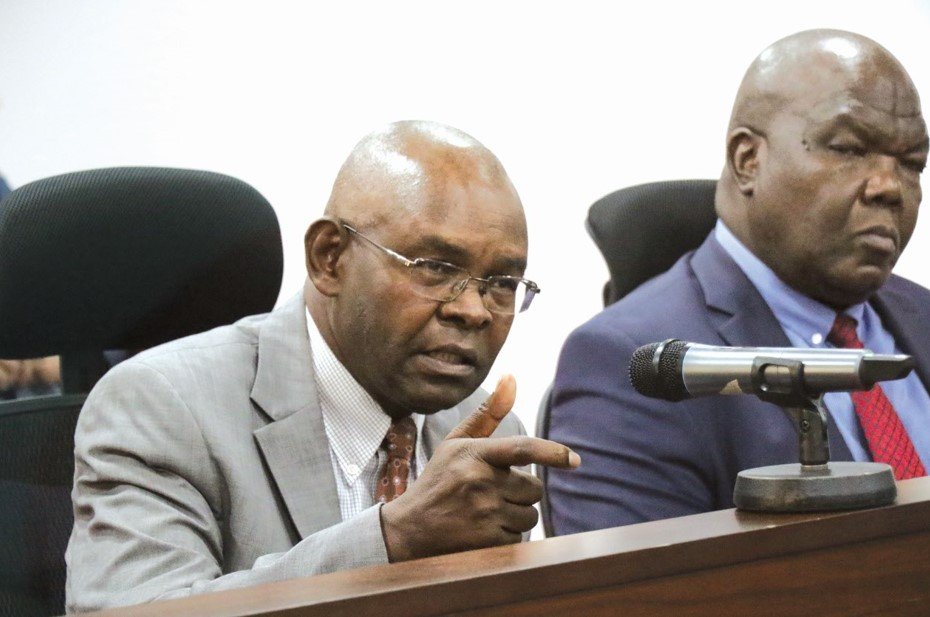
“One of the things the IMF told us when they visited Nairobi two weeks ago was that they believed the exchange rate was too stable and was interfering with inflation. Personally, I thought it odd that the IMF would claim that the exchange rate is too stable,” Muriithi said.
“They think that it is interfering with monetary policy transmission and inflation targeting. The tax-to-GDP ratio is a rule of thumb that should not be followed biblically,” he added.
The IMF’s concerns emerged during a recent staff mission to Nairobi, led by Haimanot Teferra, which ran from late September to early October. The mission aimed to assess Kenya’s current economic situation and to discuss a possible Fund-supported programme.
While the IMF described progress in its engagement, it stopped short of announcing a staff-level agreement, which is a key step before any release of funds.
Currency stability is only one point of contention in these negotiations. The IMF is also pressing Kenya to strengthen fiscal discipline, improve public debt management, and enhance transparency and governance within the public sector.
Kenya’s public debt currently stands at approximately Ksh11.8 trillion, and although a recent Debt Sustainability Analysis described it as manageable, it also highlighted a high risk of debt distress.

Kenya seeks IMF backing
In response, the National Treasury has developed a Medium-Term Debt Management Strategy for 2025, aiming to reduce the debt-to-GDP ratio from 63.7 per cent in 2024 to 57.8 per cent by 2028. The plan focuses on concessional and domestic borrowing to manage risk.
The urgency of these discussions stems from Kenya’s previous IMF programme, a four-year arrangement worth Ksh465 billion, which expired early in 2025. The premature ending of the deal led to the forfeiture of an undisbursed tranche of roughly Ksh110 billion ($850 million).
Securing a new arrangement is critical for Kenya to manage its debt repayments and support its budget, especially as borrowing from international capital markets remains expensive. CBK Governor Kamau Thugge has stressed that Kenya hopes to reach a new agreement as soon as possible.
Despite these concerns, the shilling’s stability has been praised locally. CBK data shows that adequate reserves, amounting to Ksh1.560 trillion (equivalent to 5.3 months of import cover), have helped maintain the currency’s value.
Strong remittances from the diaspora have also provided consistent inflows, reducing the pressure on the local currency. Analysts note that such stability helps businesses plan better and keeps inflation relatively contained.
President William Ruto has criticised the IMF in international forums, highlighting what he describes as structural biases in global financial institutions. Speaking at the United Nations General Assembly in New York in September 2025, he said that the IMF and the World Bank favour wealthy nations in their lending and allocation of resources.
He cited the recent allocation of Special Drawing Rights, where 64 per cent went to wealthy countries and just 2.4 per cent to poorer nations, as evidence of a system that disadvantages developing economies.
The IMF mission in Kenya also focused on longer-term reforms to enhance fiscal credibility, ensure debt sustainability, and reduce financial risks. The Fund stressed the need for more transparent debt management practices, better governance in public institutions, and efficient fiscal policy implementation.
Author
Kenneth Mwenda
Kenneth Mwenda is a business, sports, and politics digital writer with over seven years of experience in journalism, covering breaking news, feature stories, and in-depth analysis across a range of beats.
For inquiries, he can be reached at [email protected]
View all posts by Kenneth MwendaLatest News








Advertisement
More on Insights