Advertisement
Orange circus: ODM divided between old guards and reformists in chaotic post-Raila rearrangement
Thursday 12th February, 2026 10:27 AM|

When Raila Odinga, the founder of Kenya’s Orange Democratic Movement (ODM), died on October 15, 2025, the party lost more than a leader – it lost its centre of gravity.
Odinga, affectionately known as Baba, had united diverse factions under his leadership for decades. His passing in Kerala, India, left a leadership vacuum and set off sharp disputes over ODM’s direction ahead of the crucial 2027 general election.
Under Odinga’s leadership, ODM was not just an opposition force but a defining voice in Kenyan politics. He fought for multi-party democracy, served as Prime Minister from 2008 to 2013, and contested the presidency five times, earning deep loyalty across generations.
Even in his final months, he worked to build bridges with the government, signing a Memorandum of Understanding (MoU) with President William Ruto on March 7, 2025. The pact aimed to create a broad-based government with a 10-point unity agenda, covering youth empowerment, corruption, national debt, and peaceful assembly.
You Might Also Like
Raila insisted the deal was not about power sharing or the 2027 election, urging ODM to remain independent. Speaking in Machakos on Monday, September 22, 2025, during an ODM Parliamentary Group meeting, Raila warned members against committing the party to agreements that had not been discussed or approved.
He stressed that ODM had its own plan, and decisions about 2027 would be made when the time comes.
“So, wherever you are, don’t commit the party to some things which have not been discussed. Let those things be discussed first. We are ODM. Who’s told you that ODM will not have a candidate in 2027? Who has told you?” Raila said.
Yet, after his burial in Bondo on October 19, 2025, unity gave way to discord. His death revealed deep fault lines within ODM – particularly between older leaders advocating closer ties with Ruto’s United Democratic Alliance (UDA) and other leaders determined to protect the party’s independence.
The elders’ push for political deals looks less like strategic coalition building and more like self-serving manoeuvring by those close to power. Samuel Poghisio, former West Pokot Senator, warned that half of ODM died with Raila Odinga, arguing the structures left behind cannot hold the party together amid divisions over 2027 alignments.
Reformists challenge party elders
The rifts started appearing immediately. Some leaders vowed to protect what Raila fought for, focusing on democracy and opposition strength, while others insisted on staying in the broad-based government.
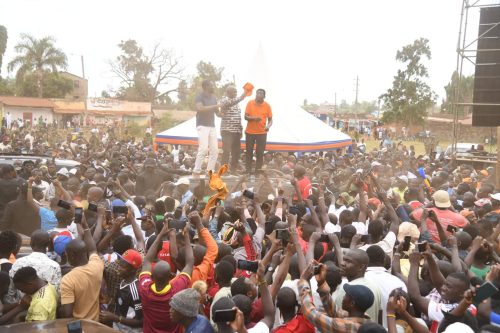
Among the sharpest voices of the youth faction is Nairobi Senator Edwin Sifuna. He has openly questioned the party’s MoU implementation, which critics say remains incomplete and largely unfulfilled.
In recent months, Sifuna – alongside legislators like Siaya Governor James Orengo – has called for ODM to position itself as an independent contender in 2027. Orengo has repeatedly warned that ODM must not be swallowed by UDA, urging the party to safeguard its autonomy.
“If ODM chooses to work with Kenya Kwanza or UDA under the current circumstances, the likely outcome is that the party will gradually shrink and retreat into Luo Nyanza,” Orengo said in January 2026. He added that ODM should enter any pact from a position of strength, not desperation.
Raila’s children – notably Winnie Odinga – have spoken out against what they see as opportunism within ODM. At a rally at Kamukunji Grounds in Nairobi on 18 January 2026, Winnie used a striking bus analogy to describe the state of the party after her father’s passing.
“On this journey, we were passengers, and Baba was the driver. One day, we woke up and were shocked. The driver had died. He had passed away,” she said. “Slowly, some people moved to the front, grabbed the steering wheel, and pulled it in different directions. They pushed us, the passengers, to the back. They forgot that Baba died only yesterday. Why the rush? Stop the bus. Let us talk. Let us decide together and move forward.”
Her comments were interpreted as a warning to leaders pushing for early alliances with President William Ruto’s United Democratic Alliance (UDA).
Embakasi East MP Babu Owino has also clashed with the elders. He rejected pre-coalition talks:
“Not once in Raila’s leadership did ODM seek partners or coalitions as it is doing now; other parties always came to ODM to form alliances.”
Owino also claimed party insiders plotted to deny him the Nairobi gubernatorial ticket, similar to what happened to Tim Wanyonyi in 2022. “They want to string me along, promising me the party ticket only to change four months to election,” he said in January 2026.
Vihiga Senator Godfrey Osotsi has warned against rushing into UDA deals.
“Let us not be in a hurry to join the UDA of President William Ruto. Ruto may short-change us,” he said in February 2026. Osotsi missed key meetings, signalling dissent, and called for a National Delegates Conference to resolve issues.
ODM faction sparks tension
The party’s internal clash came to a head in February 2026. At a National Executive Committee (NEC) meeting in Mombasa on February 11, Saboti MP Caleb Amisi was removed as deputy national organising secretary. Amisi called the decision a political witch-hunt because of his opposition to the Oburu Odinga faction, which backs deeper cooperation with UDA.

The NEC also removed Sifuna as Secretary General, replacing him with Busia Woman Representative Catherine Omanyo in an acting role. National Treasury CS John Mbadi has been among those calling for Sifuna’s ouster, urging the party to expel him over conflicting loyalties.
‘Someone like Sifuna cannot remain in ODM because he is conflicted. He is now advancing someone else’s agenda… You cannot keep him in the party,’ Mbadi said.”
The committee cited grave concern over the rising levels of indiscipline within the Party, particularly at the senior leadership level. Also ousted were Taveta Senator Danson Mwaruma and Gideon Menjo.
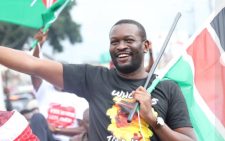
Sifuna chose not to attend the NEC meeting and instead focused on his senatorial responsibilities. His faction is driving the Linda Mwananchi Tour, launched in early February 2026 in Busia County.
The tour engages ordinary citizens on issues such as the cost of living, governance challenges, and ODM’s strategy ahead of the 2027 elections. It represents a group opposed to early coalition talks with UDA, insisting that the party maintain its independence and prepare to field its own candidates.
“The Linda Mwananchi Tour is about talking to Kenyans directly,” Sifuna said. “Raila raised leaders who stand for justice, not cowards. We fight to keep Baba’s courage alive.”
Among the senators expected to attend the tour are Sifuna himself, Richard Onyonka, Godfrey Osotsi, and Erick Okong’o Mogeni. MPs like Babu Owino, Caleb Amisi, and Joshua Kimilu are also involved. The tour emphasises economic hardship, governance reforms, and the protection of civil rights.
Oburu pushes coalition deals
On the other side, Linda Ground, Oburu Odinga, Raila’s brother and acting ODM leader, insists the party must continue in the broad-based government arrangement. Oburu argues that the Azimio la Umoja coalition effectively ceased to function when ODM left it, but stresses ongoing cooperation with the ruling party to deliver development and representation for ODM supporters.

The NEC backed Oburu, formally mandating him to negotiate pre-election coalitions, and reaffirmed the party’s commitment to the 10-point agenda and reforms.
The battle lines have wider implications than internal power struggles. Oburu’s faction focus on coalition deals may alienate ODM’s grassroots base, weakening its appeal among young voters and those frustrated by unemployment and governance issues.
A TIFA Research survey in December 2025 showed only 19 per cent of ODM supporters want to back Ruto in 2027. Former Makueni Governor Kivutha Kibwana said the “real ODM” now lies with Sifuna’s camp. Opponents such as former Deputy President Rigathi Gachagua have labelled the current party a shell of its former self.
Yet Sifuna’s group remain defiant. They argue that ODM’s independence and reformist roots are essential to honouring Raila’s legacy and keeping the party a credible opposition.
As the 2027 election approaches, ODM faces a clear choice: enter pre-election power deals that could compromise its identity or uphold the reformist path championed by its young leaders and, many argue, by Raila himself. The outcome will shape Kenya’s political landscape and determine whether ODM remains a robust opposition party or becomes absorbed into government alliances.
Author
Kenneth Mwenda
Kenneth Mwenda is a business, sports, and politics digital writer with over seven years of experience in journalism, covering breaking news, feature stories, and in-depth analysis across a range of beats.
For inquiries, he can be reached at [email protected]
View all posts by Kenneth MwendaLatest News
Advertisement
More on Insights