Advertisement
Why Orengo is opposed to ODM entering into coalition agreement with UDA
Tuesday 13th January, 2026 06:38 AM|

With the Orange Democratic Movement (ODM) Central Management Committee (CMC) having convened in Kilifi, Vipingo, on Monday, January 12, 2025, the party deliberated on several key issues.
One of the major outcomes of the meeting was a resolution mandating the party leader, Oburu Odinga, to fast-track a formal pre-election coalition with other political parties, including the United Democratic Alliance (UDA).
According to the resolution, the process is set to begin with nationwide consultative rallies, starting in Kibera, and will culminate in a National Delegates Conference (NDC). The NDC will formally rubber-stamp the party leader’s position, in line with the ODM constitution, which vests the authority to guide the party on coalition agreements and electoral direction in the party leader.
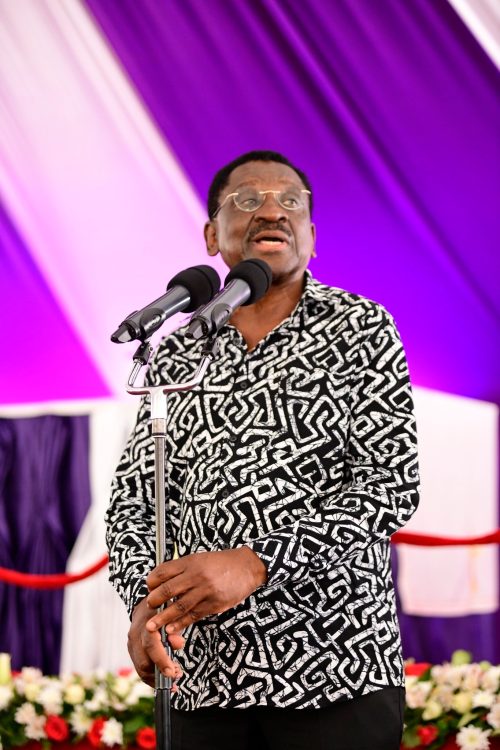
However, Siaya Governor James Orengo, a veteran politician and a founding member of ODM since its formation in 2005, has come out strongly opposed to the party entering into a pre-election arrangement with President William Ruto’s UDA.
You Might Also Like
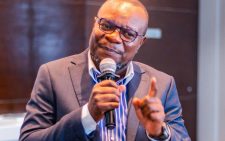
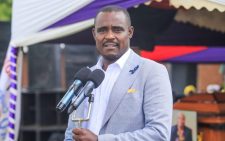
While speaking during a media interview with a local television station on Monday, December 29, 2025, the first-term governor explained the historical basis of his opposition to the proposed pact.
historical perspective
From a historical perspective, Orengo expressed concern that even at independence, the colonial government deliberately attempted to create and promote regional political parties.
He noted that Tom Mboya championed a national outlook through the National People’s Convention in Nairobi, while Jaramogi Oginga Odinga led a political movement that was largely rooted in the Nyanza region.
At the same time, Masinde Muliro mobilised political support primarily in Western Kenya. According to Orengo, the colonial strategy was clear: to regionalise and ethnicise political movements as Kenya approached independence.
He further observed that after independence, a similar pattern emerged when Jaramogi resigned from KANU and crossed the floor with a significant number of Members of Parliament, possibly even a majority.
In response, Tom Mboya introduced a constitutional amendment requiring any MP who crossed the floor to resign and seek a fresh mandate through a by-election. Although the move was legal, its political impact was far-reaching. It effectively ethnicised the Kenya People’s Union (KPU).
While KPU initially enjoyed national support, the prevailing political environment, largely shaped by KANU, pushed it into becoming a regional and effectively tribal party.
Orengo also pointed to the Moi era, noting that President Daniel Arap Moi attempted a similar strategy during the reintroduction of multiparty politics. FORD initially emerged as a broad national movement, but state pressure and political manoeuvring eventually fractured it. Kenneth Matiba went his way, Mwai Kibaki went his way, and the result was the emergence of several regional parties rather than a united national opposition.
Push behind ODM formation
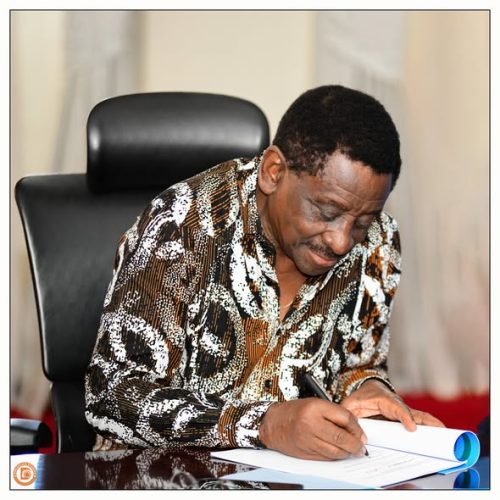
It was against this historical backdrop, Orengo argued, that Raila Odinga recognised that regional parties could not adequately address the aspirations of Kenyans. As a result, Raila deliberately worked to build ODM as a truly national party. Today, ODM has a presence in nearly every region of the country.
However, Orengo warned that he now sees renewed attempts to push ODM back into a purely regional, or even Luo-centric, party.
He noted that leaders and members from other regions have become noticeably quiet amid the ongoing internal conflicts within the party. History, he argued, shows that this is precisely how national parties are weakened and eventually reduced into regional outfits.
“However, I now see renewed attempts to push ODM back into a purely regional, or even Luo-centric, party. Leaders and members from other regions have become noticeably quiet amid the internal conflicts within the party. History shows us that this is exactly how national parties are weakened and regionalised.”
Reducing ODM to luo party
He cautioned that if ODM chooses to work with Kenya Kwanza or UDA under the current circumstances, the most likely outcome would be the gradual shrinking of the party and its retreat into Luo Nyanza.
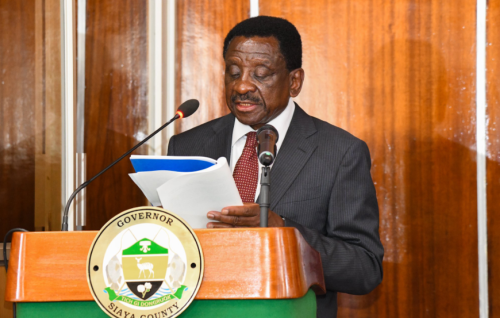
Some recent public pronouncements, he said, already create the impression that ODM is merely a regional party, a characterisation he insists is inaccurate, as ODM remains a national party.
“If ODM chooses to work with Kenya Kwanza or UDA under the current circumstances, the likely outcome is that the party will gradually shrink and retreat into Luo Nyanza. Some recent pronouncements already give the impression that ODM is merely a regional party, yet this is not true; ODM remains a national party. We must be extremely cautious not to be driven in that direction,” Orengo said
Message to ODM
Orengo emphasised the need for extreme caution to avoid being driven in that direction. He stated that ODM has a window of about 10 to 12 months to deliberately rebuild and strengthen itself as a truly national party, drawing from the political legacy of Raila Odinga.
Only after that process, he argued, should the party seriously engage in discussions on coalitions or cooperation with other political formations.
“I believe we have a window of about 10 to 12 months to deliberately rebuild and strengthen ODM as a truly national party, drawing from the political legacy of Raila Odinga. Only after that should we seriously engage in discussions about coalitions or cooperation with other political formations,” he added
ODM/UDA cooperation
At present, Orengo observed, the dominant agenda within the party appears to be immediate cooperation with the UDA government. His concern is that such a move, if not carefully managed, would only reduce ODM into a smaller and weaker party. He stressed that coalition talks should only take place between strong parties.
According to Orengo, ODM remains the most popular political party in Kenya. Therefore, if and when the party engages UDA, it must do so from a position of strength, as the senior partner, and that reality must be clearly acknowledged.
The party now appears to be at a crossroads, with two distinct factions emerging within its ranks. Even the Central Management Committee meeting that produced what has since been labelled the Kilifi Declaration exposed just how fractured the Orange Democratic Movement has become, despite having survived numerous political storms in the past.
Rift in ODM
The divisions were evident in the visible absence of several key ODM figures from the CMC meeting. Among those opposed to the proposed partnership with the United Democratic Alliance (UDA) are Secretary General Edwin Sifuna and Deputy Party Leader Geoffrey Osotsi, both of whom appear to share the same school of thought as Siaya Governor James Orengo.
In advancing his position, Orengo has previously accused senior ODM leaders of attempting to sell out the party to President William Ruto. He has insisted that ODM is strong enough to field its own presidential candidate and warned that entering into a coalition with UDA risks eroding the party’s identity and core values. According to Orengo, such a move could strip ODM of its political DNA.
Sifuna’s concerns
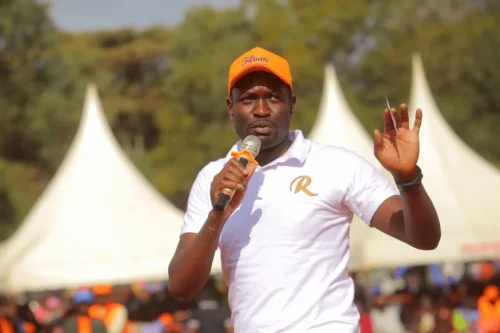
Edwin Sifuna has expressed similar concerns. He has publicly cautioned party leader Oburu Odinga against pursuing a coalition with UDA, warning him not to be misled by a section of ODM leaders pushing for the arrangement. Instead, Sifuna urged the party leadership to prioritise internal consultations and protect ODM’s independence.
In response, Oburu Odinga dismissed claims that he makes unilateral decisions, stating that he is a consultative leader who engages party members at all levels before arriving at major decisions.
He also cautioned ODM officials against speaking in different voices once the party has collectively agreed on a specific political direction, warning that such contradictions only deepen internal divisions.
Author
Latest News


Advertisement
More on Insights