Nairobi’s Underground Metro explained: The Ksh1 Trillion dream Kenya has been chasing since 1948
By Aloys Michael, July 24, 2026For nearly eight decades, Nairobi has pursued an ambitious dream: building an underground metro system to ease chronic traffic congestion and transform public transport. First proposed in 1948, the idea has resurfaced in multiple urban development plans but has never moved beyond the drawing board.
Now, that vision has gained fresh momentum after the Nairobi County Cabinet approved the first phase of the Nairobi Mass Rapid Transit System (NMRTS), a Ksh1 trillion (USD7.78 billion) underground railway linking the Central Business District (CBD) with Eastlands.
If completed, it would become Kenya’s first underground railway and one of the most significant urban infrastructure projects in Africa.
Why is Nairobi building an underground metro?
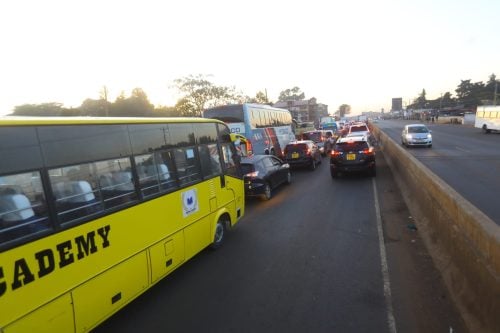
Nairobi’s population has grown dramatically over the past several decades, but its transport infrastructure has struggled to keep pace. Every day, hundreds of thousands of commuters spend hours in traffic jams, particularly along major routes leading into the CBD.
County officials believe an underground metro would provide a faster, high-capacity alternative to matatus and private vehicles while integrating seamlessly with Bus Rapid Transit (BRT) corridors and non-motorised transport networks.
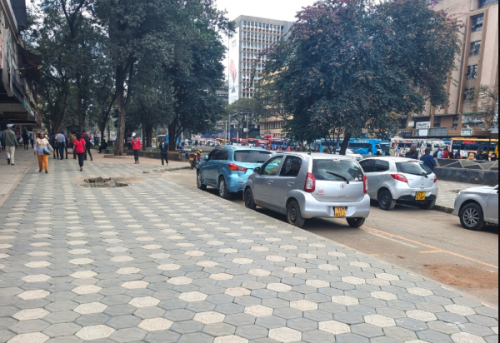
Governor Johnson Sakaja says the project is intended to reduce travel times, lower transport costs, improve air quality and unlock Nairobi’s economic potential by creating a more efficient transport system.
Although the proposal appears new, the underground metro has been part of Nairobi’s long-term planning for almost 80 years.
In 1948, colonial-era planners proposed a ring railway and underground CBD rail connections to accommodate the city’s expected growth.
The idea returned in the 1972 Nairobi Metropolitan Growth Strategy, which recommended mass rapid transit as Nairobi expanded into a regional economic hub.
More than four decades later, the proposal resurfaced in the 2014 Nairobi Integrated Urban Development Plan, yet like its predecessors, it was never implemented.
The latest proposal represents the closest the city has come to turning those plans into reality.
Railway location and cost
The first phase of the metro will focus on an underground rail core beneath Nairobi’s CBD before extending to Eastlands, one of the city’s busiest commuter corridors.
The metro is expected to connect with existing and future transport systems, creating a multimodal network designed to improve mobility across the capital.
Future phases are expected to expand the network to other parts of Nairobi, although detailed routes and timelines have yet to be announced. The proposed Ksh1 trillion budget reflects the complexity of constructing an underground railway.
Unlike surface rail, underground systems require extensive tunnelling beneath existing roads and buildings, specialised underground stations, ventilation and emergency safety systems, signalling technology, electrical infrastructure, rolling stock, drainage works and sophisticated control centres.
The project will also require long-term maintenance systems and integration with Nairobi’s wider public transport network.
According to Sakaja, financing will come from multiple sources rather than taxpayers alone.
The national government is expected to contribute about USD3 billion (approximately Ksh388 billion). At the same time, additional funding would come from pension funds, transport-oriented development and land value capture, a financing model that uses increased property values around transport corridors to help pay for major infrastructure.
Can Kenya deliver the project?
The biggest question surrounding the underground metro is not whether Nairobi needs it, but whether Kenya can finance and complete one of the country’s most expensive infrastructure projects.
To improve the chances of success, the county government plans to establish a dedicated Project Management Unit to oversee implementation. The project will also build on previous feasibility studies undertaken by international partners, including the Japan International Cooperation Agency (JICA).
Sakaja argues that Nairobi’s geology makes tunnelling more practical than in many older cities because it has fewer underground utility networks. He points to the successful construction of the Haile Selassie Avenue-Uhuru Highway underpass as evidence that the city has experience delivering complex underground infrastructure.
If completed, Nairobi would join a select group of African cities with modern urban rail systems.

Cairo has operated Africa’s oldest metro since 1987, while Addis Ababa launched sub-Saharan Africa’s first light rail system in 2015. Lagos has also begun expanding its urban rail network through the Blue Line.
Unlike those systems, Nairobi’s proposal centres on an underground CBD corridor, making it one of the continent’s most technically ambitious urban transport projects.
Will Nairobi’s underground metro finally become reality?
The proposed metro represents more than a transport project; it is the revival of an idea that has survived nearly eight decades of planning, changing governments and rapid urban growth.
Whether the Ksh1 trillion railway finally moves from blueprint to construction will depend on securing financing, maintaining political commitment and successfully navigating one of Kenya’s most complex engineering undertakings.
If it succeeds, the tunnels beneath Nairobi’s CBD will not simply carry trains. They will fulfil a vision first imagined in 1948, potentially transforming how millions of people move around Kenya’s capital for generations to come.