Advertisement
IEBC must conduct August polls with highest integrity
Thursday 16th June, 2022 07:22 AM|
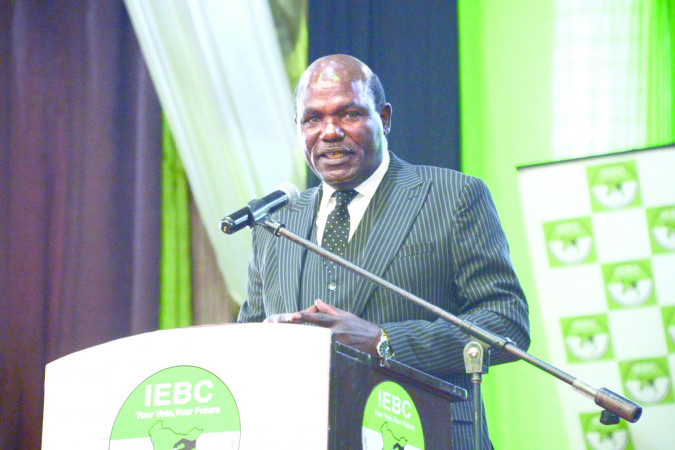
Recently, Parliament threw out proposed changes to the Elections Act that were meant to address a high threshold placed on the Independent Electoral Boundaries Commission (IEBC) in conducting elections by the Supreme Court decision of the 2017 that nullified a presidential electoral victory.
Kenyans and politicians vying for various positions are now keen on the heavy task that has been placed on IEBC to ensure it earns public trust as it prepares for a highly contested transition election.
Without the proposed changes, one of the things that will now give IEBC a serious headache is the role of deployment of technology in conducting the elections. It has failed in the previous elections.
The 2017 election was the first to be held under an elaborate regime of electoral laws, including amendments to the Elections Act that introduced the Kenya Integrated Electoral Management System (KIEMS)—a device intended to be used for the biometric voter registration and identification as well as the transmission of election results from polling stations simultaneously to the constituency and national tallying centres.
You Might Also Like


In 2017, IEBC announced results when all Forms 34A generated at the polling stations had not been submitted electronically to the national tallying centre as required by Section 39 (1C) of the Act.
The IEBC recently said it has acquired satellite modems for areas with no 3G network to enable the transmission of results electronically. To ensure this success, chief executive Marjan Hussein said they will work closely with the Communications Authority (CA) of Kenya.
He said CA has submitted to them the GPS locations of all polling centres. Only 1,111 polling stations don’t have a 3G or 4G network.
Having raised the bar higher on the importance of the role of technology in elections, IEBC should now start engaging all players in the electoral process and continuously demonstrate its preparedness for the task ahead.
The IEBC has not been able to prepare for elections early enough, a thing that has failed to inspire the confidence of the public that it’s capable of conducting free, fair and transparent elections.
If the recently concluded voter listing and the claims of tampering with voters’ register would be a pointer, IEBC needs to work harder to inspire confidence among Kenyans.
Flawed elections have often eroded the trust of citizens in the democratic process—they become a source of disillusionment and chaos.
The results of 2007, 2013 and 2017 elections were widely contested with blame-shifting towards the IEBC, and in two of them—2007 and 2017—violent protests erupted.
Let’s not forget the only way to guarantee that the events previously witnessed after contested elections will not repeat themselves this year, is to have a credible process.
IEBC must deploy enough human, managerial and material resources to ensure the polls remain credible and transparent. Insufficient time to prepare for elections is likely to expose IEBC to possible legal minefields, as witnessed in 2017.
Other challenges facing IEBC include highly ethnicised and divisive politics. Its officials have had to deal with ethnic profiling during elections, making them insecure.
— The writer is a public analyst—[email protected]
Author
PD columnist
View all posts by PD columnistLatest News








Advertisement
More on Insights