Advertisement
Govt and stakeholders must commit to unlocking potential in youth sports
Wednesday 24th December, 2025 12:35 PM|

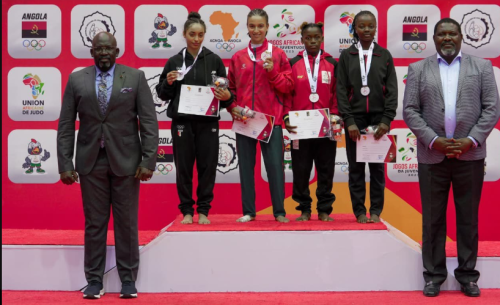
Only a couple of days after the African Youth Games held in Luanda, Angola, where for an umpteenth time Kenya showcased not only its potential but also its might as a hub of sporting excellence.
The Kenyan team, drawn across the country from dusty grounds in Trans Nzoia to sandy beaches in Kilifi County, dominated the continental games with impressive performances in handball, basketball, and individual weightlifting events.
Kenya’s supremacy was particularly evident in weightlifting, alongside several silver medals in basketball, boxing, and other disciplines.
In typical Kenyan fashion of basking in the glory, leaders and sports federations paraded the athletes and their medals on social media, proudly claiming shared origins with the heroes.
You Might Also Like


Regrettably, this momentary display of might and talent rarely goes further. Once the celebrations fade, most of these sports and their promising athletes are neglected, receiving little or no guidance and coaching to help them develop into full-fledged professionals in their fields.

Recent history shows that, despite Kenya’s abundant talent, our East African neighbours have consistently outperformed us in youth sports.
Slacking off in youth sports
While Kenya’s Young Malkia Strikers won the African U20 volleyball championship, Rwanda has emerged as the “new Europe” for Kenyan basketball players seeking opportunities abroad.
Tanzania’s national soccer team, Taifa Stars, is now competing in the 2025 AFCON, gradually occupying the regional spotlight Kenya once held.
Our neighbours are dominating youth sports, especially football, where their women’s club and national teams have recently defeated Kenya in CECAFA and the Kagame Club Championship.
Uganda remains an exemplary nation in grassroots sports development—one we should emulate, though national pride often prevents us from admitting it.
These examples serve as a stark reminder of the sporting truism that “Hard work beats talent when talent doesn’t work hard enough.”
Kenya’s new Competency-Based Education (CBE) is designed to cater to students whose paths and careers lean toward excellence in sports or creative fields.
This vision must be encouraged not just on paper but in spirit, through deliberate, sustained action to nurture and develop sports talent in Kenya.
The impressive displays at the Africa Youth Games must serve as a timely wake-up call for stakeholders and sports federations on what needs urgent focus moving forward.
Federations in chess, boxing, and other disciplines must ensure teenagers gain access to superior opportunities, scholarships, and career-enhancement programs.
Complacency kills
Exposure should extend to coaches, many of whom admitted to an eye-opening experience on their first trips beyond Kenya’s frontiers.
Competition never waits for the complacent. While others take the painful but necessary steps to improve, resting on our laurels will surely lead to a decline.
A year later, at the next edition, improved opponents can easily overshadow yesterday’s champions.
Government and key stakeholders must commit to sustained efforts, ensuring the promising talent emerging in youth sports is fully nurtured and realised.
Kenya must reclaim its position as a leading sporting nation in Africa and ensure its young talents evolve into world-class athletes in both team and individual sports.
Author
Latest News







Advertisement
More on Insights