Advertisement
Governors’ meeting to explore anti-poverty financing solutions
Tuesday 05th August, 2025 07:00 AM|
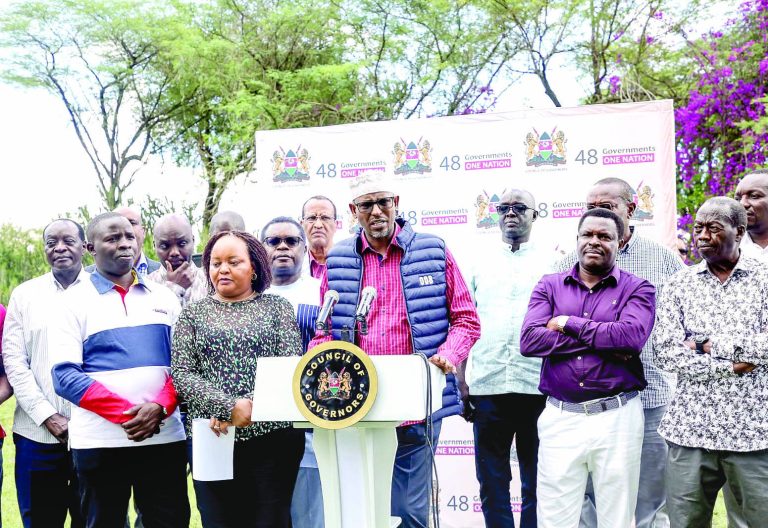
The 2025 Devolution Conference, whose theme is “For the people, for prosperity: Devolution as a catalyst for equity, inclusion and social justice,” creates a dynamic space to examine devolution as a governance tool for tackling inequalities and consequently enhancing social justice.
The advent of devolution sought to promote social and economic development and to provide proximate services to communities.
Despite the tremendous progress made by county governments since the advent of devolution, counties still face a myriad of challenges.
One such challenge is the inadequate allocation of resources to address inequalities, marginalisation, and poverty in all their manifestations.
You Might Also Like


The question that lingers, therefore, is: how can we ensure that economic growth is felt by everyone, especially the marginalised? A viable solution lies in pro-poor financing.
Pro-poor financing refers to deliberate financial policies, programs, and investments specifically designed to benefit vulnerable and poor populations and reduce poverty.
This approach recognises that economic growth alone may not be sufficient to alleviate poverty and that targeted interventions are required to ensure the poor partake in the benefits of development.
The approach entails channelling more funds to initiatives that address inequality and advance access to development and economic opportunities for citizens regardless of their background, gender, or social standing.
Importantly, it is about dismantling systemic barriers to socio-economic inclusion.
Amartya Sen reminds us that development is a process of expanding the real freedoms that people enjoy and extinguishing the ‘unfreedoms’ such as poverty, poor economic opportunities, and systematic social deprivation.
Freedoms are not only the primary ends of development; they are the principal means.
The devolved functions can be deemed as freedoms. For instance, social opportunities in the form of access to road infrastructure and health services, among others, advance economic freedoms.
To further sustain these freedoms and eradicate poverty, and fulfil social justice outcomes, governments at both levels will be required to allocate the maximum available resources for the progressive realisation of economic, social, and cultural rights.
By prioritising such commitments, governments advance redistributive justice, ensuring that the benefits of devolution reach the vulnerable and marginalised.
Day three of the conference focuses on financing equity and inclusion. The title of the session, “Sealing the Fault Lines: Strategies for Action in Financial Inclusivity”, is indeed compelling.
The session will examine the role of subnational governments in promoting access to financial opportunities in order to address systemic economic inequalities and disparities.
The session’s outcomes include consensus building on innovative and actionable strategies to be employed to ensure planning, resource allocation, and implementation focus on the often left-out and forgotten populations and ensure no one is left behind.
You cannot afford to miss this riveting conversation at the 2025 Devolution Conference, where actionable solutions geared towards pro-poor financing will be explored.
The writer is the CEO of the Council of Governors
Author
Mary Mwiti
View all posts by Mary MwitiLatest News







Advertisement
More on Insights