Fed rate cut brings relief to Kenya’s heavy debt load
By Kenneth Mwenda, September 18, 2025The United States Federal Reserve has cut its main interest rate by 0.25 percentage points, lowering it to between 4.00 per cent and 4.25 per cent. The decision on September 17, 2025, is the first reduction since December last year and follows signs of a cooling labour market in America.
The cut was widely expected, with most economists betting on a quarter-point reduction. Federal Reserve Chairman Jerome Powell said the job market is “really cooling off”, pointing to fewer hires, a higher unemployment rate, and uncertainty caused by tariffs and immigration policies. Inflation has also edged up but remains under control. Powell stressed that the Fed remains cautious, leaving room for further cuts if risks to jobs or price stability rise.
What the cut means for Kenya
For Kenya, the Fed’s move eases pressure on loans tied to the Secured Overnight Financing Rate (SOFR). Nearly Ksh1 trillion in debt, mostly from the Standard Gauge Railway (SGR) project and syndicated borrowing, is pegged to US dollar rates.
A lower SOFR means smaller interest payments. Analysts say Kenya could see some interest savings in the coming months on SOFR-linked loans, though the exact amount depends on currency and rate movements. The government faces large repayments, including Sh129 billion due twice a year for the SGR loan and more than Ksh80 billion in September and October for syndicated debts.
The stronger shilling, now at Ksh129 to the dollar, adds to the relief by reducing the local currency cost of repayments.
Kenya’s debt challenge
Kenya’s debt load is heavy. In the 2025/26 financial year, repayments are expected to take up more than 44 per cent of the Ksh4.29 trillion budget.
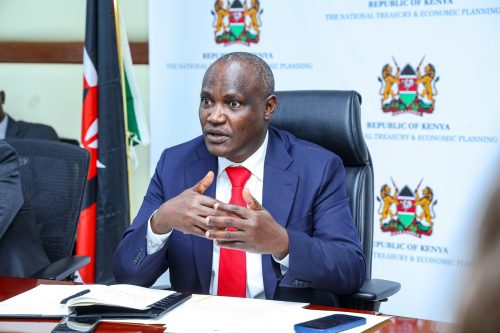
The SGR project, funded by a Ksh656 billion loan from China, remains the most visible example. Interest is tied to floating US rates, which have been higher in recent years, raising repayment costs. Syndicated loans, carrying interest rates as high as 14 per cent, are another burden. Treasury Cabinet Secretary John Mbadi has described them as one of the costliest drains on public finances.
Alongside the Fed cut, Kenya is negotiating with China to shift the SGR loan from dollars to yuan. Treasury officials say such a move could halve interest costs, saving more than Ksh50 billion a year.
A yuan loan would carry a fixed rate of about 3 per cent, compared with the current SOFR-linked terms above 6 per cent. Analysts, however, warn that this could bring new currency risks, as Kenya does not hold large reserves of yuan.
Politics in Washington
The Fed’s decision also comes against a backdrop of political pressure in the United States. President Donald Trump has repeatedly criticised Powell, mocking him as “too late Powell” for not cutting rates earlier.

Trump’s administration also tried to remove Fed Governor Lisa Cook, appointed by former President Joe Biden, but a court blocked the move. Meanwhile, Trump ally Stephen Miran recently joined the Fed’s board and pushed for a bigger cut of 0.5 per cent.
Powell said there was little support for such a sharp move, defending the quarter-point reduction as the right step for now. He also insisted that the Fed would remain independent despite political attacks.
Outlook for Kenya
For now, Kenya stands to gain from the Fed’s move. Lower repayments on dollar loans will free up funds for development projects and ease strain on the national budget. If the Central Bank of Kenya follows with its own cut to local rates, businesses could also benefit from cheaper borrowing.
But the challenges remain. Kenya’s debt-to-GDP ratio has reached 70 per cent, its highest in two decades. And if global inflation picks up again, the Fed could be forced to raise rates in the future, undoing some of today’s relief.