Advertisement
Education funding: Act now or risk collapse
Monday 28th July, 2025 04:00 AM|

Treasury Cabinet Secretary John Mbadi startled the country with the pronouncement that the government cannot sustain free primary and secondary education at the prescribed levels.
In fact, government capitation per student dropped to Ksh16,900 from Ksh22,244 over the years. This slashing has, in reality, been implemented by default.
And that, despite perennial delays in disbursement. A total of Ksh64 billion was never paid, and the government is reluctant to make good.
In 2025 alone, the backlog is Ksh18 billion. Is it any wonder then that schools have been in perennial financial crises?
You Might Also Like

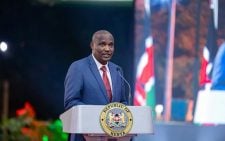
Mbadi’s statement must mark a turning point in education financing in Kenya. Kenyans must have a very difficult conversation that they have avoided for far too long – how the ever-growing education demands are going to be financed.
What are the facts?
First, education receives the highest budget allocation in Kenya.
In the 2025/26 budget, it was allocated Ksh702.7 billion, a whopping 28 per cent share. In the 2020 budget, the allocation was Ksh567.8 billion (17.92 per cent). There’s no more fiscal space in the budget.
Second is the multipronged crisis in public universities. The entire public university ecosystem is engulfed in a massive financial crisis with no solution in sight.
The Higher Education Loans Board (HELB) has been grossly underfunded for years.
In the current 2025/26 budget, it received Ksh26 billion against a requirement of Ksh48 billion.
HELB says it cannot cater for new university students this year. Public universities have debts amounting to Ksh72.2 billion, and no way to pay.
Third, the country has a deficit of 98,000 teachers. Kenya’s traditional huge deficit of teachers is compounded every year, especially in the sciences.
The Teachers Service Commission asked for Ksh20 billion to recruit teachers, which included Ksh4.8 billion for 40,000 intern teachers and Ksh15.4 billion for 25,000 teachers on permanent terms. It received Sh3.2 billion.
The capitation crisis will only worsen as numbers grow. Primary school enrolment has grown from 10.1 million in 2020 to 10.4 million in 2024, while secondary school learners increased from 3.5 million to 4 million in the same period.
These are 800,000 extra learners in five years, requiring capitation. Kenya’s population is projected to reach 57.8 million in 2030 from 48.8 million in 2020, adding millions more children to school!
The education system is now at mortal risk of collapsing on itself. It’s currently a patchwork held together by Band-Aid.
What is now clear is that the country is flying into a storm in the education sector. Something must give. All government attempts to reform the financing of the education sector have been met with howls of outrage and insistence on working with structures that were overrun years ago.
Nobody offers any alternatives. The perennial mantra is government must pay, yet there is no more fiscal space in the budget.
Borrowing is out. Such a massive recurrent expenditure that keeps growing cannot be funded through borrowing.
That would be very imprudent fiscal management. Kenyans continue burying their collective head in the sand. A time of reckoning is coming, if it is not already here.
The issue that Kenyans do not want to confront is that somebody must pay for the ever-growing needs of the country’s education system.
The question is who, and how?
The sooner Kenyans put aside the histrionics and tackle this question, the sooner the painful measures that are urgently needed can start being implemented, and the sooner the country can put this tempest behind it.
Author
Gathu Kaara
View all posts by Gathu KaaraLatest News







Advertisement
More on Insights