Advertisement
MP Caroli Omondi: Goons are hired criminals, not political activists
Tuesday 14th July, 2026 08:12 AM|

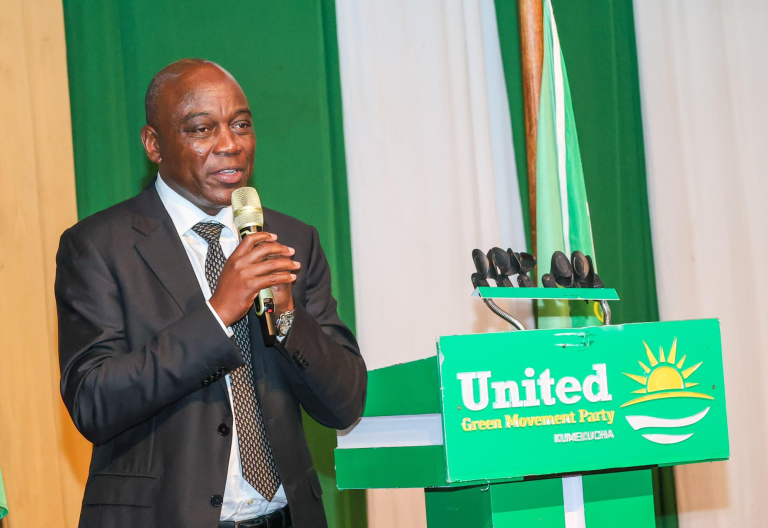
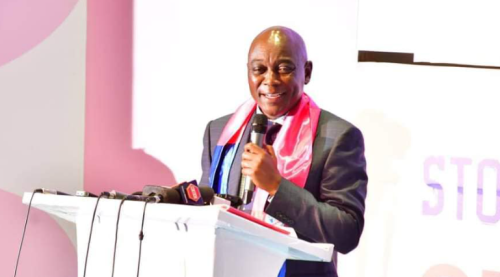
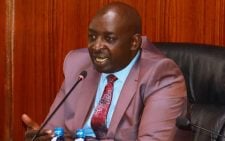
Suba South Member of Parliament Caroli Omondi has given his definition of who a real goon is.
Omondi told a local TV station on Tuesday, July 14, 2026, a day after his vehicle was smashed and vandalised during violence targeting the Linda Mwananchi team in Nyahururu.
The lawmaker rejected attempts to describe freedom fighters or citizens resisting oppression as goons, maintaining that the term should only be used for criminals hired to threaten, intimidate or disrupt people with opposing political views.
“Sam, I am very shocked that my dear brother here is comparing freedom fighters to goons. I think it is very important that we understand who a goon is and what the definition of a goon is,” Omondi said.
Caroli Omondi defines a goon
You Might Also Like


According to Omondi, a goon is a person recruited and paid to interfere with lawful meetings, intimidate political opponents or violently suppress people with whom their sponsors disagree.
“A goon is a person who is foolish, stupid and egocentric. A person who is paid to threaten, disrupt, interfere with and intimidate a person they do not agree with. These are basically dunderheads,” he said.
“A goon is just a criminal, a common thug. In the history of politics, there have always been goons, people who are hired by others to disrupt other people’s engagements.”
Omondi insisted that individuals participating in genuine political or liberation struggles should not be placed in the same category as organised groups hired to attack meetings.
“Freedom fighters cannot be goons. Masara, the people you are describing cannot be goons,” he said.
The MP referred to independence hero Achieng’ Oneko as an example of a freedom fighter who could not be described as a goon.
Oneko was among the Kapenguria Six detained by the British colonial administration in 1952 alongside Jomo Kenyatta, Bildad Kaggia, Paul Ngei, Fred Kubai and Kungu Karumba.
“Achieng’ Oneko could not be a goon,” Omondi stated.
Omondi recounts the Nyahururu attack
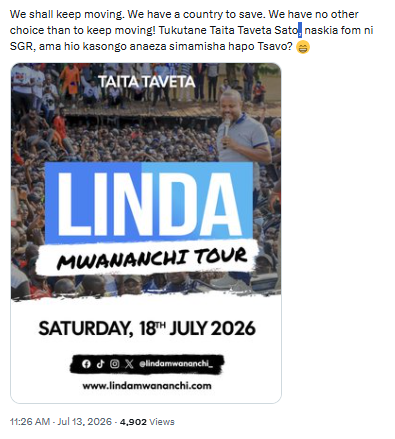
Omondi also recounted the violence witnessed during the Linda Mwananchi political activities in Nyahururu on Sunday, July 12.
He said the Linda Mwananchi leadership had received intelligence that people were planning to disrupt their programme before the suspected attackers descended on them at the church.
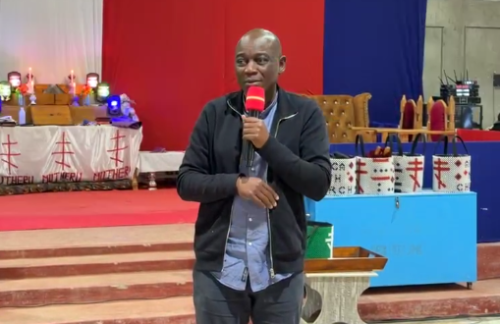
“We had received information that they had planned to attack us. Goons actually came and attacked us at the church. Before I could speak, we heard gunshots,” Omondi said.
The Linda Mwananchi team had attended a service at AIPCA Nyahururu Cathedral before proceeding with political engagements in the town.
Omondi, Murang’a Governor Irungu Kang’ata, Vihiga Senator Godfrey Osotsi and other leaders were forced to flee after groups of people invaded the gathering and violence broke out.
Videos from the incident showed damaged vehicles as politicians and supporters scrambled for safety.
The team had initially planned to campaign in Ol Kalou ahead of the July 16 parliamentary by-election, but changed its programme following warnings about possible confrontations.
The leaders instead restricted their engagements to Nyahururu.
Omondi later thanked Nyahururu residents for receiving the Linda Mwananchi team despite what he described as an attack by sponsored goons.
Police dispute shooting account
The National Police Service, however, disputed reports that a firearm had been discharged during the Nyahururu confrontation.
Police said Joseph Gitau, who was identified as Kang’ata’s driver, sustained a chest injury during a confrontation but maintained that no shooting had occurred.
Kang’ata had earlier said his driver was shot and taken to the hospital after the Linda Mwananchi convoy came under attack.
The differing accounts have placed pressure on investigators to establish the source of the sounds described as gunshots and determine who organised and financed the people involved in the violence.
Fourteen suspects taken to court
Police arrested six suspects in connection with the Nyahururu incident and eight others following separate political violence in Kisumu on the same day.
The 14 suspects were arraigned on Monday, July 13, to face charges linked to the unrest.
In Kisumu, violence outside ACK St Stephen’s Cathedral left people dead and injured, nine motorcycles burnt and a police vehicle damaged.
Interior Cabinet Secretary Kipchumba Murkomen later said the number of suspects arrested in connection with the Kisumu and Nyahururu incidents had increased to 20.
Author
Latest News


Advertisement
More on Inside Politics