Advertisement
Does free maternity care exist under Linda Jamii?
Saturday 04th October, 2025 12:57 PM|
With discussions around Linda Jamii and Linda Mama heating up, nobody, not even the government, has come out to explain well to Kenyans the nitty-gritties of the former programme.
If they have done so, they have only spoken about the good side of the coin, explaining how it has a wider scope than the defunct Linda Mama, which saw pregnant women walk to hospitals and deliver for free without being asked questions.
Complications arising from delivery, such as postpartum haemorrhage, were all catered for by the scheme.
Also watch: Women in Kisumu demand improvement of maternal health services in the county
What Linda Mama offered
You Might Also Like


The Linda Mama initiative covered all antenatal visits, delivery, and a few months post-delivery, with no money being asked from the women. Even being registered under the National Health Insurance Fund (NHIF) was never a requirement.
The situation is now different with Linda Jamii. It is only restricted to members of the Social Health Authority (SHA).
A mother who does not subscribe to the scheme is forced to dig deep into her pockets to pay for delivery fees.
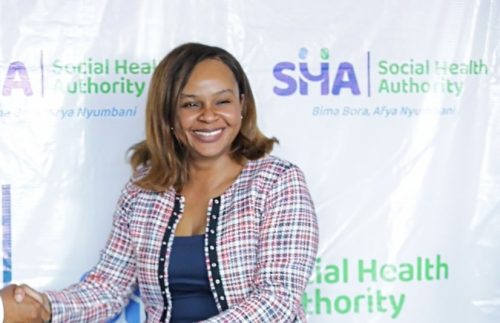
For an employed mother, her SHA contributions must be remitted from her salary by the 9th of every month before enjoying the service.
For unsalaried mothers seeking to enjoy Linda Jamii, they must remit their full annual package before accessing the service.
For example, if required to pay Ksh500 monthly, she will be required to pay Ksh6,000 upfront as the annual remittance to enjoy the service. Basically, free maternal care under Linda Jamii is gone and no longer exists.
Shift to Linda Jamii
With SHA being the governing body of the Social Health Insurance Fund (SHIF), there is also an aspect of Linda Jamii under this programme.
Linda Mama was established in 2013 after the assumption of the Jubilee government.
It was then referred to as free maternity care but achieved the name Linda Mama in 2016, lasting up to 2023, when Kenya Kwanza took over and did away with the NHIF. It is now named Linda Jamii under this programme.
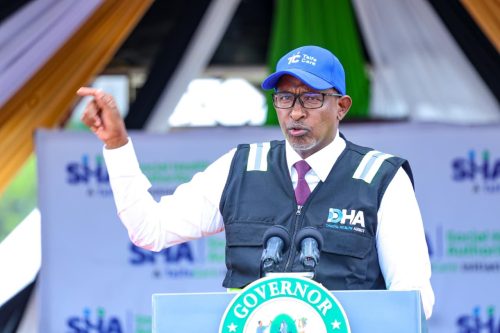
The allocation per mother for normal delivery was increased to Ksh10,000, while under Uhuru’s Linda Mama, it was Ksh3,500.
For caesarean sections, it rose from Ksh6,000–10,000 under Linda Mama to Ksh30,000 under Linda Jamii.
Restrictions under Linda Jamii
Unlike Linda Mama, where a mother could deliver at any hospital regardless of the level of care, most caesarean section deliveries under Linda Jamii are restricted to level 3 hospitals and must be eligible for SHIF.
President Ruto’s government has defended this move, stating that, unlike Linda Mama, which only targeted mothers, Linda Jamii targets the whole family.
When a household remits SHA premiums, it caters to the whole family, including delivery, which is part of primary health care (PHC), as well as critical illness cover for a person who exhausts SHIF.

The move to scrap the Linda Mama programme, which was entirely free, was recently faulted by former head of state Uhuru Kenyatta, who accused the current regime of trying to impose something that is not working and untested and which is being experimented on people at the expense of their lives.
This drew reactions from allies close to the president, with Ruto himself later siding with the former head of state, telling him that Linda Jamii is an improvement of Linda Mama that his regime gave birth to, which saw women giving birth in.
Author
Latest News




Advertisement
More on Insights