Advertisement
5 reasons why sandalwood business is prohibited in Kenya
Saturday 01st November, 2025 11:52 AM|
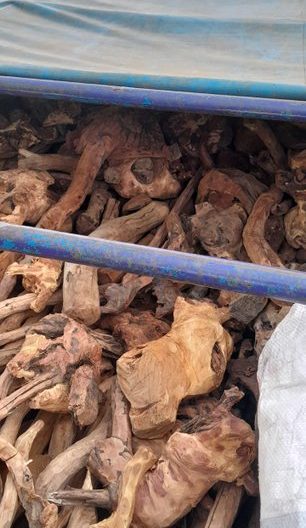
Local authorities have on many occasions intercepted sandalwood consignments, with the Nyahururu case being among the latest operations that bore fruit in the fight against the illegal trade in Kenya.
The operation, detailed in a statement by the Directorate of Criminal Investigations (DCI) on October 26, 2025, was conducted after the team intercepted a vehicle along the Nyahururu-Rumuruti Road, uncovering a haul of 532 kilograms of sandalwood hidden inside.
“In a commendable operation by a multi-agency team in Nyahururu, two suspects have been arrested while transporting sandalwood valued at approximately Ksh5 million,” read the DCI statement in part.
“Upon inspection, authorities discovered the vehicle was loaded with approximately 532 kilograms of sandalwood.”
You Might Also Like



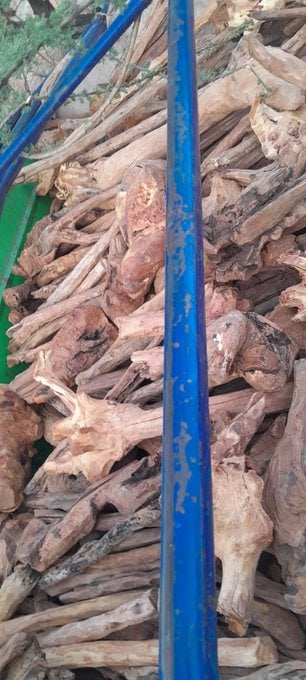
Also, on September 20, 2025, police officers from Wamba Police Station in Samburu County, working jointly with Kenya Wildlife Service (KWS) officers, received intelligence on patrol regarding illegal sandalwood trading that was taking place in Ntunyus Village and discovered a lorry bearing fake number plates parked on a homestead.
Upon inspection, the lorry was found to be fully loaded with pieces of wood suspected to be sandalwood, with an estimated weight of approximately five tonnes. As the said lorry was towed to Wamba Police Station and impounded, below are the reasons why the sandalwood trade is illegal within the boundaries of Kenya.
Risk of extinction
Initially, sandalwood was being uprooted and cut at unsustainable rates by local communities (often to extract oil from roots/trunk), pushing wild populations toward local extinction. The ban was introduced to stop that rapid decline. Authorities put measures in place to protect the plant.
Organized illegal trade and criminal syndicates
High international demand and huge prices for sandalwood oil have attracted organised criminal networks and cross-border traffickers. The illegal traders have turned the harvest into a lucrative illegal trade that ordinary law enforcement tools have struggled to contain. That criminal element was a major reason for strict prohibition and enforcement.
Biodiversity loss and ecosystem damage
More often, harvesting sandalwood typically involves uprooting whole trees, which destroys habitats, reduces biodiversity and degrades community forests, with knock-on effects for soil, pastoral livelihoods and other local plant/animal species. This is one of the reasons its trade is prohibited in Kenya.
Threats to local communities and livelihoods
Trafficking networks exploit rural communities (pressure, bribery, unsafe/unstable conditions) while removing a locally valuable medicinal/cultural resource; the ban helps protect community resources and reduce exploitation. Policy briefs and field reports document community harm tied to the trade.
Legal protection and international obligations
Kenya placed sandalwood under formal protection (presidential/legal notices and forest conservation law), and the species is subject to international trade controls (CITES listings). That legal framework makes harvesting, transport or export without authorisation illegal.
However, despite the ban, local security agencies have been impounding sandalwood consignments in tonnes, suspected to be products of illegal trade.
Author
Latest News








Advertisement
More on Insights