Advertisement
Why Raila’s death triggered ODM succession battle similar to FORD party’s collapse
Tuesday 20th January, 2026 06:40 AM|

Kenya’s opposition politics is entering a dangerous déjà vu moment. In the wake of Raila Odinga’s death, the Orange Democratic Movement (ODM) is showing early signs of the same internal fractures that once tore apart the Forum for the Restoration of Democracy (FORD) after the exit of its founder, Jaramogi Oginga Odinga.
Barely months after Raila’s passing in October 2025, ODM is already convulsing under the weight of a succession struggle that pits family against family, legacy against ambition, and ideology against expediency.
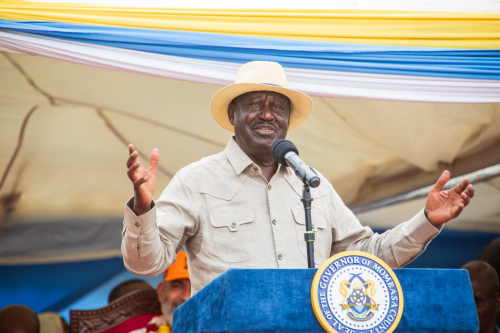
The party that once thrived on Raila’s singular authority now finds itself exposed, leaderless, factionalised, and vulnerable to fragmentation.
At the centre of the storm are two rival camps, both anchored in Raila’s lineage. On one side is East African Legislative Assembly (EALA) MP Winnie Odinga, Raila’s daughter, backed by her brother Raila Junior.
You Might Also Like
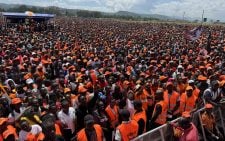
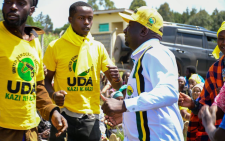

On the other hand is a faction associated with Siaya Senator Oburu Oginga, Raila’s uncle and the party’s de facto elder, who has made recent remarks that have been interpreted as an attempt to impose order and possibly succession from above.
Winnie’s intervention has been sharp, emotional, and deliberately political. Pushing back against calls, real or perceived, for dissenters to quit ODM, she warned against turning the party into a closed club.

“Nobody will be removed from the party. They talk too much, and when we ask questions, they tell us to leave the party. If we leave, who will they remain with? This is a people’s party, and when we leave, we will leave with the people,” Winnie stated.
Winnie was equally categorical that Raila’s stature cannot be inherited, warning against what she sees as premature attempts to step into his political shoes.
“Raila left us just a while ago. Relax, why are you in a hurry? Let us talk first, come to an agreement, so that we can move on together. As a family, we do not belong to any faction. We remain team Raila,” she added.
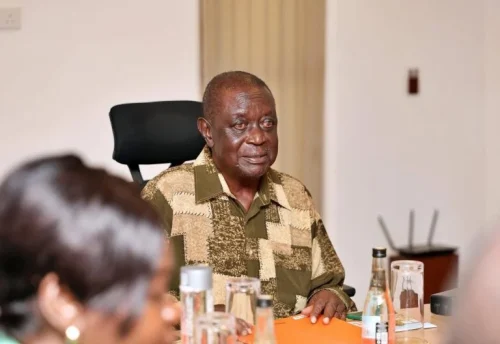
ODM’s tiff
This insistence on consultation and consensus echoes a lesson ODM appears not to have learned from history, specifically, from FORD.
The parallels are striking. FORD, once a formidable national movement under Jaramogi Oginga Odinga, began to unravel almost immediately after internal leadership disputes took root.
Even before Jaramogi’s death, the party fractured following disagreements with Kenneth Matiba over the presidential ticket, birthing Ford Kenya (Jaramogi) and Ford Asili (Matiba). What followed was a cascade of splinters, each weakening the brand and diluting its influence.
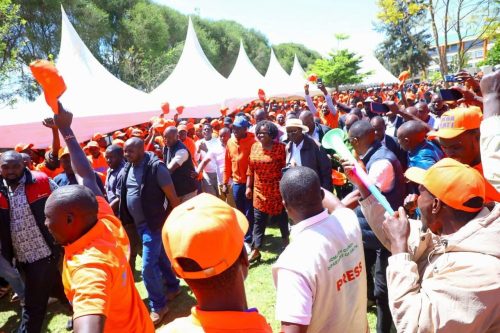
Jaramogi’s death only accelerated the decay. Michael Wamalwa’s rise to leadership failed to stem internal rivalries, culminating in Raila Odinga himself walking away with a bloc of Luo MPs to form the National Development Party (NDP). FORD never recovered its national sheen.
ODM today appears to be standing at a similar crossroads. Ideological fault lines, particularly over cooperation with President William Ruto’s United Democratic Alliance (UDA), are widening.
Party in a shipwreck?
Winnie openly questioned claims that Raila had sanctioned a political embrace of the Kenya Kwanza administration, describing such assertions as both misleading and disrespectful.
“Raila was one in a million. We will never get anyone like him. You cannot copy-paste Raila,” she asserted.
That warning mirrors the fatal mistake FORD made: assuming charisma, authority, and national appeal could simply be transferred from one leader to another without a broad consensus.
The tensions were further inflamed after ODM leaders toured Raila’s backyard, where Oburu Oginga was quoted as telling dissatisfied members to leave the party if they wished, remarks he later clarified, insisting he had no intention of expelling anyone. Still, the damage had been done. In a post-Raila ODM, words carry heavier consequences.
Just as FORD was hollowed out by defections, ODM now risks bleeding relevance as some members openly warm up to the Ruto administration while others demand a return to grassroots mobilisation and internal rebuilding ahead of the 2027 General Election.
Author
Latest News

Advertisement
More on Inside Politics