Advertisement
Why Orengo’s presidential ambitions test Oburu’s grip on ODM turf
Wednesday 10th June, 2026 10:47 AM|

A silent but increasingly consequential contest is unfolding within Kenya’s opposition politics. It is not yet a formal campaign, nor an outright rebellion, but beneath the surface of the Orange Democratic Movement (ODM), a defining struggle is taking shape over succession, strategy, and the party’s future after Raila Odinga.
At the centre of this emerging political fault line is Siaya Governor James Orengo, whose growing presidential ambitions are forcing a delicate recalibration of ODM’s internal power balance and testing the authority of de facto party leader Oburu Odinga.
Orengo appears convinced that the moment has come for ODM to field its own presidential candidate in 2027 and revive its traditional pursuit of State House.
His allies argue that after decades of mobilisation under the late Raila Odinga, the Luo community and ODM at large cannot indefinitely outsource its national ambitions.
You Might Also Like
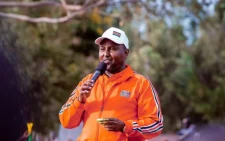
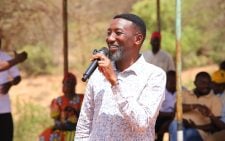
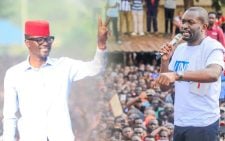
Those close to him say Orengo sees himself as part of the next generation of leadership prepared to carry that mantle forward. In recent public remarks, he has openly signalled his readiness to contest for the presidency, turning what was once quiet speculation into a live political question.
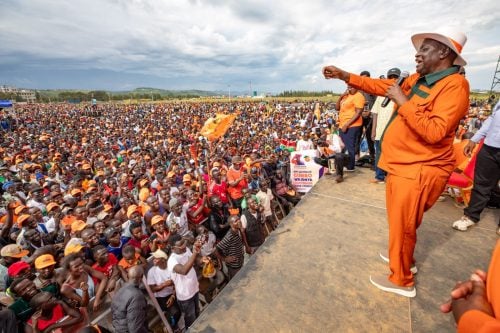
“The battle for Raila’s successor is still not yet over, and I am one of the leaders on the throne,” Orengo claimed in the latest media interview with the press in Kisumu.
But that position is colliding with a more cautious and pragmatic school of thought led by Oburu, who has increasingly positioned himself as the stabilising force within ODM’s post-Raila transition.
Orengo’s charm offensive
For Oburu, political arithmetic outweighs sentiment. He argues that Kenya’s current power structure demands engagement rather than confrontation, particularly under what ODM insiders refer to as the Broad-Based Government (BBG) arrangement.
“We want power, and it is vested in Ruto now. We can only enjoy it from within.” Oburu claimed, citing Broad-Based Government (BBG), as the power shield.
His position reflects a broader calculation within sections of ODM leadership that President William Ruto’s political machinery remains formidable, and that outright opposition in 2027 may be strategically costly.
For decades, Luo Nyanza political leaders have pursued the presidency through various coalitions and movements, often falling short. Oburu’s allies argue that this history underscores the need for coalition politics rather than solo ethnic or party-based bids.
He maintains that working within government structures offers ODM leverage, influence, and access to resources that would be lost in a high-risk presidential gamble. Migori Governor Ochilo Ayacko supports this view, saying the BBG arrangement reflects political realism rather than surrender.
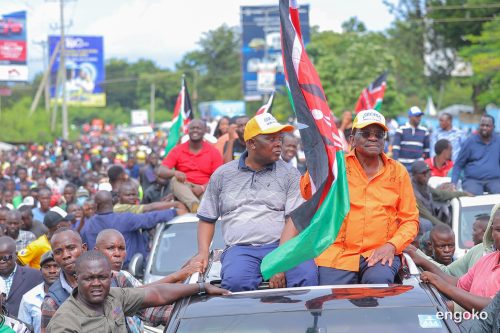
“Walking away from that arrangement could mean surrendering access to power in exchange for another uncertain presidential gamble,” Ayacko argued.
According to this camp, Kenya’s electoral history reinforces their caution. Attempts to unseat sitting presidents before term limits expire have rarely succeeded.
Many within ODM privately acknowledge that dislodging President Ruto may prove even more difficult, given his reputation as a highly strategic and adaptable political operator.
Yet this is precisely the logic Orengo’s supporters reject. Figures aligned to him, including ODM Secretary-General Edwin Sifuna, argue that ODM risks political dilution if it abandons its presidential ambitions entirely.
They warn that prolonged cooperation with government structures could erode ODM’s opposition identity and weaken its grassroots support base, particularly among voters who still view the party as an alternative to state power rather than an extension of it.
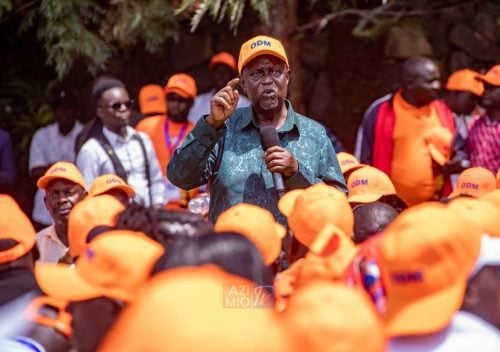
Oburu’s ODM squeezed?
Orengo’s candidacy, therefore, is not merely personal ambition. It has become a referendum on ODM’s ideological direction: whether it remains a competitive opposition force or transitions into a pragmatic partner within government.
The implication for Oburu is immediate and politically sensitive. As de facto party leader and Raila’s elder brother, he sits at the centre of ODM’s transitional authority.
Yet he must balance internal cohesion with the demands of the BBG arrangement while managing rising pressure for a return to full-scale opposition politics.
The tension became visible when Oburu recently indicated he would defend his Siaya Senate seat, only to quietly retreat from that position amid speculation that it was aimed at avoiding an uncontested political opening for Orengo.
Party insiders now see ODM as being pulled in two directions. One side argues that power is best pursued through strategic engagement with government, preserving influence while preparing for a stronger bid in 2032.
The other insists that political relevance requires contesting power directly, regardless of the odds.
For Orengo, the pathway is increasingly defined as he can either pursue ODM’s nomination and attempt to reshape the party from within or break away should the leadership remain committed to the broad-based arrangement.
Author
Kepher Otieno
View all posts by Kepher OtienoLatest News


Advertisement
More on Inside Politics