Advertisement
Why Oburu’s zoning politics may trigger fresh trouble for ODM ahead of 2027
Monday 25th May, 2026 08:12 PM|

A political storm is looming in the Orange Democratic Movement (ODM), in what could be a defining moment for the Orange party ahead of the 2027 general elections.
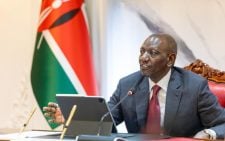
Key in the turbulence is the outfit’s leader, Oburu Odinga, and the increasingly controversial zoning debate. What was initially framed as a strategy to manage competition and preserve the party’s strongholds is now threatening to deepen divisions, weaken ODM’s grassroots grip and hand President William Ruto a major political advantage.
Oburu’s support for zoning politics, coupled with his declaration of interest in the Siaya Senate race, has placed many long-serving ODM leaders in an uncomfortable position.
For years, these leaders have enjoyed near-guaranteed support in traditional ODM zones, particularly in Nyanza. However, the political landscape is rapidly changing with the emergence of rival camps within ODM (Linda Mwananchi), which has exposed widening cracks that could explode before 2027.
You Might Also Like



The latest Trends and Insights For Africa (TIFA) survey has only intensified the pressure. The poll indicates that the Linda Mwananchi faction associated with embattled Orange party Secretary General Edwin Sifuna enjoys overwhelming support among ODM supporters.
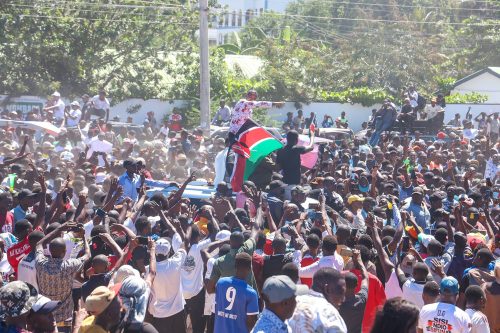
According to the survey released on May 14, 2026, the faction commands 73 per cent support compared to just 24 per cent for the Linda Ground camp linked to Oburu .
The findings suggest that ODM supporters are increasingly gravitating toward leaders perceived to represent a stronger opposition stance against the Kenya Kwanza administration.
The perception that sections of ODM are slowly aligning themselves with Ruto’s political orbit has angered a sizeable portion of the party’s grassroots supporters. Many ODM loyalists still view the party as the country’s principal opposition movement.
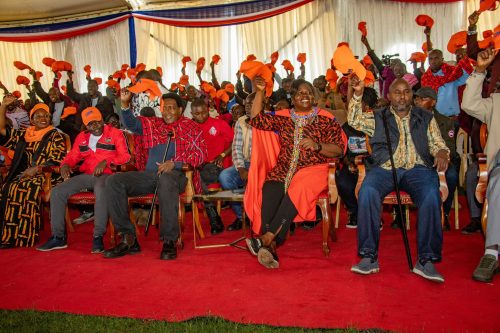
Oburu’s acid test
Any sign of cooperation with the ruling camp is interpreted as betrayal, especially at a time when Kenyans are grappling with economic hardship, rising taxes and frustrations over governance.
The zoning strategy risks worsening this perception as it is less about party unity and more about protecting political elites from competitive democracy.
Younger leaders and ambitious aspirants increasingly feel locked out by an old guard keen on maintaining political control. Such frustrations could trigger defections to alternative formations, particularly the Linda Mwananchi faction, which is steadily gaining momentum nationally.
For many ODM politicians facing uncertain political futures, survival will matter more than loyalty.
The reality is that the United Democratic Alliance (UDA) possesses enormous financial and organisational muscle. If ODM enters 2027 while divided, UDA could exploit the confusion by fielding strong candidates even in regions historically considered ODM strongholds.

This would significantly reduce the bargaining power and influence of ODM leaders who have relied on the party’s dominance for decades.
Oburu’s Senate ambitions in Siaya also complicate the succession debate within ODM. His entry signals that the old guard is unwilling to loosen its grip despite growing calls for generational change.
That move may alienate younger leaders who believe the party must reinvent itself to remain politically relevant after the eventual transition from the shadow of Raila Odinga.
Indeed, the battle inside ODM is no longer merely ideological. It is now a struggle over identity, succession and political direction.

Will ODM remain a radical opposition movement rooted in grassroots activism, or will it evolve into a softer establishment party willing to accommodate the government of the day? The popularity of the Linda Mwananchi faction suggests that a majority of ODM supporters still prefer confrontational opposition politics over elite political arrangements.
That makes the coming months an acid test for Oburu and leaders associated with the Linda Ground camp.
Their political calculations may appear strategic in the short term, but they risk accelerating internal rebellion within ODM.
If mishandled, the zoning debate could spark an exodus that permanently reshapes opposition politics in Kenya.
And for President Ruto, a fractured ODM may be the perfect political gift ahead of his re-election bid in 2027.
Author
Latest News





Advertisement
More on Insights