Advertisement
Why Kenyans are turning against Ruto
Thursday 17th July, 2025 01:20 AM|
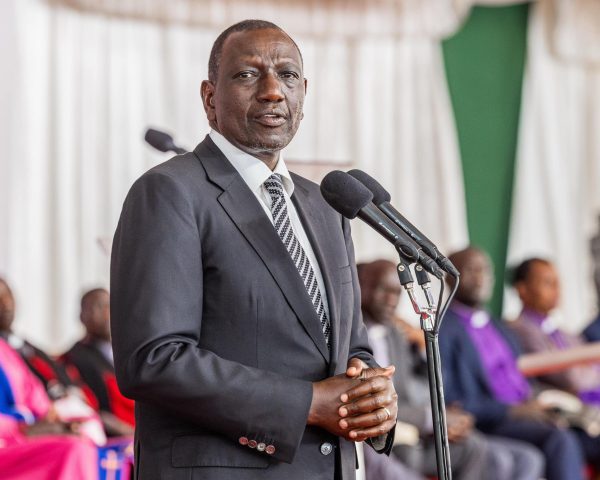
The multitudes he drew to his rallies and the connection he created with ordinary mwananchi whenever he traversed the country in the run-up to the 2022 elections was organic and unreal.
Then Deputy President William Ruto staged a glossy campaign that directly whispered a sense of hope to Kenyans of the lowest cadre.
Whenever he took to the podium to address his supporters, his targeted mention of the words- hustlers, boda boda, mama mboga, mtu wa mkokoteni na wheelbarrow, coupled with the promise to lower the cost of living by bolstering food production, would light up the nation and trigger optimism.
‘Government of hustlers’
His message resonated with the ordinary Kenyan. Through roadside rallies and market-centre meetings, he spun a narrative of economic empowerment, promising to dismantle the elitist stranglehold on power and usher in a government of the “hustlers.”
You Might Also Like


“We have a plan to organise the economy of this country. We intend to lower the cost of living by empowering local farmers to produce enough food. It is for this reason that we intend to ensure there is security of land ownership for farmers and further reduce the cost of farm inputs from the current Ksh7,000 to Ksh2,500,” Ruto would say in his rallies, where he undeniably endeared himself as a man of the people.
It was a campaign that oozed grassroots appeal and gave hope to the most vulnerable. He cast himself as the people’s champion — God-fearing, humble, and attuned to the cries of the common mwananchi.
Few would have imagined that public chants calling for his removal would be so resounding just two and a half years after he successfully ascended to the highest office in the land. The tide has dramatically turned.
The resistance President Ruto is currently experiencing is unprecedented, according to his own view.
Public outrage
Across the nation, chants of “Ruto must go!” now echo in the streets. Public outrage has boiled over.
The very citizens who once danced to his tunes and clung to his promises now march in protest, demanding answers and accountability.
Shocked by the scale of discontent, the President himself recently asked, “Why me?” Speaking in the wake of nationwide protests, Ruto questioned why his predecessors — including Daniel arap Moi, whose 24-year regime was marked by political repression—never faced such widespread fury.
“All this chaos — why wasn’t it directed at Moi, Kibaki, Uhuru? Why the contempt and arrogance?” he posed.
But are Kenyans turning against Ruto himself — or against the style of governance he has adopted since assuming power?
According to human rights defender and political analyst Grace Oloo, it’s not personal — it’s political.
“It’s not that people hate the president,” Oloo explains.
“This is a president who came into power with a well-crafted manifesto. He painted a picture of a leader who feared God—someone who would uphold human rights and rule of law. But what he is doing now contradicts everything he stood for during the campaign.”
Oloo cites Ruto’s now-infamous directive for police to “shoot looters in the leg” as a chilling departure from the values he espoused.
“Who told him a person shot in the leg cannot die? People hate his actions, not the man himself.”
She also faults the administration for undermining the Constitution, failing to respect court orders, and interfering with the independence of institutions.
“He does not give autonomy to governance bodies. We’ve seen court orders ignored, institutions overrun. It’s not leadership by law—it’s leadership by decree.”
Informaed population
Oloo believes the backlash Ruto is facing is magnified by two things his predecessors didn’t contend with: a progressive Constitution and an informed population.
“During Moi’s time, most of us didn’t even know what the Constitution said. But today, everyone can quote Chapter One — it gives sovereign power to the people. That awareness has empowered citizens to speak out and hold leaders accountable.”
She also notes that Kenya has, since Moi’s era, ratified several key international human rights conventions, further raising public expectations on governance.
“Unfortunately,” she adds, “President Ruto was a political student of Moi. He still believes in the old command-and-control model of leadership, but times have changed.”
But the blame does not lie with the executive alone.
Oloo says Parliament has abdicated its constitutional role of oversight.
“If Parliament was functioning properly, Ruto would never overstep. In other countries, presidents are summoned to answer tough questions. Here, it’s the reverse — MPs are summoned to State House, not to check power, but to align with it. The loyalty is to power and perks, not to the people.”
Mombasa-based human rights activist Mathias Shipeta shares similar concerns, saying Ruto’s swift fall from grace is a result of broken promises and lost connection with ordinary Kenyans.
“He was the darling of the masses, the people’s champion. But once he got into office, he abandoned that role,” says Shipeta. “He surrounded himself with elites and lost touch with the ground.”
Public sentiment ‘ignored’
Shipeta argues that the president ignored public sentiment, even as the situation worsened. “He gets all the intelligence briefs. He knows what’s going on, but he chooses to ignore the ground reality.”
The sharp contrast between expectation and reality, he says, has created widespread disillusionment.
“During the Kibaki era, there was free education, NHIF was accessible, and university fees were manageable. Today, students pay over Sh100,000 per semester, fuel prices have skyrocketed, and the new Social Health Insurance and Housing Levy have become unbearable burdens. People are paying more, earning less, and getting very little in return.”
He questions the logic of taxing workers heavily without guaranteeing them benefits.
“Even with the Housing Levy, there is no assurance that those contributing will one day own a house. You pay, but there’s no return — just promises.”
Shipeta believes the disconnect stems from a refusal to listen.
“If President Ruto had taken time to genuinely listen — especially to the Gen Zs who are protesting—he could have turned things around. These are our children, our future. Meeting them, hearing them out, is not too much to ask.”
He warns that the president is navigating a very thin line.
“When you’re loved so deeply, you can be hated just as passionately. That love can turn into resentment overnight. Leadership requires humility and responsiveness. Magufuli had it. He would stop his motorcade to listen to a market woman. That’s what people expected from Ruto.”
Both Oloo and Shipeta agree that the backlash is not simply a rejection of a man, but of a leadership style that feels increasingly detached from the people who gave him power.
Author
Reuben Mwambingu
View all posts by Reuben MwambinguLatest News







Advertisement
More on Inside Politics