Advertisement
Wetang’ula: Fine line between the Speaker, politician
Saturday 02nd August, 2025 01:00 AM|
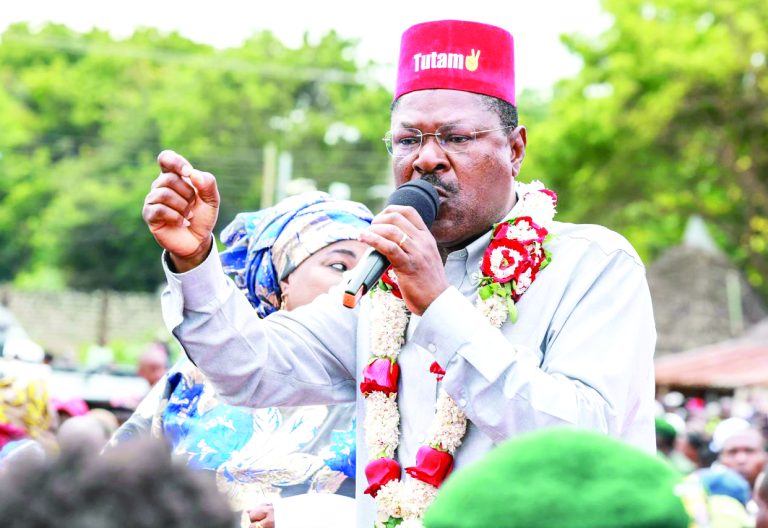
National Assembly Speaker Moses Wetang’ula is facing growing criticism over his overt involvement in Kenya Kwanza political activities, raising fresh questions about his impartiality and commitment to the constitutional expectations of his office.
Wetang’ula, who was elected Speaker in 2022 after a lengthy career in politics and leadership of Ford Kenya, now finds himself in the eye of a political storm.
His actions — particularly his active role in President William Ruto’s 2027 re-election campaign and in government-sponsored programmes — have sparked accusations of partisanship and conflict of interest.
In recent months, Wetang’ula has been seen participating in high-profile campaign events and making public statements in favour of the Kenya Kwanza agenda.
You Might Also Like

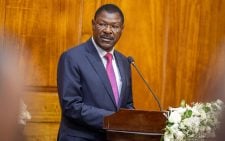
These activities, critics argue, blur the line between his political affiliations and his constitutional role as the Speaker, whose primary responsibility is to ensure that the National Assembly operates efficiently and neutrally.
The Kenyan constitution and parliamentary rules clearly require the Speaker to be neutral, not publicly advocating for any political party or coalitions.
The Speaker is meant to preside over debates, manage parliamentary procedures, and ensure fairness during legislative proceedings.
As such, Wetang’ula’s active participation in political campaigns, including addressing rallies and defending Ruto over his 2022 campaign promises and governance and leadership style, has sparked concerns.
Gone rogue
According to Prof Gitile Naituli, a political analyst and lecturer at the Multimedia University of Kenya, Wetang’ula’s actions violate Article 75 of Chapter six of the Constitution of Kenya, which stipulates the manner in which State officers should behave to avoid conflicts between their personal and public duties and prevents compromising public interests for personal gain or demeaning the offices they hold.
“His conduct is a direct erosion of integrity in public office. It is unfortunate that the country is descending into a situation where law and traditional norms no longer hold. Wetang’ula has gone rogue as a speaker of the National Assembly,” Prof Naituli observes.
While encouraging Kenyans to move to court and petition for his removal, Prof Naituli observes that Wetang’ula’s overt involvement in Kenya Kwanza politics and Ruto’s 2027 re-election bid is a testament that Kenya’s legislature has been captured by the executive.
“When the Speaker finds himself held hostage by the Executive, it directly means that Parliament has equally been captured. As a Speaker and being number three in leadership ranking according to the constitution, Wetang’ula should remain a neutral and independent arbiter,” Prof Naituli says.
Despite the traditional expectation that Speakers distance themselves from active politics to maintain neutrality, Wetang’ula has been seen openly drumming up support for Ruto and marketing his Ford Kenya party.
In the past three months alone, he has participated in over ten Kenya Kwanza “empowerment” events, mainly coordinated by Deputy President Kithure Kindiki.
The events, recently held in Bungoma, Busia, Kwale, Mombasa and Kisii counties, have doubled up as political mobilisation forums under the guise of government outreach.
In Bungoma County, his political stronghold, Wetang’ula pitched camp in a bid to consolidate support for both his party and the president’s re-election bid.
While empowerment drives are not unusual, critics argue that Wetang’ula’s presence at these highly-partisan functions compromises the independence of the Speaker’s office.
Unlike his predecessors — Justin Muturi and Kenneth Marende — Wetang’ula has continued to wear his political hat even after assuming the role of Speaker.
Marende, a former ODM member, earned widespread respect for his neutrality, especially during the 2008 standoff over who between ODM’s Raila Odinga and Wiper’s Kalonzo Musyoka would lead government business in the House.
Muturi, while a product of the Jubilee coalition, largely kept a low political profile and focused on parliamentary duties.
Wetang’ula, however, has remained the Ford Kenya party leader and is frequently seen engaging in overtly political activities. His critics say this erodes the credibility and neutrality of the institution he leads.
Wetang’ula, however, maintains that as a political leader and a member of the Kenya Kwanza coalition, it is within his rights to support his party’s objectives.
However, his critics argue that such engagements compromise the trust placed in him to manage the National Assembly impartially.
“I am fully committed to my role as Speaker and have always worked to maintain order and fairness in the House,” Wetang’ula told the PD Wikendi.
“However, I also have the right to support the government I helped form, and this should not be seen as a conflict of interest.”
Machakos deputy governor Francis Mwangangi, who served in the National Assembly as Yatta MP between 2013 and 2017, is doubtful whether Wetang’ula can maintain neutrality when handling matters involving the Executive or when presiding over contentious debates between the ruling party and the opposition.
Biased umpire
According to Mwangangi, Wetang’ula should resign or be impeached, arguing that his continued involvement in political campaigns undermines the trust of MPs and the public in the National Assembly.
Within the National Assembly, he has been accused of steering the House in favour of Kenya Kwanza’s legislative agenda.
From expediting motions that benefit the Executive to allegedly stifling opposition voices, questions have emerged about his ability to serve as an impartial arbiter.
For instance, Wetang’ula allowed a controversial motion by Minority Leader Junet Mohammed to be debated regarding the conduct of Deputy President Rigathi Gachagua — even after the House had already adopted an impeachment motion against him.
Furthermore, he facilitated the passage of the widely-opposed 2024 Finance Bill, which was later rejected by President Ruto amid national outcry.
Wetang’ula’s 2022 ruling declaring Kenya Kwanza as the majority coalition in Parliament — despite a High Court declaration to the contrary — also stirred controversy.
He justified the decision on the grounds that several parties initially aligned to Azimio la Umoja had formally defected to Kenya Kwanza.
“Arising from the foregoing, Kenya Kwanza is the majority and Azimio is the minority. The leadership of the House remains unchanged,” Wetang’ula ruled, disregarding legal and political opposition to the move.
Wetang’ula caused more confusion in the House when he declared nominated MP Sabina Chege the deputy minority whip instead of Embakasi West’s Mark Mwenje, whom Azimio la Umoja had appointed.
The saga had rumbled on since April 6, 2025, when the minority coalition party made a communication to the Speaker with an intention to replace Sabina with Mwenje, after she indicated that she would henceforth be working with the government.
He ignored several court rulings overruling his decision, only to reverse his decision after a three-judge bench judgement.
In their judgment delivered in February early this year, Justices John Chigiti, Lawrence Mugambi, and Jairus Ngaah also unequivocally declared Wetang’ula’s dual role as Speaker and Ford Kenya party leader unconstitutional.
“Once he became Speaker of the National Assembly, he ceased to be the leader of Ford Kenya party,” the three-judge bench ruled, holding the dual role as unlawful and unconstitutional.
Wetang’ula’s political clout in Bungoma also appears to be waning. In a recent rally, his attempt to rally the crowd with the Ford Kenya slogan “Simba! Simba! Simba!” fell flat — an unusual outcome in his home county.
Looking visibly unsettled, he paused and asked in Bukusu, “Have you forgotten?” — an incident seen by observers as a sign of diminishing local popularity.
Nevertheless, Wetang’ula received a boost over the last weekend when a section of MPs from the Western region publicly endorsed him as the region’s political kingpin.
During the latest empowerment event in Western Kenya, more than 10 lawmakers threw their weight behind Wetang’ula as the de facto leader of the Luhya community and even proposed him as a future presidential contender.
Led by Lugari MP Nabii Nabwera, the group declared that Wetang’ula should be the community’s spokesperson and eventual successor to President Ruto in 2032.
“Wetang’ula has vast political experience, and politicians outside Western Kenya should only engage the Luhya community through him,” said Nabwera.
Kimilili MP Didimus Barasa, Webuye East’s Martin Wanyonyi and Kiminini’s Kakai Bisau echoed the sentiment, urging other Luhya leaders to respect Wetang’ula and stop undermining him.
Bungoma Senator David Wakoli and other leaders, including MPs Beatrice Elachi (Dagoretti North) and John Waluke (Sirisia), attended the event, amplifying calls for regional unity.
“For the Luhya community to prosper, it must have a single voice, and that voice is Moses Wetang’ula,” Tongaren MP John Chikati stated.
Some legislators have also come to Wetang’ula’s defence, including Chikati and Beatrice Adagala (Vihiga Woman Rep), who insisted that Wetang’ula is doing his job professionally, claiming that those criticising him harbour ill political motives.
“As Members of Parliament who participated in the election of the Speaker, we wish to express our serious disapproval of this veiled narrative, which we suspect is being sponsored by enemies of progress. We shall not allow anyone to downgrade the status of the Speaker,” Adagala insisted.
Yet not everyone is impressed. Nairobi Senator Edwin Sifuna has been especially vocal in his criticism of Wetang’ula’s conduct.
During debate on the 2024 Finance Bill, Sifuna accused the Speaker of stifling debate and exhibiting dictatorial tendencies.
“Speaker Wetang’ula is running the House like a DJ at a disco matanga in Matisi,” Sifuna quipped. “He’s controlling the mic, shutting it off at will, and interjecting every time an MP rises to contribute. He should let the debate flow.”
Constitutional experts and civil society groups have raised concerns that Wetang’ula’s dual role — as both Speaker and party leader — is setting a dangerous precedent.
Article 106 of the Constitution does not expressly bar the Speaker from holding a party position, but the spirit of the law demands neutrality in the conduct of parliamentary business.
Mwangangi goes on to warn that Wetang’ula’s conduct could undermine trust in Parliament.
“When the Speaker becomes a campaigner, he cannot be an honest referee. It erodes confidence in legislative decisions and weakens oversight on the executive,” he said, adding Wetang’ula’s conduct highlights broader tensions about the separation of powers, political accountability, and the fragile nature of Kenya’s multiparty democracy.
According to him, the Speaker’s balancing act between national leadership and partisan politics will remain a contentious issue — one likely to define not just his legacy, but also the integrity of Parliament itself.
Author
Print Reporter
View all posts by Print ReporterLatest News






Advertisement
More on Inside Politics